




Online Consultation
Please accurately enter the information below.
Quick Cost Consultation
Quick Consultation & Reservation
Cases finding
similar to my profile






Doctor's Note
Medical columns by our surgeons
Abdominoplasty | Correcting Lower Abdominal Laxity with Floating Umbilicoplasty: 3-Month Progress [Doctor's Note by Dr. Kukhan Lee]
2026-08-19
Abdominoplasty | Correcting Lower Abdominal Laxity with Floating Umbilicoplasty: 3-Month Progress [Doctor's Note by Dr. Kukhan Lee]
If upper abdominal laxity is minimal and only the lower belly is loose, is a full abdominoplasty necessary?
If upper abdominal skin redundancy is not significant
and laxity is predominantly concentrated in the lower abdomen,
an S-type abdominoplasty using a floating umbilicoplasty approach—which does not create a new umbilicus—can be considered depending on individual presentation.
However, the surgical method and incision extent must be determined
after thoroughly evaluating the degree of diastasis recti and the scope of skin laxity together.
▶ View Clinical Cases of Lesarts Abdominoplasty
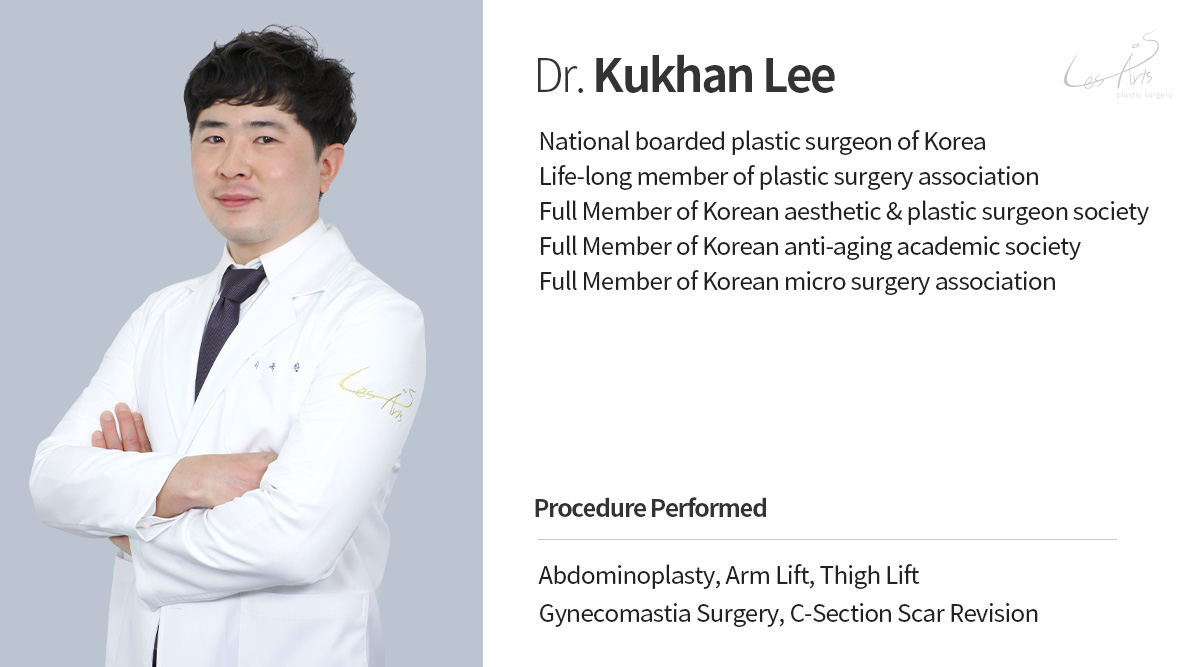
Hello, I am Dr. Kukhan Lee, Board-Certified Plastic Surgeon at Lesarts Plastic Surgery.
Some individuals experience concerns where, despite consistent post-partum exercise and weight management,
the lower abdomen protrudes forward or redundant, loose skin
persists without sufficient resolution.
This is because abdominal contour is not determined
solely by subcutaneous fat.
If the skin has overstretched during pregnancy and diastasis recti (separation of the abdominal muscles) has developed,
anterior bulging or skin ptosis may not decrease as much as hoped
through weight reduction alone.
This patient visited our clinic to address post-partum lower abdominal skin laxity
and a forward-projecting abdominal contour.
Because redundancy in the upper abdominal skin was relatively minimal,
rather than a full abdominoplasty, an S-type abdominoplasty
using a floating umbilicoplasty technique was selected.
Let us examine the abdominal contour, surgical scar,
and recovery status at 3 months post-op.
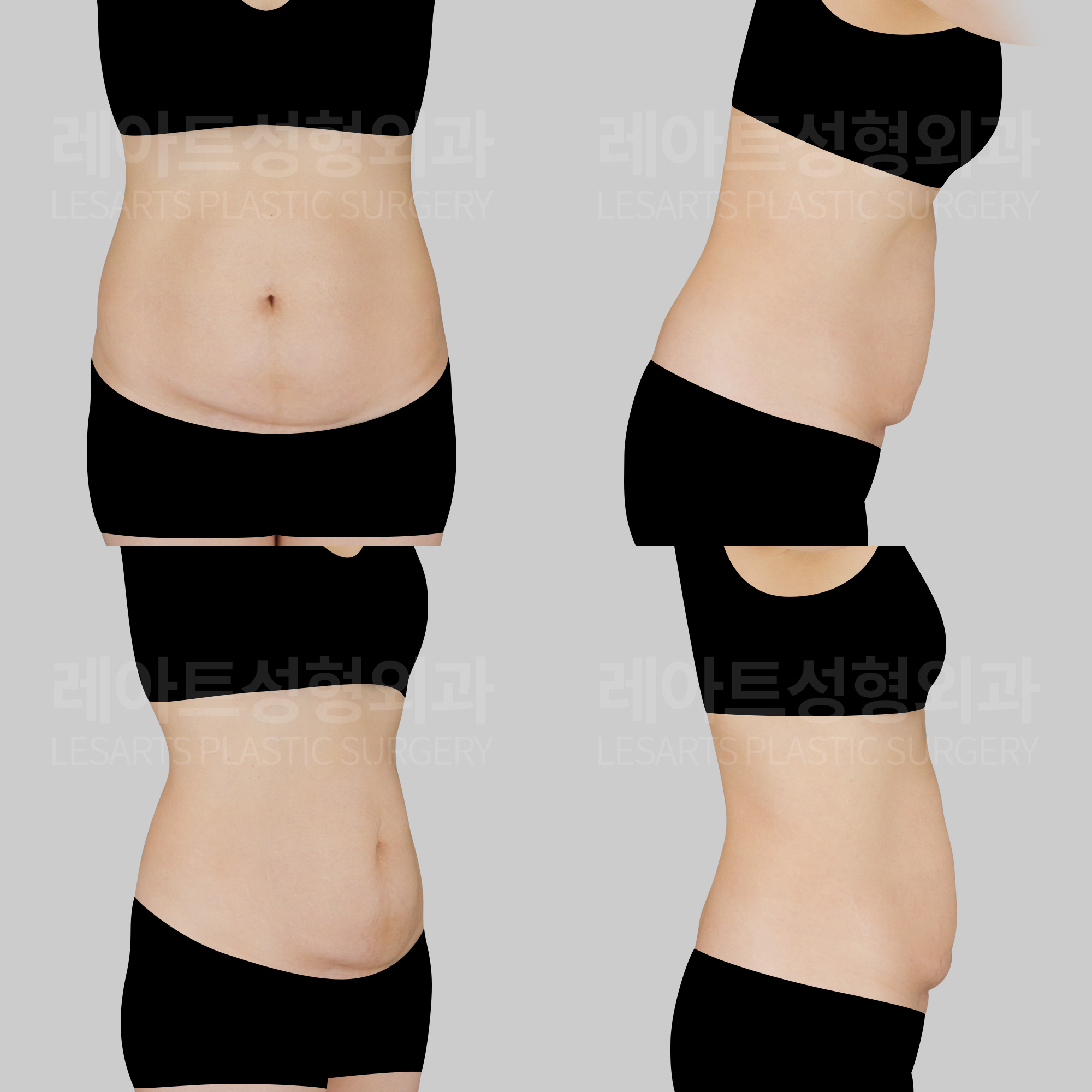
[Pre-Operative Physical Examination for Abdominoplasty]
The patient was a female in her early 40s who had delivered two children via Cesarean section.
Her height was 160 cm, body weight was 56 kg, and she had a history of significant abdominal expansion during pregnancy,
having delivered relatively large infants weighing approximately 4 kg.
Although she consistently maintained dietary control and exercise routines following delivery,
the anterior abdominal fullness did not decrease to the extent she desired.
Among her concerns, the most prominent issue
was the forward-protruding lower abdomen.
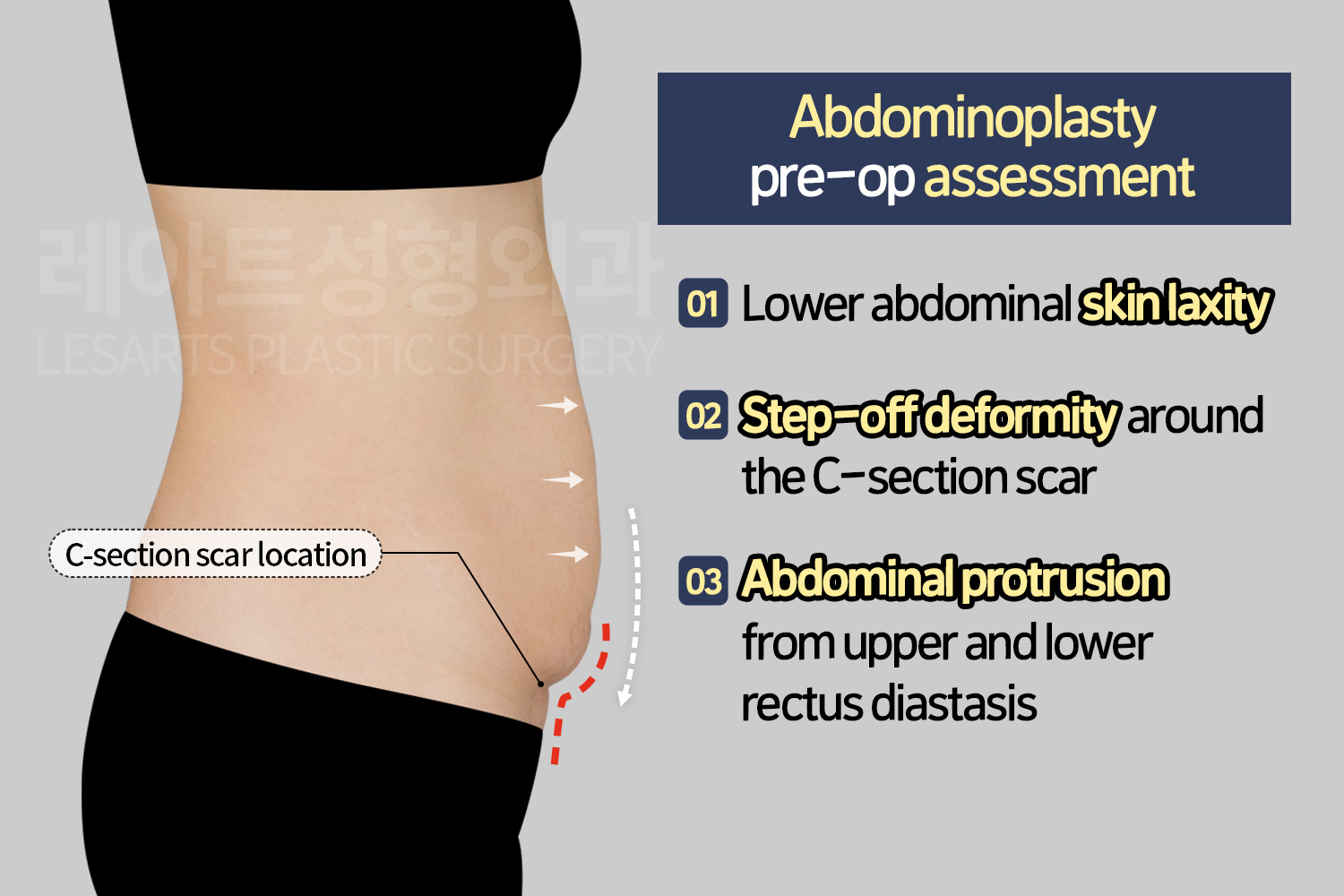
[Pre-Operative Diagnosis for Floating Umbilicoplasty Abdominoplasty]
During physical examination, upper abdominal skin laxity was not substantial.
In contrast, in the lower abdomen, redundant skin overlapped above the C-section scar,
creating a noticeable step-off.
Stretch marks (striae) resulting from pregnancy remained across the abdomen,
and baseline skin elasticity was diminished.
In addition to skin quality, the rectus abdominis muscles were evaluated.
Diastasis recti was relatively clearly palpable across both upper and lower regions,
contributing to the overall rounded forward projection of the abdomen.
When establishing the surgical plan, the following anatomical aspects were considered together:
- Upper abdominal skin laxity was minimal
- The patient felt little concern regarding upper abdominal laxity
- Diastasis recti across both upper and lower regions required simultaneous plication
- Given limited upper abdominal skin redundancy, an M-type full abdominoplasty could add
an unnecessary periumbilical transposition scar
Therefore, for this patient, an S-type abdominoplasty using a floating umbilicoplasty approach
planned concurrently with abdominal liposuction was established.
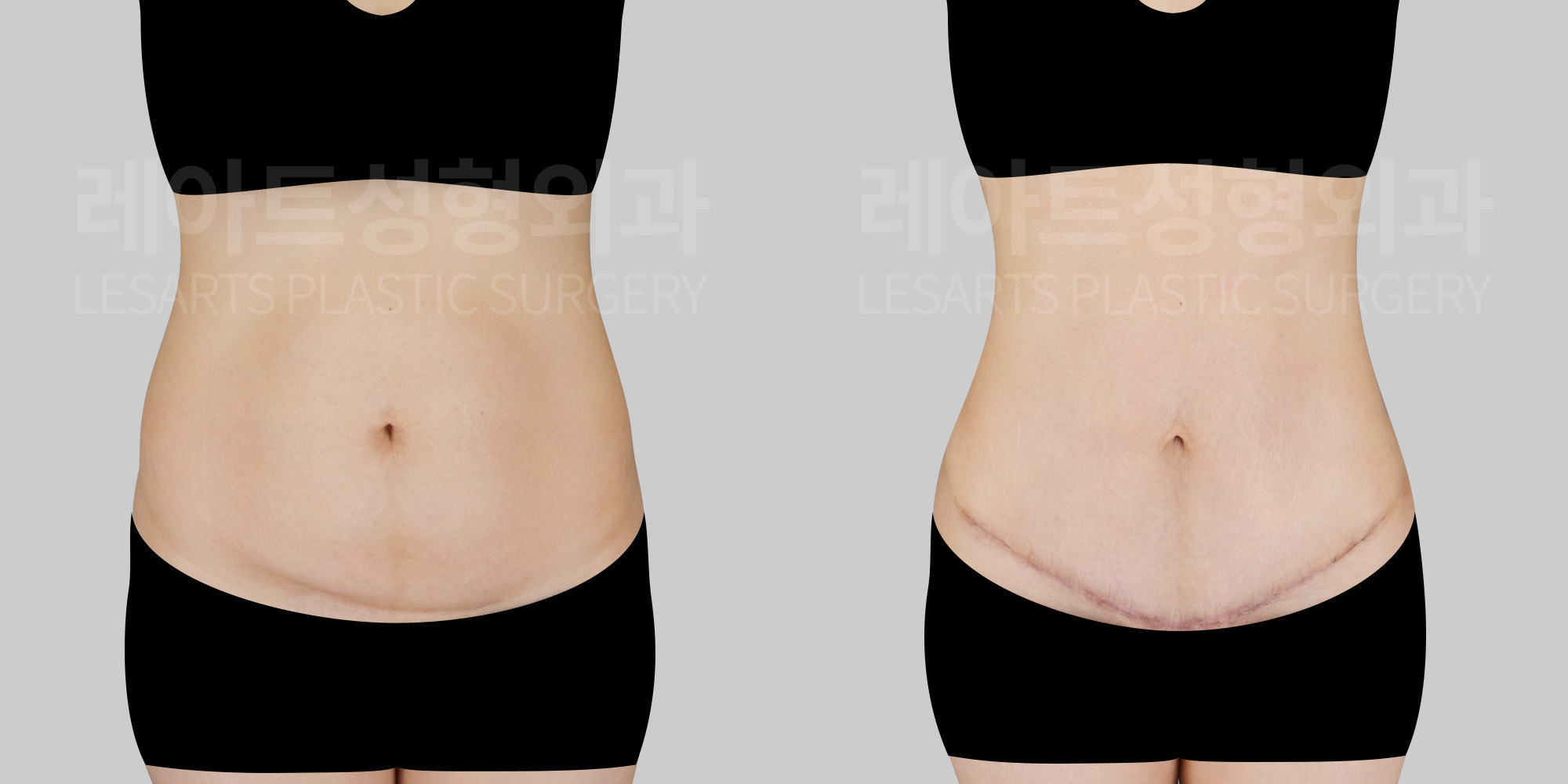
[Floating Umbilicoplasty Abdominoplasty 3-Month Progress - Dr. Kukhan Lee, Lesarts Plastic Surgery]
Here is the appearance at 3 months post-op.
In this patient, during the actual operative procedure, the incision length
extended slightly longer than initially estimated.
In abdominoplasty, incision length is not fixed uniformly from the beginning;
it can vary based on the extent of redundant skin to be excised and the degree of tissue laxity.
In particular, when the resection width is widened to adequately remove loose tissue,
the horizontal incision length may lengthen accordingly,
with scar length potentially extending at a ratio of approximately 1:3 to 1:4
relative to the vertical resection width.
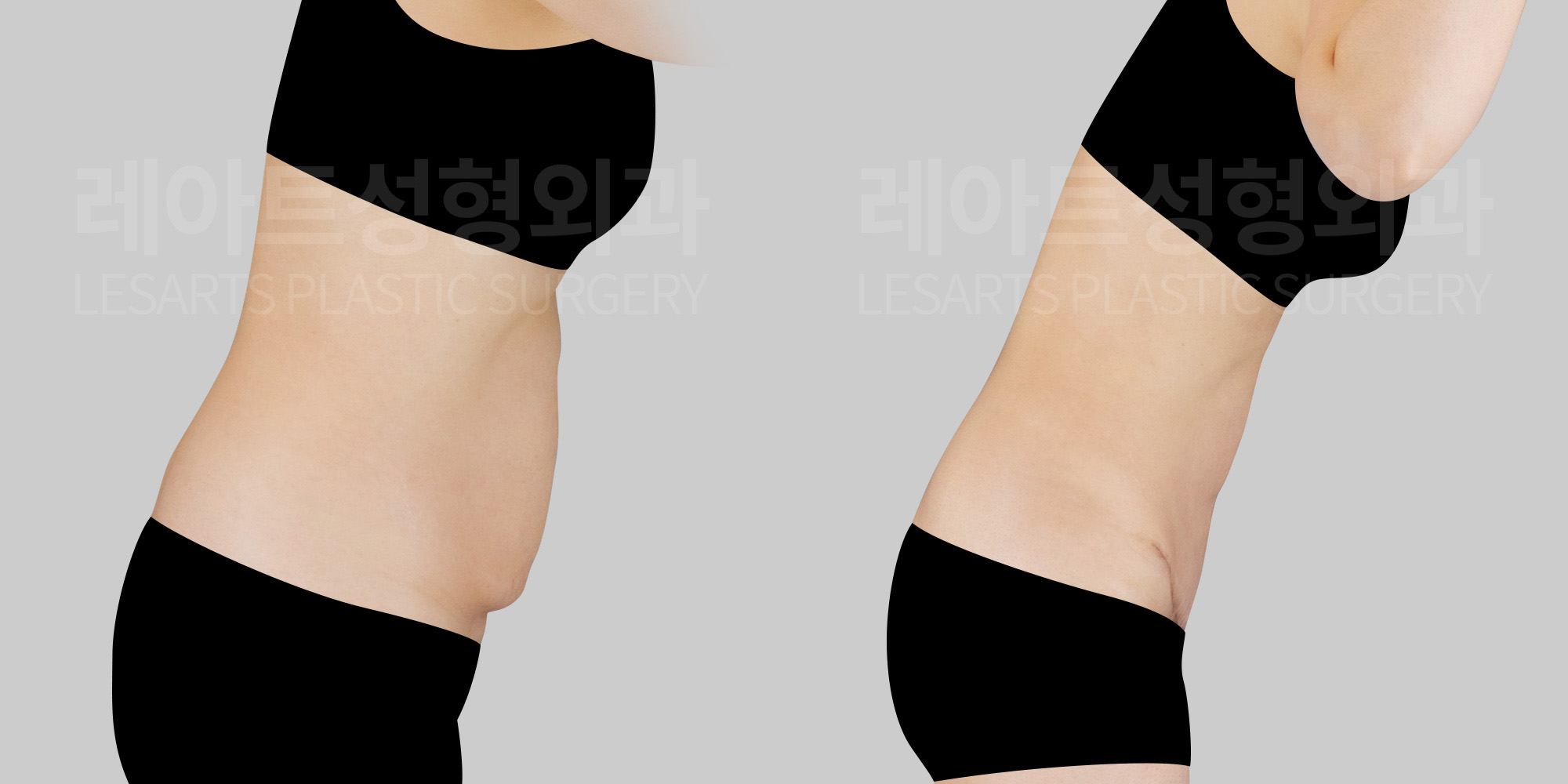
[Plication of Upper Diastasis Recti via Mini Abdominoplasty - Dr. Kukhan Lee, Lesarts Plastic Surgery]
The patient had relatively substantial lower abdominal skin laxity,
and the area of tissue laxity extended toward the flanks.
In such presentations, if the incision length is restricted too aggressively simply to make the scar shorter,
a 'dog-ear' deformity where skin bunches and puckers at both lateral ends
can occur.
Therefore, the potential for the incision to extend longer than initially estimated
was thoroughly explained prior to surgery.
Rather than focusing solely on minimizing scar length, the procedure prioritized overall contour refinement,
smoothly redraping redundant skin and flank transitions.
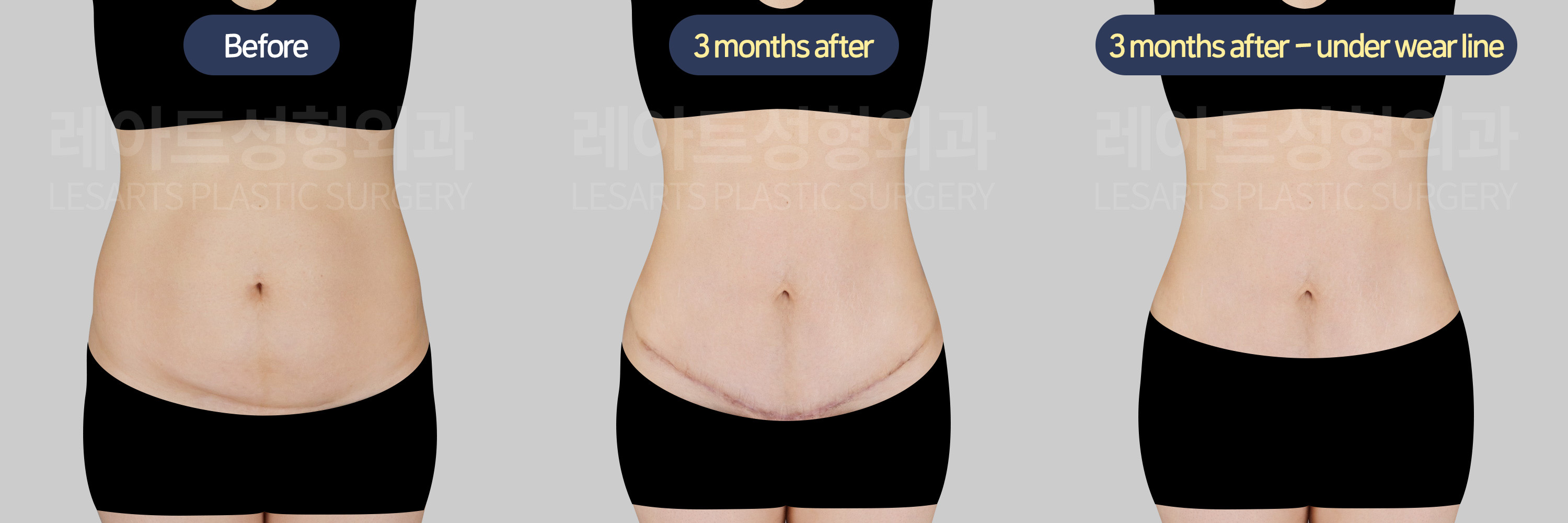
[Incision Placement in Abdominoplasty - Lesarts Plastic Surgery]
During the procedure, the pre-existing
C-section scar was excised alongside the redundant skin.
The new abdominoplasty incision line was positioned
relatively low so that it can be concealed
under underwear or swimwear.
Abdominoplasty scars can appear erythematous or pronounced for a period post-operatively,
often lightening gradually from the lateral margins inward.
Because 3 months post-op is an early phase where scar maturation is still underway,
continued follow-up throughout recovery remains necessary.
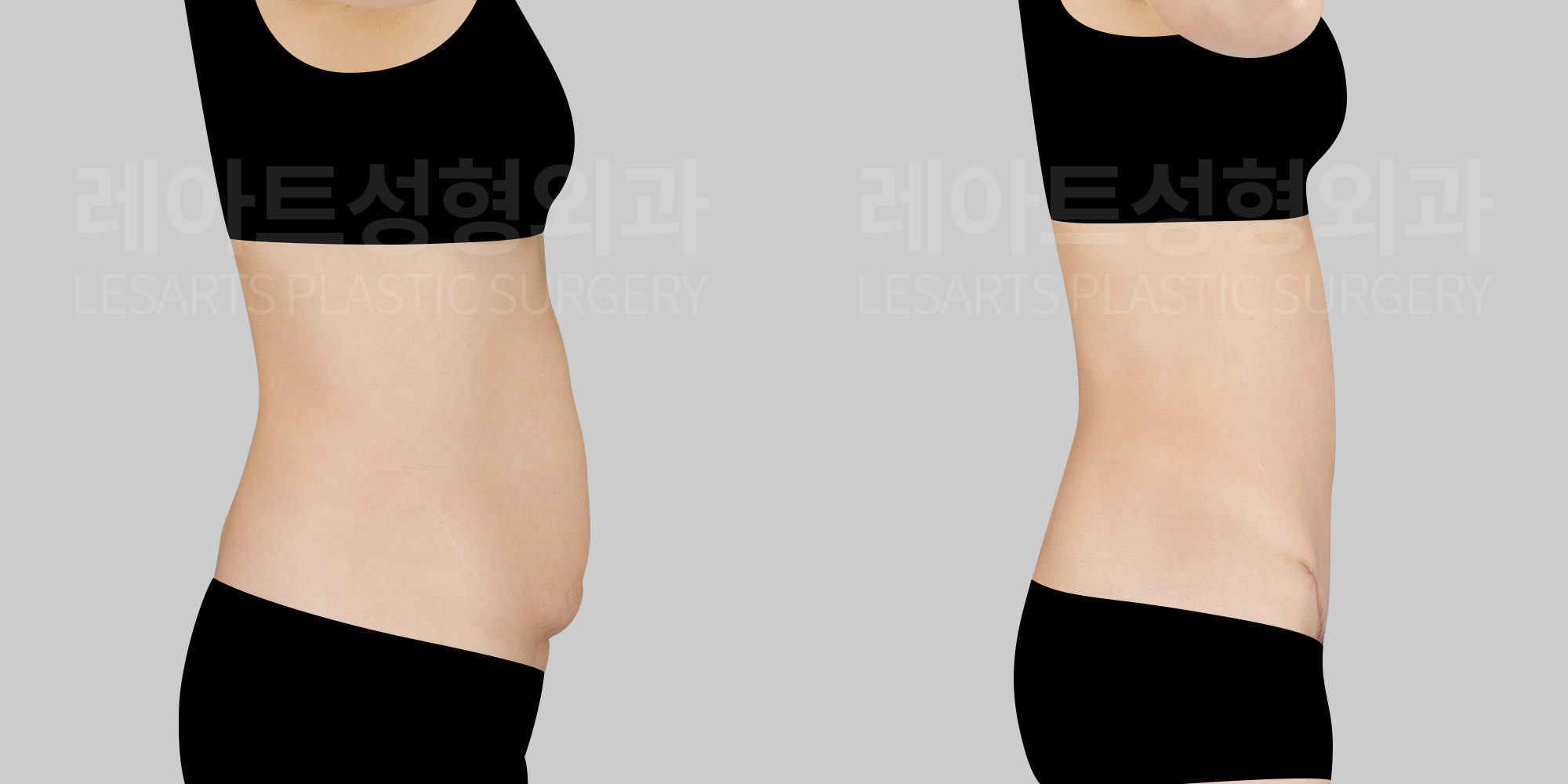
[Correction of C-Section Scar Step-Off via Abdominoplasty - Dr. Kukhan Lee, Lesarts Plastic Surgery]
Pre-operatively, due to diastasis recti, the anterior abdomen
projected forward in a rounded contour.
Additionally, redundant lower abdominal skin overlapped above the C-section scar,
forming a visible step-off.
Following concurrent rectus plication,
the anterior abdominal wall transitioned to a flatter contour than before.
In particular, the lower abdominal bulge that had caused the patient significant concern decreased,
and the tissue fold overlapping the C-section scar
was also resolved.
Changes in Umbilical Position and Shape Following Floating Umbilicoplasty
Floating umbilicoplasty abdominoplasty differs from full abdominoplasty,
which transposes and reconstructs the navel.
As lower abdominal skin is pulled downward to achieve tightening,
the existing umbilicus shifts along with the redraped tissue.
In this patient as well, the post-operative position of the umbilicus
settled slightly lower than before.
Because the lower abdomen was advanced and tightened significantly, the umbilical shape
can appear somewhat altered compared to pre-op.
However, as surrounding redundant skin was redraped, the periumbilical area and
entire anterior abdomen settled into a firmer, more supportive appearance.
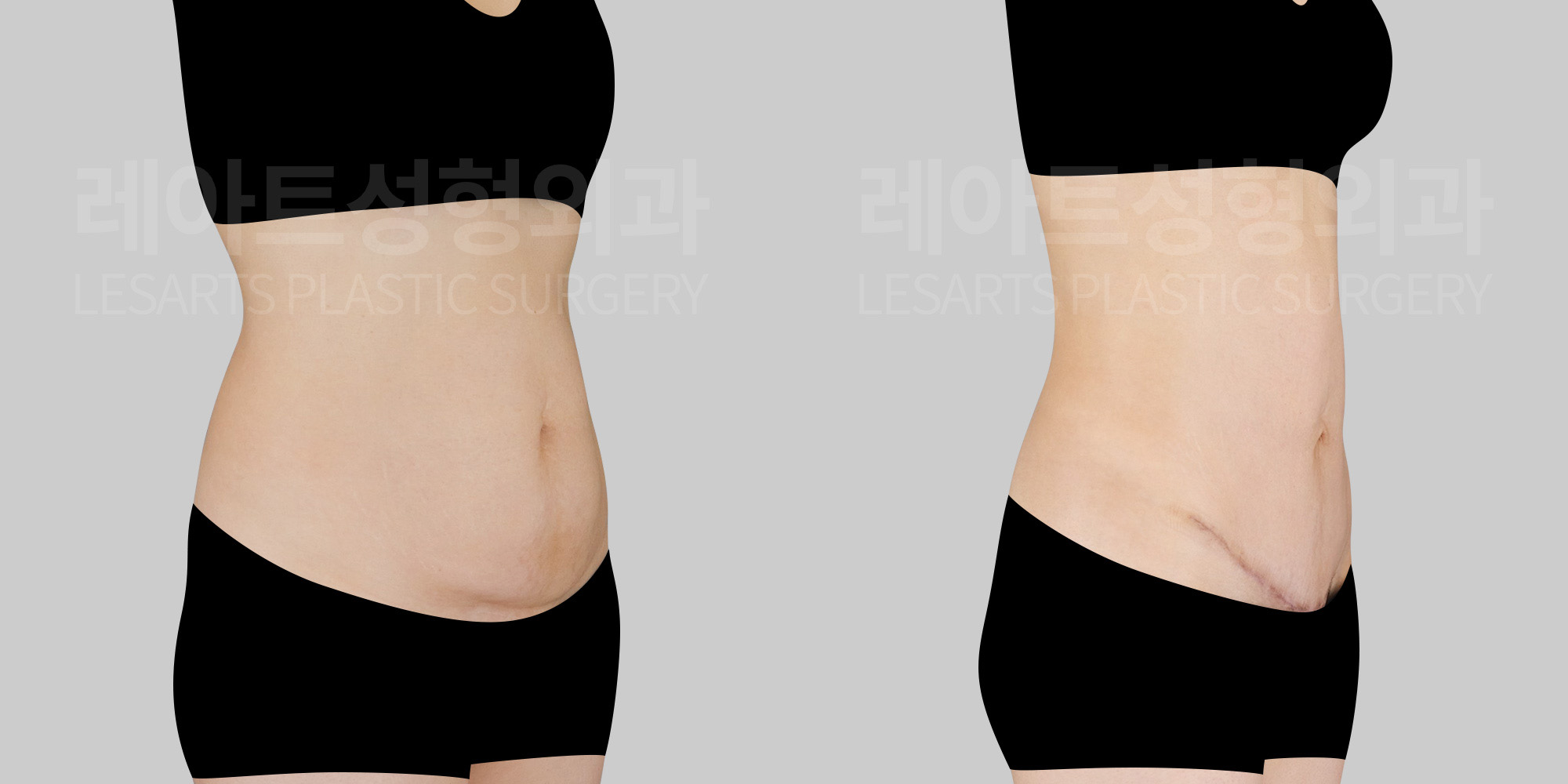
[Recovery Status at 3 Months Post-Abdominoplasty - Dr. Kukhan Lee, Lesarts Plastic Surgery]
In this patient, abdominal liposuction was performed concurrently
with floating umbilicoplasty abdominoplasty.
While redundant skin and separated rectus muscles were corrected via abdominoplasty,
residual subcutaneous fat along the abdomen and flanks was contoured via liposuction.
Consequently, rather than simply tightening the lower abdomen,
the overall line extending across the anterior abdomen and flanks
transitioned more naturally.
At around 3 months post-op, the external contour of the abdomen
may appear considerably settled.
However, internal tissues have not yet completely softened at this stage.
A pulling sensation during abdominal movement or stretching, or temporary tissue firmness
across the operative field, can remain noticeable.
Some patients may also feel concerned as scars can appear relatively erythematous
or prominent around this phase.
Three months is an active phase of scar remodeling;
pulling sensations and tissue firmness tend to soften over time,
and scar erythema will gradually fade.
Depending on healing progress, scar management protocols and adjunctive therapies such as radiofrequency
can be continued to support recovery.
This patient presented with redundant lower abdominal skin overlapping a prior C-section scar
following two Cesarean deliveries, along with anterior abdominal projection
resulting from diastasis recti.
Because upper abdominal skin redundancy was minimal and the patient did not feel significant concern
regarding upper abdominal laxity,
an S-type abdominoplasty using a floating umbilicoplasty technique
was selected over an M-type full abdominoplasty.
The rectus abdominis was plicated from upper to lower regions,
and redundant lower abdominal skin was excised.
At 3 months post-op, the tissue step-off overlapping the C-section scar was eliminated,
and the protruding abdomen transitioned to a flatter contour than before.
While the incision extended longer than initially anticipated,
because tissue laxity extended toward the flanks, prioritizing natural contour refinement
over forcibly restricting scar length to avoid dog-ear deformities
was the appropriate surgical direction.
Additionally, 3 months post-op represents a recovery window where, even if contour has settled,
internal tightness, tissue firmness, and scar erythema may remain.
Continuing post-operative scar management while monitoring recovery is helpful,
and pairing surgical contouring with ongoing weight management
and regular exercise is important to maintain long-term results.
If redundant lower abdominal skin, step-offs over C-section scars, or anterior projection persist
after childbirth despite exercise and weight management,
rather than assuming a full abdominoplasty is the sole option, consulting on whether laxity extends
into the upper abdomen and whether a floating umbilicoplasty approach
is suitable can help determine the most appropriate surgical plan.
▶ View More Lesarts Abdominoplasty Cases
Floating Umbilicoplasty Abdominoplasty FAQ
1. When is floating umbilicoplasty abdominoplasty considered?
It can be considered when upper abdominal skin laxity is minimal while redundant tissue is concentrated in the lower abdomen,
and concurrent rectus plication is required.
Applicability must be determined after evaluating skin redundancy
and baseline umbilical position together.
2. Does umbilical position change with floating umbilicoplasty?
Because the existing umbilicus shifts along with the tissue as lower abdominal skin is pulled downward,
the post-operative position of the navel may settle slightly lower than before.
3. Are incisions always short in mini abdominoplasty?
Not necessarily. If redundant tissue extends toward the flanks,
the incision line may extend longer than expected to prevent dog-ear deformities
and achieve adequate contour redraping.
4. Can a C-section scar be removed during abdominoplasty?
If the previous C-section scar lies within the planned resection boundary,
it can be excised alongside the redundant skin.
In this clinical case as well, the prior C-section scar was removed together.
5. Is it normal for scars to appear pronounced at 3 months post-abdominoplasty?
Three months post-op is an active phase of scar remodeling where incision lines can appear erythematous or prominent.
Color and tissue firmness tend to soften over time,
and targeted scar aftercare can be utilized to support healing.
Dr. Kukhan Lee


Cases finding
similar to my profile
Customer Diagnostics


Select the surgery and
area you are interestedto see real
before andafter changes.


we
make you,
the art
Clinic hours
MON - FRI
10 am – 7pm
SAT
10 am – 4pm
Holiday
SUN, HOLIDAY
Location
Lesarts Moon Clinic Tower 4-5F, 40, Nonhyeon-ro 168-gil,
Gangnam-gu, Seoul, Republic of Korea

Medical institution name Lesarts Plastic Surgery
Address Lesarts Moon Clinic Tower 4-5F, 40, Nonhyeon-ro 168-gil, Gangnam-gu, Seoul, Republic of Korea
Representative Moon sung jun
