




Online Consultation
Please accurately enter the information below.
Quick Cost Consultation
Quick Consultation & Reservation
Cases finding
similar to my profile






Doctor's Note
Medical columns by our surgeons
Abdomen & Arm Liposuction | Sagging Upper Arm & Abdominal Laxity: How Much Can Be Improved with Liposuction Alone Without Excisional Lift Surgery?
2026-08-28
Abdomen & Arm Liposuction | Sagging Upper Arm & Abdominal Laxity: How Much Can Be Improved with Liposuction Alone Without Excisional Lift Surgery?
Q. After massive weight reduction (90kg → 60kg range), how can redundant, sagging posterior arm tissue and flank fullness
be smoothly refined through liposuction alone without skin excision (lift surgery)?
A. By uniformly evacuating superficial and intermediate adipose layers, the procedure promotes even 'skin retraction and adherence'
to underlying muscular planes, complemented by integrated anatomical contouring across contiguous regions.
[Learn More About Lesarts Liposuction]
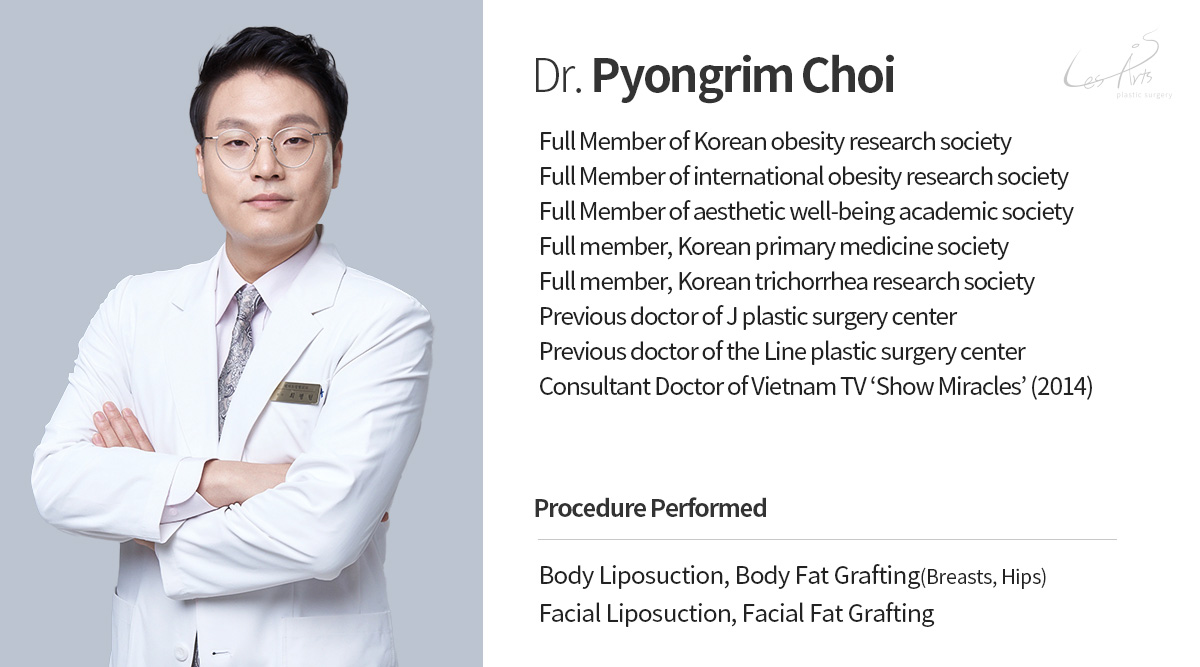
Hello, I am Dr. Pyongrim Choi of Lesarts Plastic Surgery.
Even after achieving substantial weight loss through rigorous dieting,
“Why do certain areas still appear bulky and noticeably sag downward?”
A clinical presentation frequently encountered among women in their 20s and 30s is
tissue laxity along the posterior upper arm,
accompanied by persistent subcutaneous fat along the flanks and love handles,
where overall body weight has normalized, yet body silhouettes remain poorly defined.
This stems not merely from residual adipose volume,
but from an interplay of subcutaneous fat distribution + diminished dermal elasticity + internal fibrous architectural anatomy.
1. Typical Upper Body Contour Changes Following Massive Weight Reduction
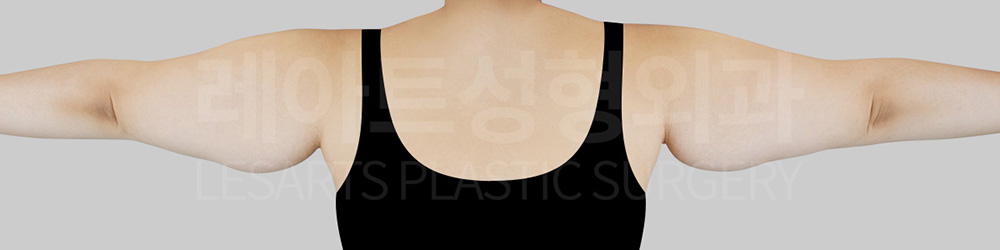
Unresolved Posterior Arm Laxity After Weight Reduction
1) Upper Arm Region (Posterior and Lateral Brachial Lines)
Subcutaneous fat volume has decreased overall, but localized deposits persist
Particularly concentrated along the posterior triceps bulge and lateral margin (redundant underarm zone)
With rapid loss of skin recoil, residual subcutaneous fat and stretched cutaneous tissue sag together, forming a pendulous contour
Unlike primary obesity, tissue consistency presents as soft and redundant rather than firmly tense
Tissue excursion and oscillation become distinctly noticeable when abducting or moving the arms
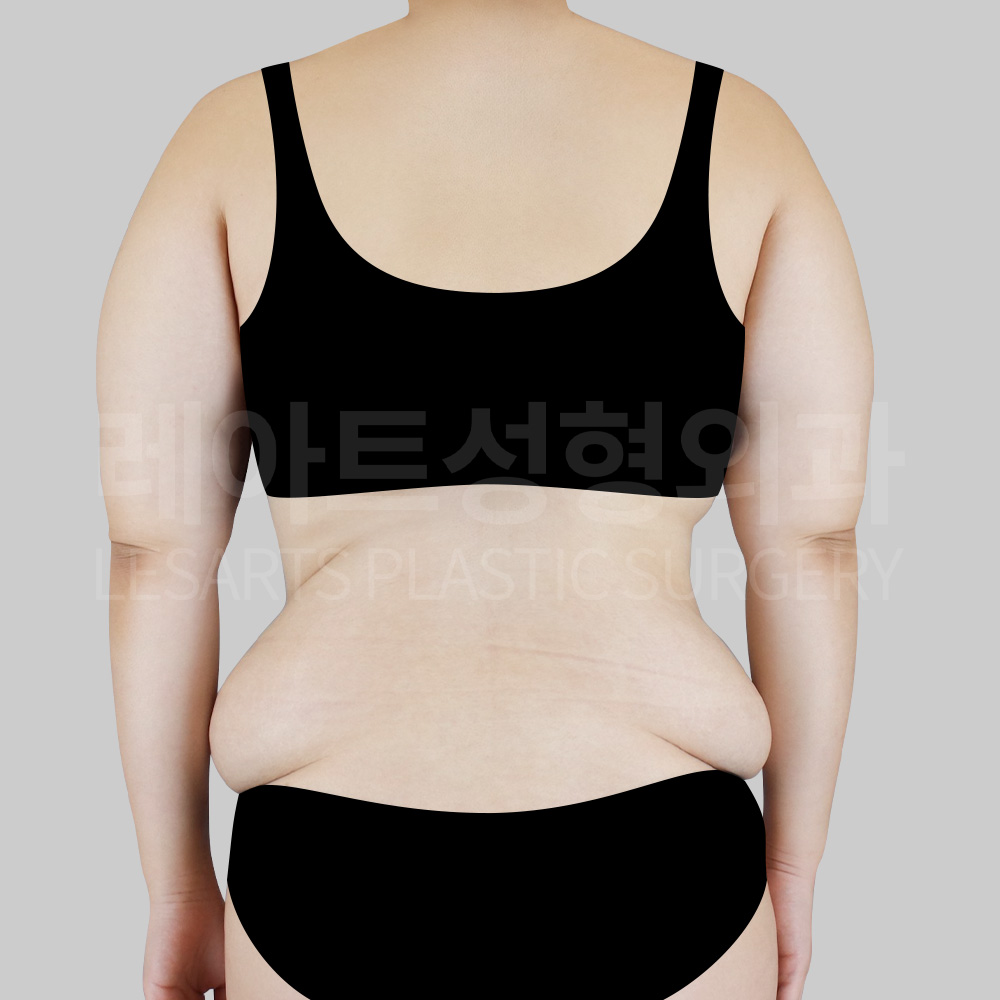
Unresolved Flank and Love Handle Adiposity After Weight Reduction
2) Abdomen and Flank Contours (Love Handles & Posterior Flanks)
While anterior central abdominal volume has diminished,
subcutaneous adipose tissue along the lateral flanks and posterior love handles frequently persists
Particularly from posterior views, tissue manifests as localized bulges rather than an indented waistline
Characterized by reduced skin recoil presenting as focal adipose protrusion with slight inferior displacement
Differing from generalized abdominal fullness, the waist-to-pelvis transition appears stepped and interrupted
2. Why Do Posterior Arm Laxity and Flank Adiposity Resist Caloric Deficits?
1) Anatomical Structural Factors
- Variations in Adipose Architecture
The posterior arm and lateral flank regions contain dense fibrous retinacular ligaments anchoring adipose tissue firmly in place
Regional Metabolic Hierarchy During Weight Reduction
Systemic adipose depletion generally proceeds from central abdomen → facial zones → extremities,
and flank and posterior upper arm regions exhibit pronounced lipolytic resistance, making them among the last to decrease
- Diminished Cutaneous Retraction Capacity
These regions are physiologically prone to laxity because overstretched skin cannot contract proportionately following rapid volumetric deflation
Consequently, even a modest residual adipose layer visually exaggerates the appearance of tissue descent
3. Core Surgical Strategies for Liposuction Alone Without Excision
In post-bariatric and massive weight reduction cases presenting with tissue laxity, surgical success depends
not merely on total volume evacuated, but on how uniformly the layer is sculpted to facilitate firm skin redraping.
1) Surgical Technique for Posterior Brachial Redundancy
Beyond deep fat debulking, the superficial and intermediate subcutaneous planes beneath the dermis must be contoured with uniform precision.
This promotes subdermal contracture and uniform adherence,
achieving circumferential reduction alongside cutaneous retraction.
Contiguous areas—including axillary folds, anterior axillary deposits, and scapular back lines—are contoured simultaneously
to establish seamless transitions, rendering the upper arm visually leaner and longer.
2) Surgical Technique for Abdominal and Flank Contouring
In nulliparous women without severe anterior abdominal panniculus apron deformity,
full abdominoplasty is frequently unnecessary.
The primary target resides within the subcutaneous adipose tissue of the lateral flanks and posterior love handles.
Evenly thinning flank adiposity up to the superficial layer
encourages redundant skin to readhere smoothly against abdominal wall musculature, restoring a defined, streamlined waist silhouette.
[Clinical Case Analysis]
[Patient Profile]: 30-year-old female / 167 cm / 68 kg
Primary Goals: Resolution of residual posterior arm laxity and flank bulges persisting after extensive dietary weight loss
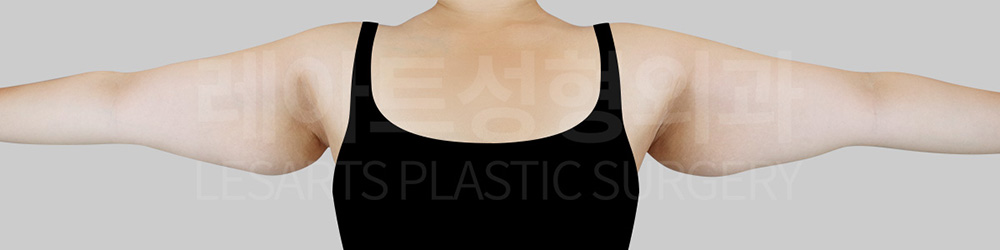
Preoperative Brachial Line - Anterior View
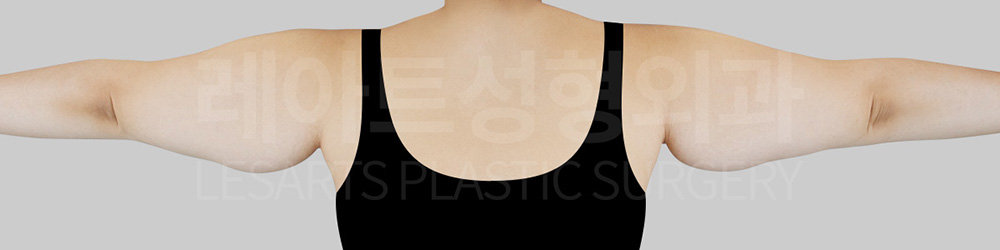
Preoperative Brachial Line - Posterior View
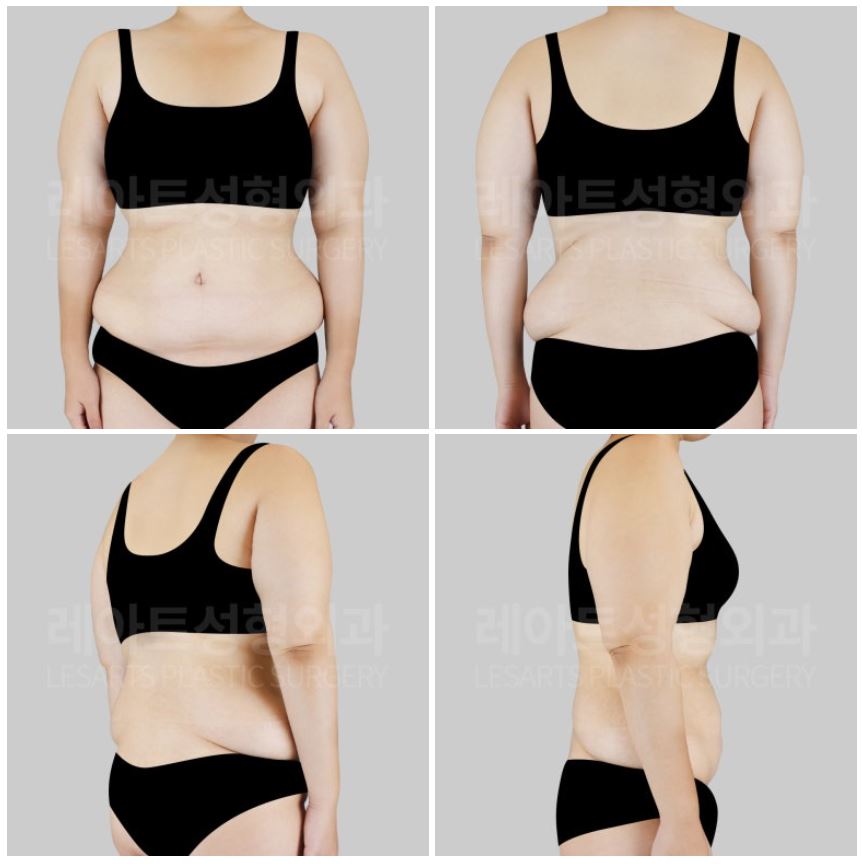
Preoperative Clinical Physical Evaluation
[Clinical History & Physical Assessment]
Prior history: Massive weight loss from 90 kg down to 60 kg 2 years prior → subsequent weight rebound to 68 kg
Brachial Region: Mixed presentation of redundant posterior subcutaneous fat and moderate cutaneous laxity
Abdominal Region: Predominance of lateral flank adiposity over central fullness, lateral love handle protrusion with mild lower abdominal skin loosening
[Staged 360-Degree Circumferential Liposuction Plan]
Stage 1: Circumferential 360-degree upper arms, axillary folds, scapular backline, and accessory axillary tissue
Stage 2: Comprehensive contouring of anterior abdomen, lateral flanks, and posterior love handles
[10-Month Postoperative Clinical Follow-Up]
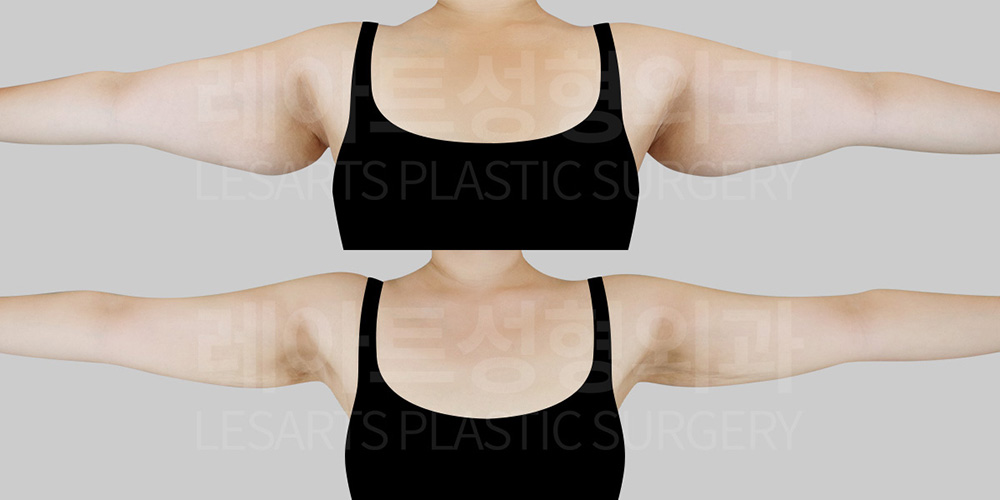
Lesarts Arm Liposuction Before & After - Posterior Arm Contour Improvement
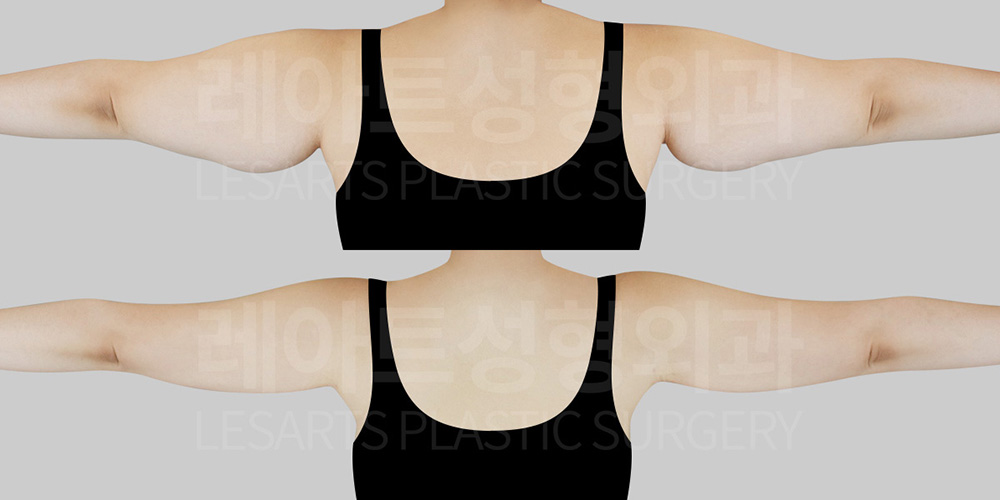
Contour Retraction in Sagging Arms - Dr. Pyongrim Choi, Lesarts
In the arms, significant “circumferential reduction” and improved “cutaneous retraction of redundant tissue” were simultaneously achieved,
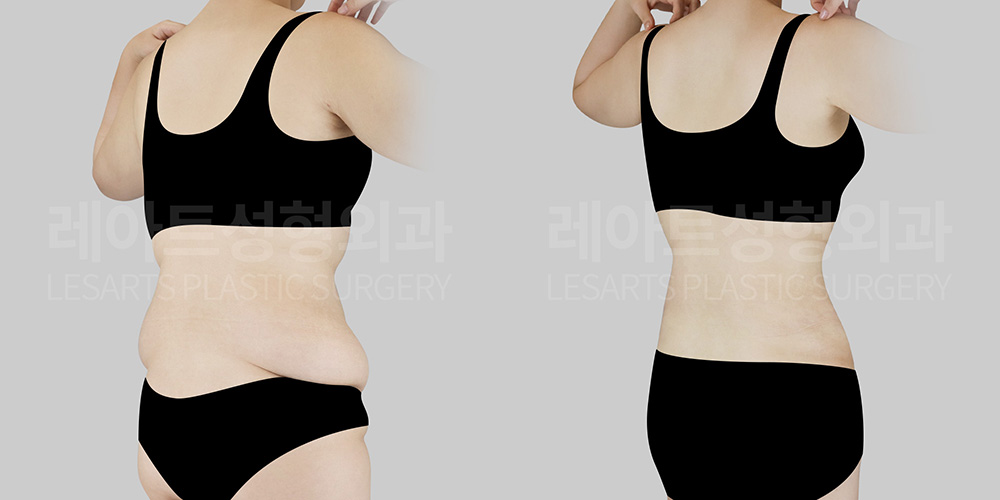
Improvement of Flank and Love Handle Sagging with Liposuction - Lesarts Plastic Surgery
while the torso demonstrates notable “reduction of lateral fullness” alongside the restoration of a “defined waistline curve.”
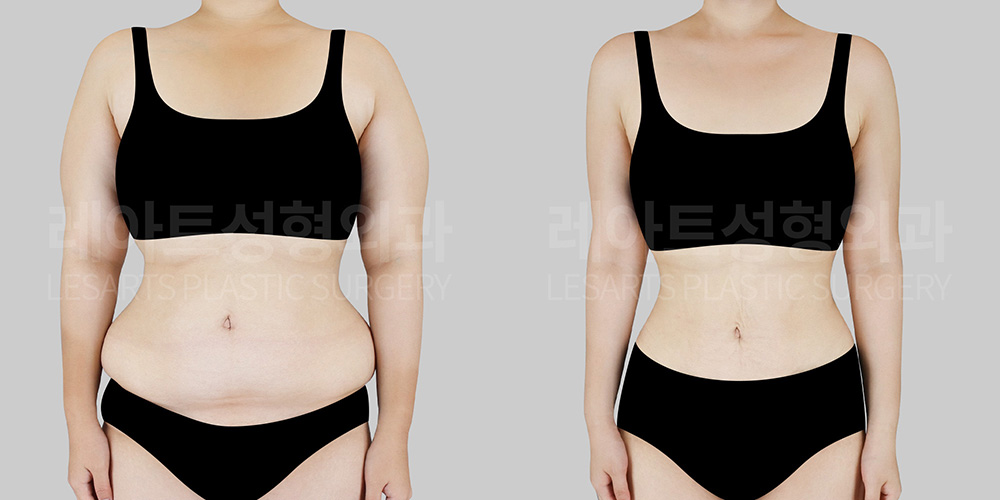
Contour Transitions After Arm & Abdominal Liposuction
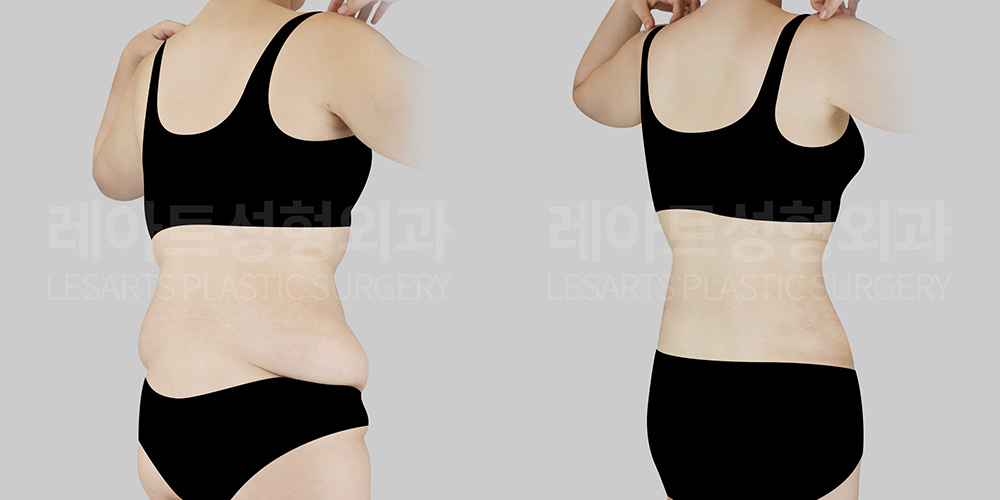
Before & After Posterior Brachial Contouring - Dr. Pyongrim Choi, Lesarts
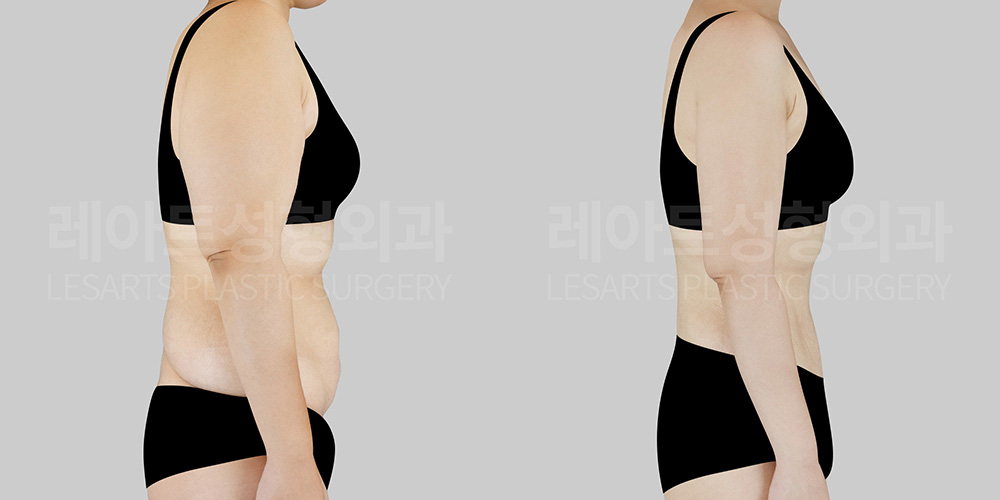
Circumferential Changes Before & After Liposuction - Dr. Pyongrim Choi, Lesarts
Comparing anterior and posterior body silhouettes demonstrates a visibly leaner clothing fit
without requiring further drastic systemic weight reduction.
The definitive technical factor in managing this challenging presentation was
delicate cannula manipulation to evenly contour superficial adipose tissue
without surface irregularities while promoting skin adherence,
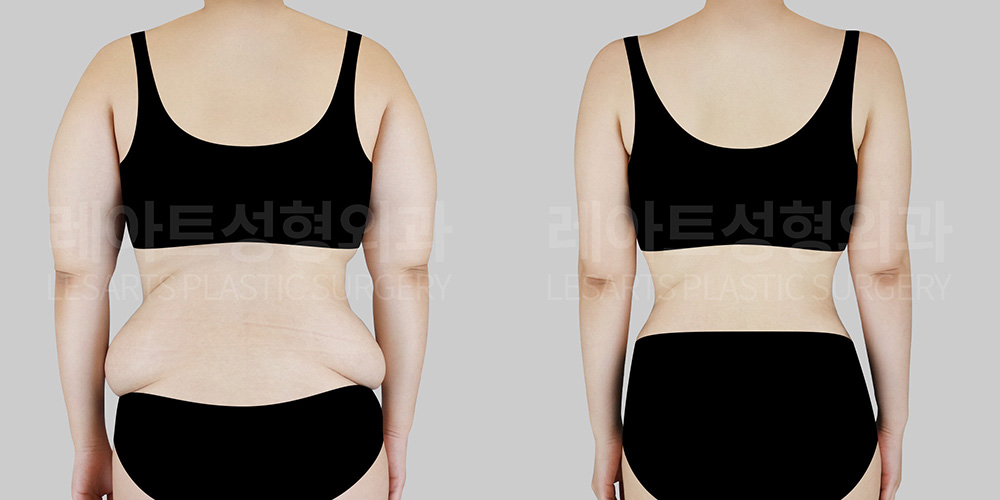
Before & After Arm Liposuction Comparison - Dr. Pyongrim Choi, Lesarts
coupled with integrated 360-degree design transitions along the
arms, axillae, scapular region, flanks, and pelvis,
achieving significant volume reduction and minimized laxity without surgical skin excision.
Certain localized contours resist resolution through standard caloric restriction and workouts alone.
Particularly in the posterior arms and lateral flanks,
tissue consists not only of adipocytes, but of subcutaneous fat and relaxed skin hanging together in a loose suspended state,
making localized bulk appear visually pronounced.
In such anatomical presentations, dedicated body contouring is not merely simple adipose removal;
it is a specialized procedure that rebalances structural lines,
promotes close adherence of overlying skin to muscular planes,
and refines overall body silhouettes.
To achieve meaningful circumferential reduction and skin retraction without the scarring associated with excisional lift surgery,
clinical outcome relies less on over-aggressive volume extraction
than on refined, delicate sculpting aligned with individual anatomical structures.
View More Lesarts Before & After Cases
Abdomen & Arm Liposuction FAQ
Q1. Why do the posterior upper arms and flanks (love handles)
resist weight loss and continue to sag even after significant diet-induced reduction?
A. These anatomical zones feature strong fibrous septa and higher lipolytic resistance, causing them to deplete
more slowly during systemic weight reduction. Furthermore, overstretched skin loses natural recoil capacity,
causing even small remaining adipose deposits to present as loose, pendulous tissue folds.
Q2. What is the key surgical technique to address sagging posterior arm tissue through liposuction without excisional lift surgery?
A. Evenly contouring both superficial and intermediate subcutaneous planes to facilitate 'skin retraction and adherence.'
Promoting close redraping of relaxed cutaneous tissue against deeper anatomical planes simultaneously
supports both circumferential reduction and laxity improvement.
Q3. Why should upper arm liposuction be performed alongside contouring of the axillae, accessory breast tissue, and scapular regions?
A. Treating the arm in isolation risks leaving abrupt step-offs along boundaries connecting to the shoulder, back, and axilla.
Sculpting contiguous anatomical areas simultaneously establishes smooth, uninterrupted lines,
visually enhancing arm length and slender proportions.
Q4. Under what conditions of abdominal laxity can liposuction alone yield satisfactory outcomes without requiring full abdominoplasty?
A. In patients without history of pregnancy or severe anterior pannus apron deformity,
where laxity is predominantly localized to the lateral flanks and posterior love handles, superficial liposuction
and skin redraping can restore a refined waist contour without excisional scarring.
Q5. Why is 'delicate cannula manipulation' more critical than 'total volume extracted' in post-weight loss liposuction involving laxity?
A. Indiscriminate, excessive volume extraction over compromised skin elasticity can induce surface irregularities
or worsen tissue descent. Delicate surgical control that sculpts the subdermal plane evenly to encourage smooth tissue adherence
and three-dimensional line restoration remains the determining factor in surgical outcomes.
Dr. Pyongrim Choi


Cases finding
similar to my profile
Customer Diagnostics


Select the surgery and
area you are interestedto see real
before andafter changes.


we
make you,
the art
Clinic hours
MON - FRI
10 am – 7pm
SAT
10 am – 4pm
Holiday
SUN, HOLIDAY
Location
Lesarts Moon Clinic Tower 4-5F, 40, Nonhyeon-ro 168-gil,
Gangnam-gu, Seoul, Republic of Korea

Medical institution name Lesarts Plastic Surgery
Address Lesarts Moon Clinic Tower 4-5F, 40, Nonhyeon-ro 168-gil, Gangnam-gu, Seoul, Republic of Korea
Representative Moon sung jun
