




Online Consultation
Please accurately enter the information below.
Quick Cost Consultation
Quick Consultation & Reservation
Cases finding
similar to my profile






Doctor's Note
Medical columns by our surgeons
Abdominoplasty | Male S-type Mini Abdominoplasty 4-Month Progress
2026-08-28
Abdominoplasty | Male S-type Mini Abdominoplasty 4-Month Progress
Q. When addressing rippled, redundant lower abdominal laxity that persists even after significant weight loss,
what are the benefits and clinical characteristics of S-type mini abdominoplasty that reduce concerns over umbilical scarring?
A. By omitting periumbilical incisions, it preserves natural native umbilical contours
while excising redundant lower abdominal skin folds to achieve a smooth, taut contour when sitting or bending forward.
Learn More About Lesarts Plastic Surgery Male Abdominoplasty
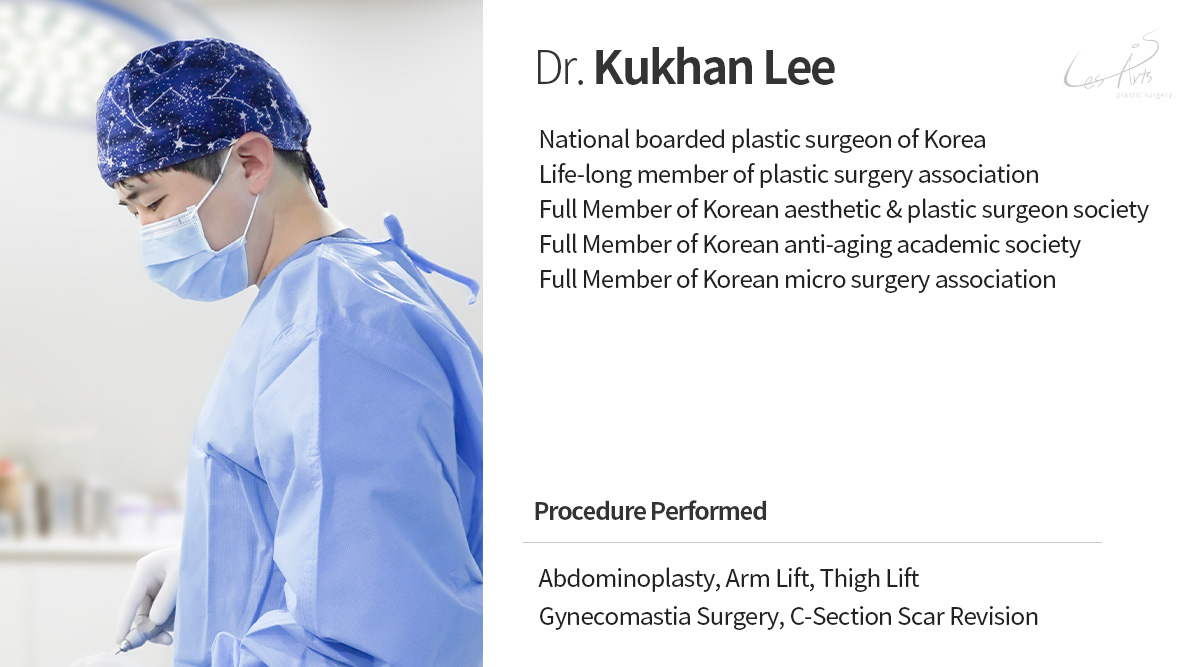
Hello, I am Dr. Kukhan Lee of Lesarts Plastic Surgery.
As temperatures rise and clothing becomes lighter, body contour concerns naturally become more prominent.
Particularly following successful weight reduction in men, failing to achieve the anticipated refined silhouette often leaves lingering frustration rather than satisfaction.
Persistent abdominal skin laxity and redundant loose folds frequently cannot be resolved through dietary weight loss alone,
leading many individuals to seek clinical consultation due to considerable frustration despite maintaining intensive workouts and rigorous nutritional discipline.
While abdominoplasty was once perceived primarily as a postpartum restorative procedure for women,
an increasing number of male patients are now seeking consultations to address post-weight-loss skin redundancy and establish a firmer upper body contour.
Below, we examine a clinical case of a male patient who underwent
S-type mini abdominoplasty to improve lower abdominal laxity and tissue folding following weight reduction.
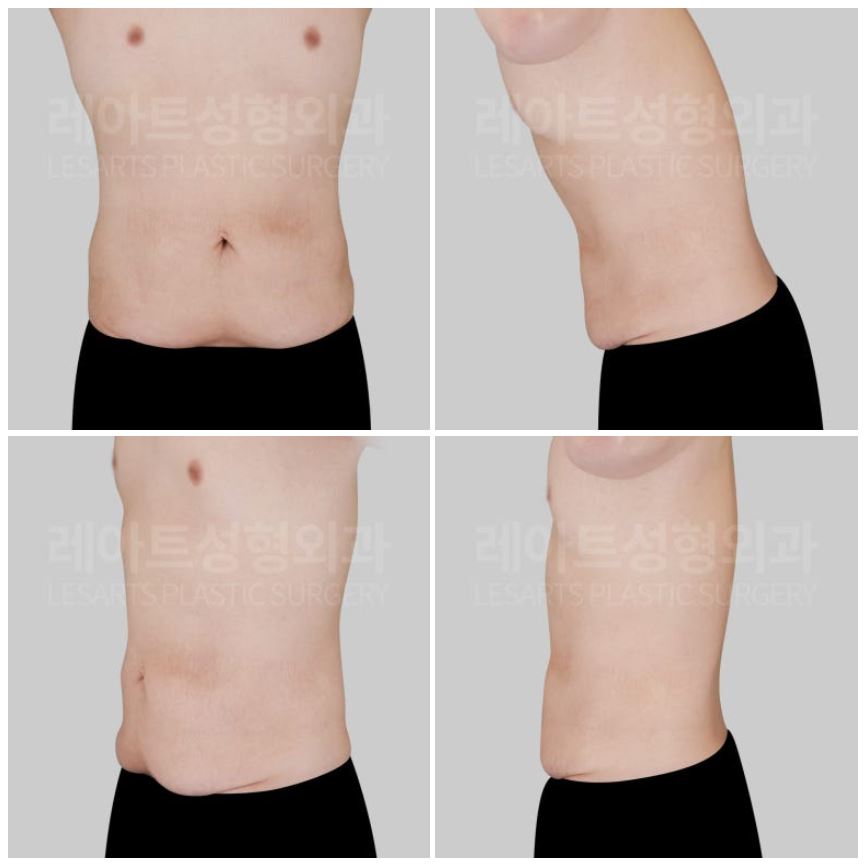
Preoperative Physical Evaluation for Male Abdominoplasty
The patient was a male in his 30s measuring 170 cm and 76 kg, with a history of severe pediatric obesity.
Having achieved substantial weight reduction in adulthood, he had consistently maintained his current weight, yet despite sustained resistance training and dietary control,
the loss of lower abdominal dermal elasticity and redundant skin laxity remained completely unchanged, presenting a major ongoing concern.
Because the overstretched skin formed a noticeable outward lower abdominal bulge, he experienced disrupted clothing fit in regular daily attire,
and wearing form-fitting athletic wear prominently accentuated the isolated protrusion of the lower abdomen, creating significant psychological stress.
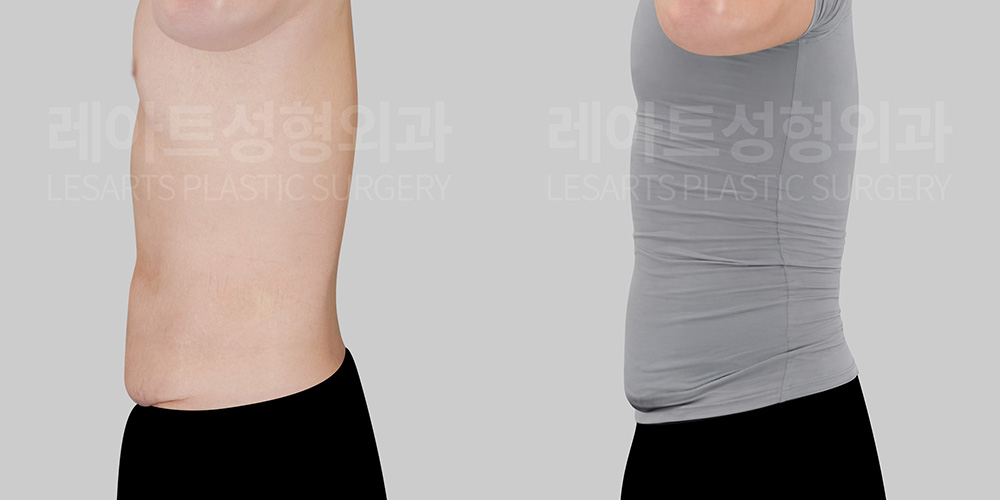
Preoperative T-Shirt Fit in Male Abdominoplasty - Lesarts Plastic Surgery
On physical examination, generalized excessive subcutaneous adipose accumulation was not prominent across the abdomen.
However, rippled, creased cutaneous redundancy was clearly apparent over the infraumbilical wall,
with lower abdominal laxity accompanied by mild supraumbilical skin loosening.
Furthermore, supraumbilical skin descending over the navel gave the umbilicus a structurally low-set appearance.
To comprehensively address generalized laxity and reposition the umbilicus, an M-type full abdominoplasty represented a clinically suitable consideration.
However, the patient experienced relatively little subjective distress regarding upper abdominal laxity or current umbilical position,
while harboring considerable hesitation toward the periumbilical scar inherently required in full abdominoplasty.
In particular, concern that a reconstructed umbilicus might appear unnatural or artificial served as a decisive factor in choosing the surgical modality.
Accordingly, S-type mini abdominoplasty preserving native umbilical architecture was selected as an optimal tailored approach.
We clearly confirmed that the patient's primary concern—lower abdominal skin redundancy and protrusion—could be effectively refined,
while maintaining thorough preoperative consultation regarding the anatomical limits and expected morphological shifts of a mini abdominoplasty.
Because redundant skin extended laterally beyond the central infraumbilical zone toward the flanks, preventing lateral step-offs or dog-ear deformities required
a transverse incision length slightly longer than conventional mini procedures; furthermore, because tissue is advanced inferiorly without periumbilical release,
we thoroughly explained the structural feature wherein natural umbilical morphology is preserved, yet its relative vertical position may appear slightly lower postoperatively.
Ultimately, S-type mini abdominoplasty was performed,
combined with concurrent abdominal liposuction to sculpt a smoother transition and optimize tissue dissection efficiency.
Male Mini Abdominoplasty 4-Month Progress
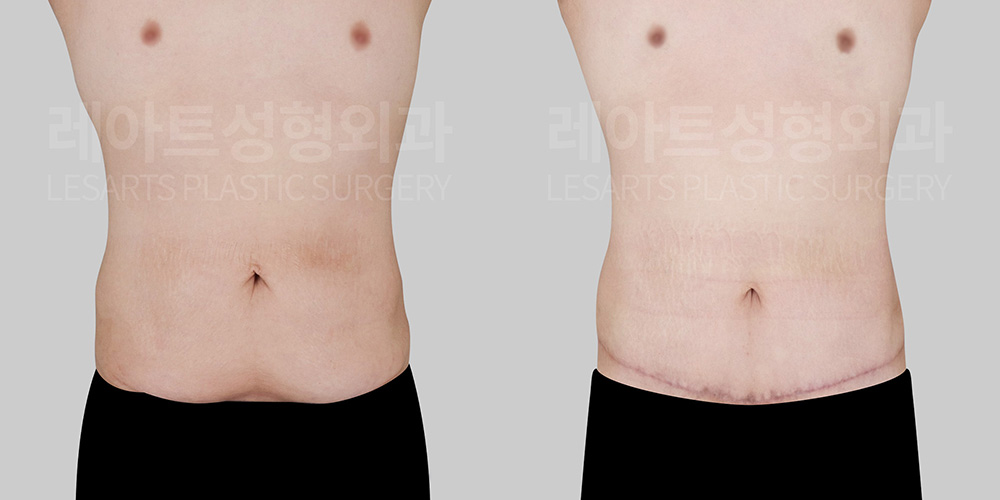
Before & After Male Mini Abdominoplasty - Dr. Kukhan Lee, Lesarts Plastic Surgery
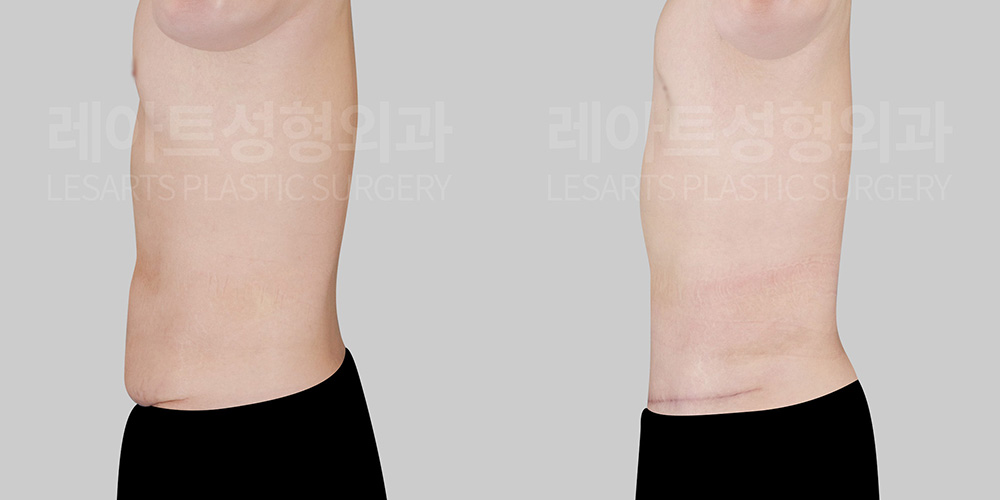
Abdominoplasty Clinical Outcomes - Dr. Kukhan Lee, Lesarts Plastic Surgery
Because this was not a case of primary obesity involving heavy subcutaneous fat aspiration, overall waistline circumferential reduction appears relatively moderate.
However, the central clinical improvement lies in the clean excision of rippled, overlapping lower abdominal skin,
establishing a firmer, smoother, and more masculine lower abdominal contour.
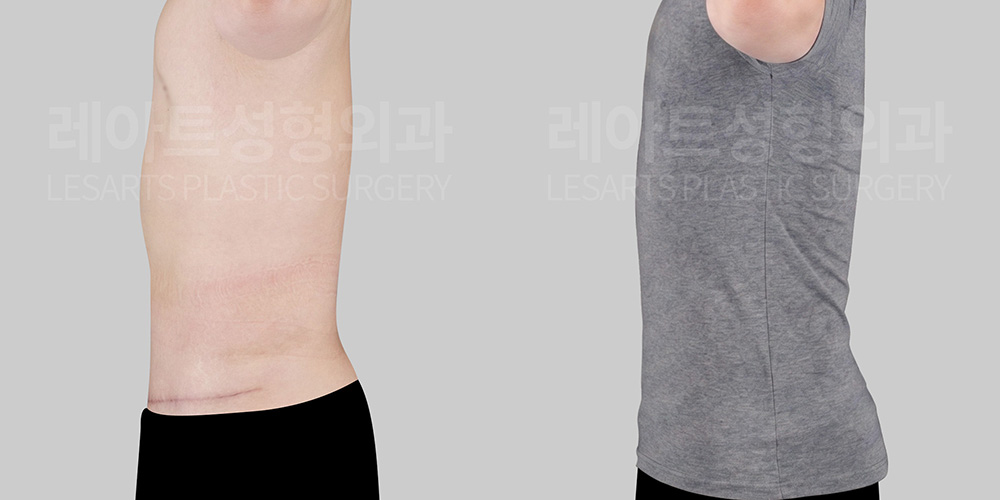
Postoperative T-Shirt Fit in Male Mini Abdominoplasty - Lesarts Plastic Surgery
In particular, the redundant folding that previously bunched thickly when bending forward or sitting in a chair has been tautly resolved,
substantially alleviating the aesthetic frustration experienced during workouts and daily wear.
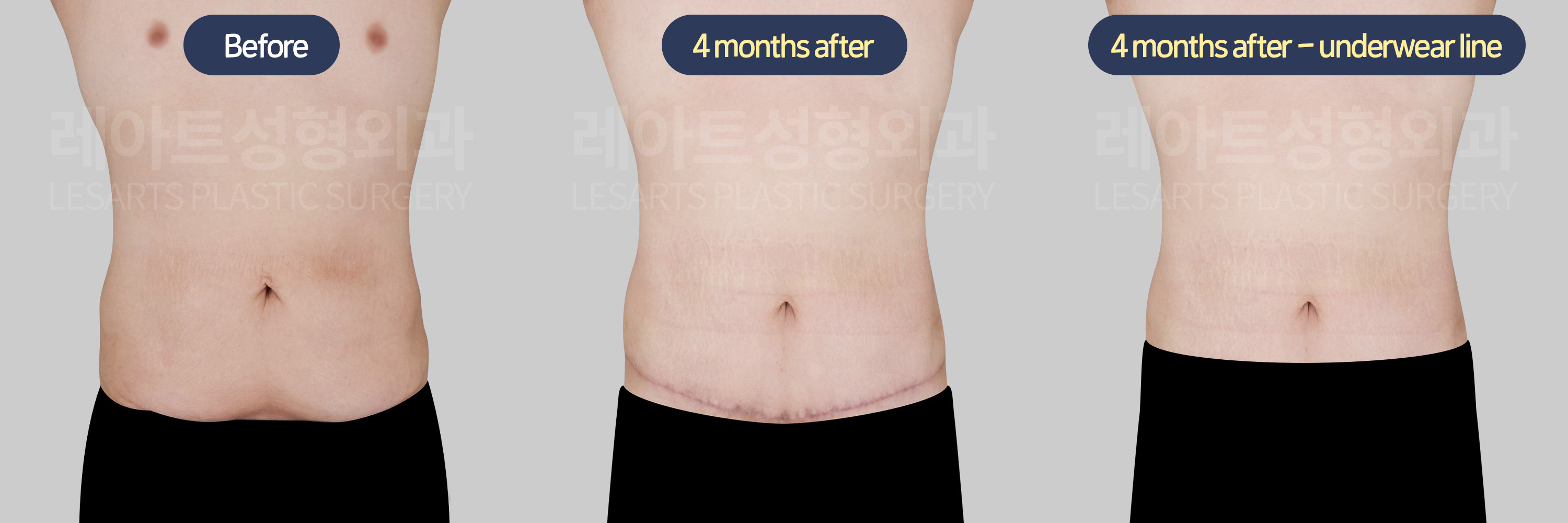
Male Mini Abdominoplasty Incision Location - Board-Certified Plastic Surgeon Dr. Kukhan Lee
The resulting transverse incision line extends laterally toward the flanks, approaching the scope seen in extended L-type procedures.
This extension represents an essential surgical design to minimize lateral step-offs and close the contour evenly without dog-ear puckering.
Additionally, the slightly more inferior visual position of the umbilicus relative to baseline reflects a standard structural characteristic of umbilicus-sparing S-type mini abdominoplasty.
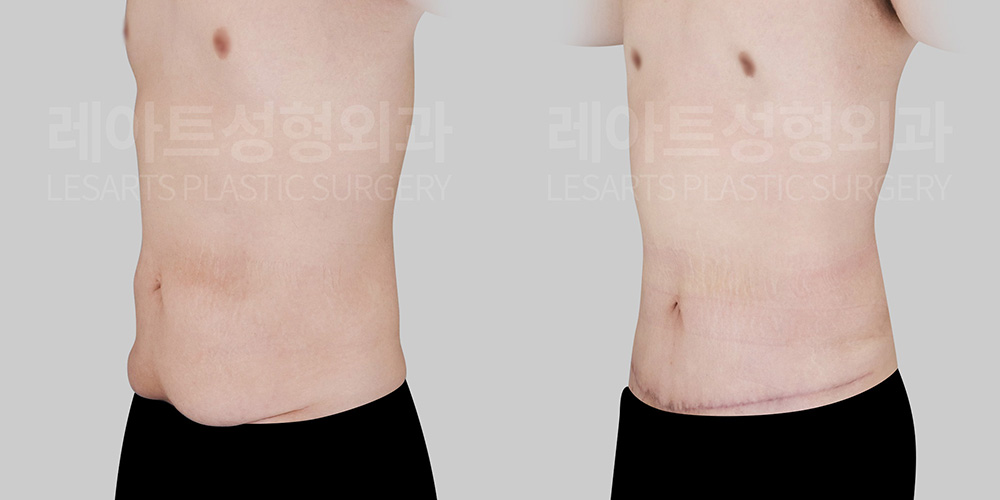
Male Abdominal Skin Redundancy Correction - Dr. Kukhan Lee, Lesarts
At 4 months postoperatively, the patient is progressing through active scar maturation,
where mild erythema and temporary pigmentary changes along the lower transverse incision remain visible.
Surgical scars undergo natural remodeling over 6 months to over a year, gradually softening and blending with surrounding skin tones,
and consistent combination with clinical scar lasers and topical regimens supports favorable long-term scar maturation.
In male massive weight loss cases, overstretched cutaneous tissue that has lost internal elasticity rarely regains spontaneous contractility through independent exercise or diet.
Particularly when dermal elastic fibers have undergone structural disruption, non-surgical energy devices yield limited tightening effects.
Where structural cutaneous redundancy rather than adipose volume forms the primary cause of contour distortion,
direct surgical excision of excess skin alongside redraping of the abdominal wall provides a definitive anatomical solution.
Optimal abdominoplasty techniques (M-type full vs. S-type mini) vary according to adipose distribution, degree of laxity, anatomical extent of redundancy, and individual scar preferences.
Rather than relying on unguided self-assessment, a detailed evaluation with a board-certified plastic surgeon is essential to determine the safest surgical plan,
clarifying realistic contour expectations and inherent procedural limits.
Abdominoplasty FAQ
Q1. Why does lower abdominal laxity persist in men despite successful weight loss and continued fitness regimens?
A. Dermal elastic recoil is often structurally compromised from prior pediatric obesity or rapid weight expansion.
Once underlying adipose volume depletes, overstretched cutaneous tissue cannot retract on its own, presenting as persistent rippled folds.
Q2. What factors led to selecting S-type mini abdominoplasty over M-type full abdominoplasty in this case?
A. The patient had high reluctance regarding periumbilical scarring and potential aesthetic distortion of a newly created navel.
When lower abdominal redundancy is the primary concern, umbilicus-sparing mini abdominoplasty serves as a suitable clinical alternative.
Q3. Why was the transverse incision extended laterally toward the flanks in S-type mini abdominoplasty?
A. Because skin laxity extended broadly toward the iliac crests and flanks, a restricted incision could lead
to dog-ear puckering or lateral step-offs; extending the incision ensures a flat, smooth contour transition.
Q4. What anatomical trade-offs should be anticipated following S-type mini abdominoplasty?
A. Because tissue is redraped downward without releasing or transposing the umbilicus,
the native umbilical architecture is preserved, though its vertical position may appear slightly lower postoperatively.
Q5. What is the expected scar presentation at 4 months, and what post-op management is recommended?
A. Mild erythema and temporary hyperpigmentation represent standard healing findings at 4 months.
Ongoing use of scar silicone gels, hydration, and periodic dermatologic laser treatments will support progressive remodeling into a softer, paler scar.
Dr. Kukhan Lee


Cases finding
similar to my profile
Customer Diagnostics


Select the surgery and
area you are interestedto see real
before andafter changes.


we
make you,
the art
Clinic hours
MON - FRI
10 am – 7pm
SAT
10 am – 4pm
Holiday
SUN, HOLIDAY
Location
Lesarts Moon Clinic Tower 4-5F, 40, Nonhyeon-ro 168-gil,
Gangnam-gu, Seoul, Republic of Korea

Medical institution name Lesarts Plastic Surgery
Address Lesarts Moon Clinic Tower 4-5F, 40, Nonhyeon-ro 168-gil, Gangnam-gu, Seoul, Republic of Korea
Representative Moon sung jun
