




Online Consultation
Please accurately enter the information below.
Quick Cost Consultation
Quick Consultation & Reservation
Cases finding
similar to my profile






Doctor's Note
Medical columns by our surgeons
Gynecomastia | Surgery in the Summer?! - Is Summer Surgery Really Safe?
2026-08-28
Gynecomastia | Surgery in the Summer?! - Is Summer Surgery Really Safe?
Q. Does undergoing gynecomastia surgery in the summer increase the risk of delayed wound healing, infection, or scarring due to heat and sweat?
What is the medical rationale showing there is no clinical reason to avoid summer surgery?
A. Thanks to climate-controlled clinical environments, waterproof dressings, and advanced functional compression garments,
there is no medical reason to expect compromised wound healing simply due to the summer season.
Learn More About Lesarts Gynecomastia Surgery
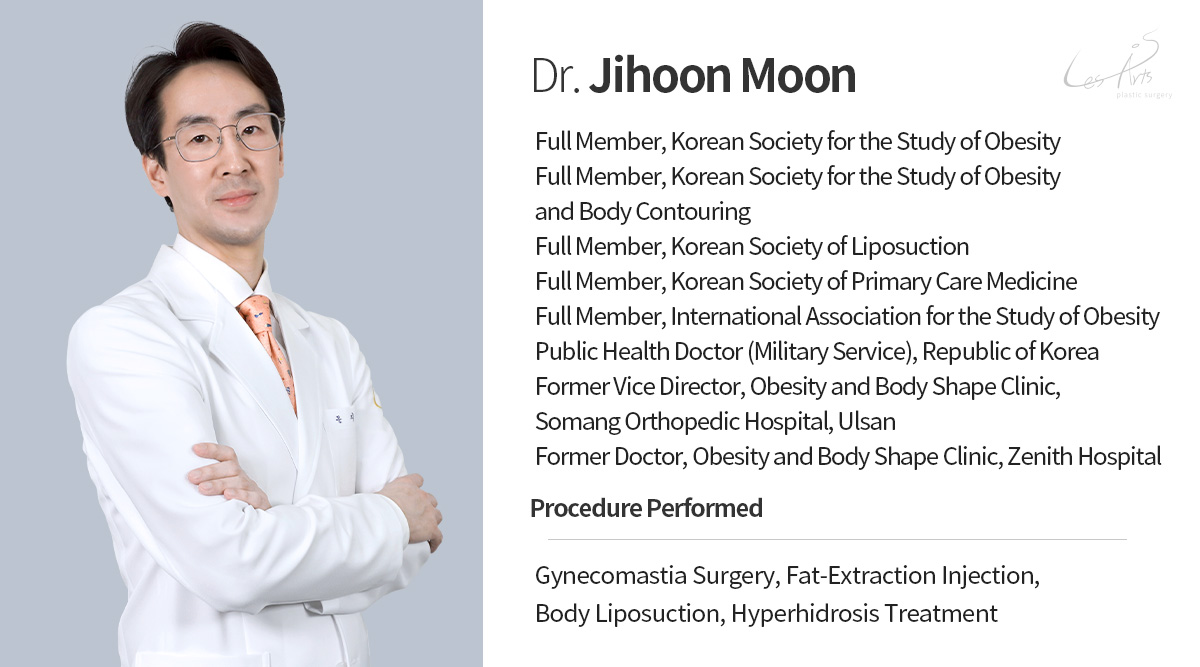
Hello, I am Dr. Jihoon Moon of Lesarts Plastic Surgery.
As we enter the early days of summer, there is a question I hear quite frequently during consultations:
“Doctor, with the weather so hot, won't my surgical incisions heal poorly or become inflamed if I have surgery now?”
“I sweat quite heavily by nature; shouldn't I postpone gynecomastia surgery until cooler weather?”
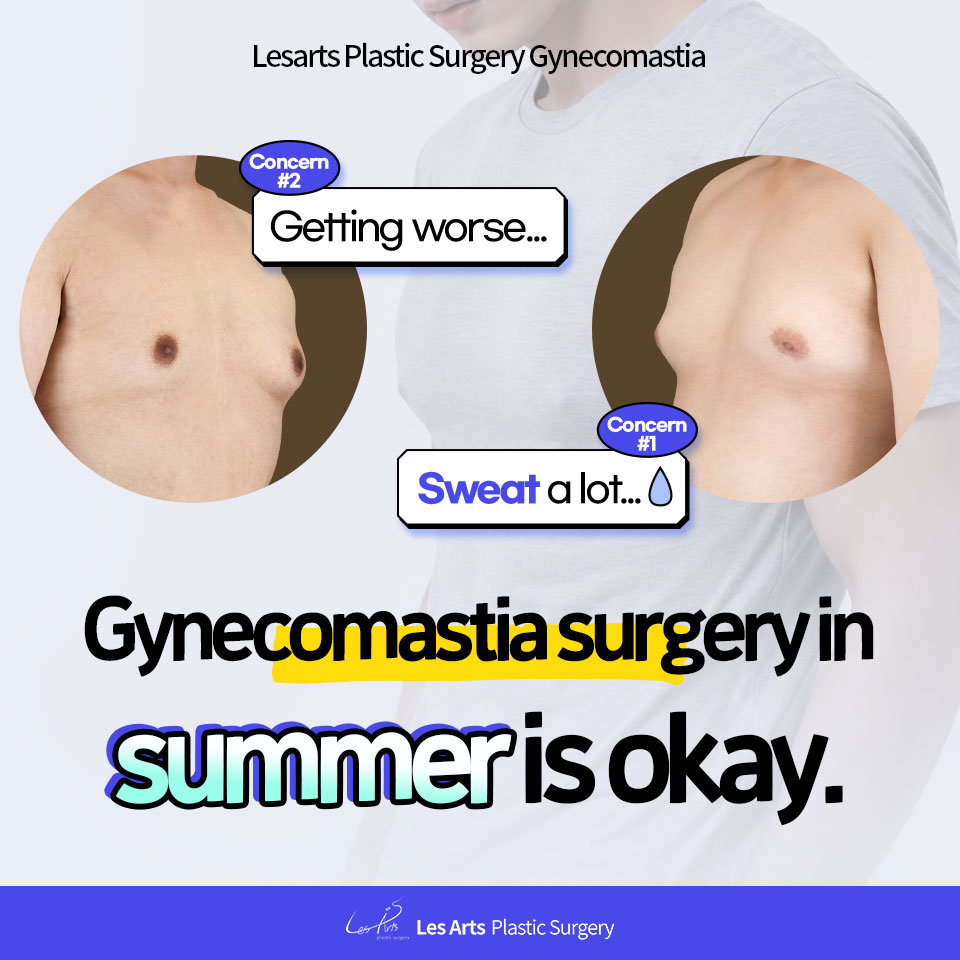
To address this directly, there is no medical reason to avoid undergoing gynecomastia surgery during the summer months.
This means there is no clinical need to delay surgery until autumn or winter and prolong unnecessary aesthetic stress simply because of seasonal timing.
In this post, I will examine the clinical realities behind common misconceptions surrounding summer gynecomastia surgery from a plastic surgeon's perspective.
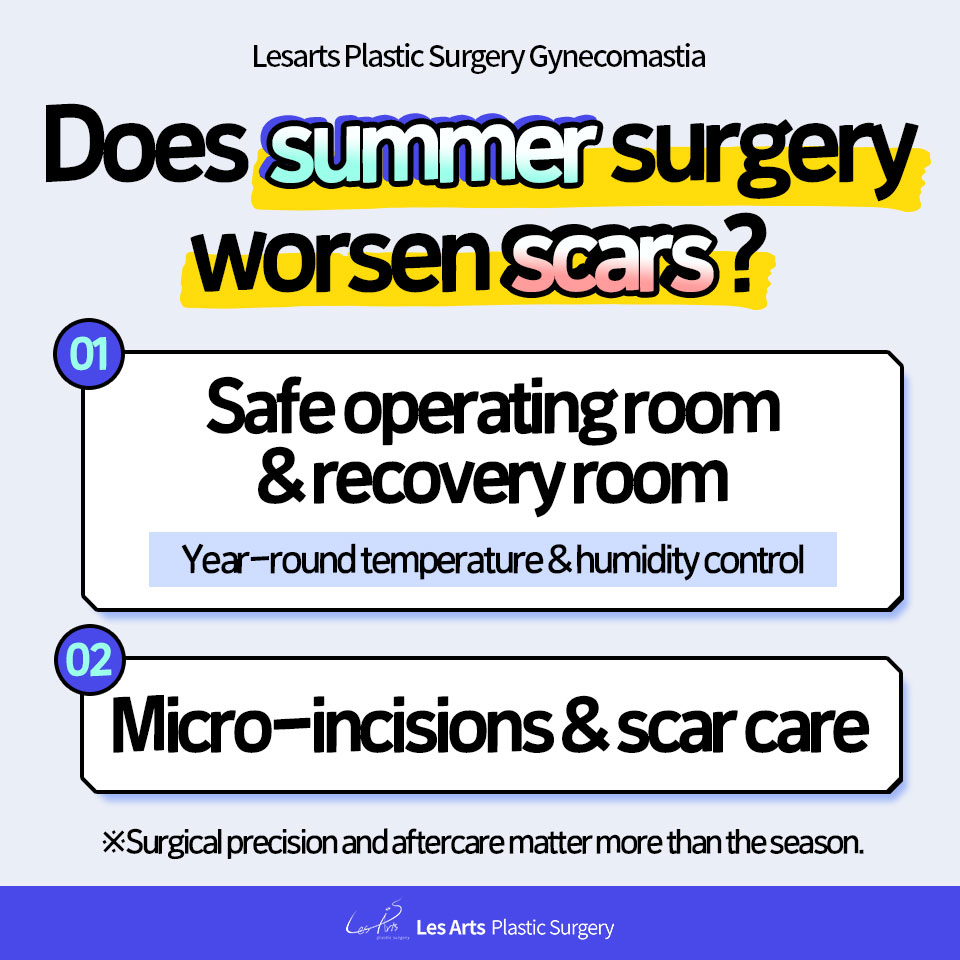
1. “Do incisions heal worse in summer?”: Outdated Beliefs Disproven by Modern Medicine
The primary concern for most patients involves potential inflammation, infection, and surgical scarring.
In eras past, when air conditioning, environmental climate control, and modern hygiene standards were limited, high summer heat and humidity could indeed present challenges for wound recovery.
However, modern surgical settings operate under entirely different clinical standards.
Strictly Regulated Sterile Hospital Environments
Operating rooms, recovery suites, and clinical wards are maintained year-round within sterile, constant-temperature, and humidity-regulated systems.
Surgical procedures are conducted in an optimal, secure setting regardless of external weather conditions.
Advances in Surgical Technology and Antiseptic Protocols
Contemporary male gynecomastia surgery is performed with precision through minimal peri-areolar incisions, supported by targeted antibiotic therapy and medical-grade waterproof dressings.
Wound protection methods allow patients to shower safely within 2 to 3 days postoperatively,
rendering the incidence of wound complications or infection related to external ambient humidity extremely low.
Consequently, surgical recovery is determined not by the season,
but by how diligently the patient adheres to postoperative instructions (particularly early cessation of alcohol and smoking),
and how meticulously the plastic surgeon excises glandular and adipose tissue while minimizing surrounding tissue trauma.
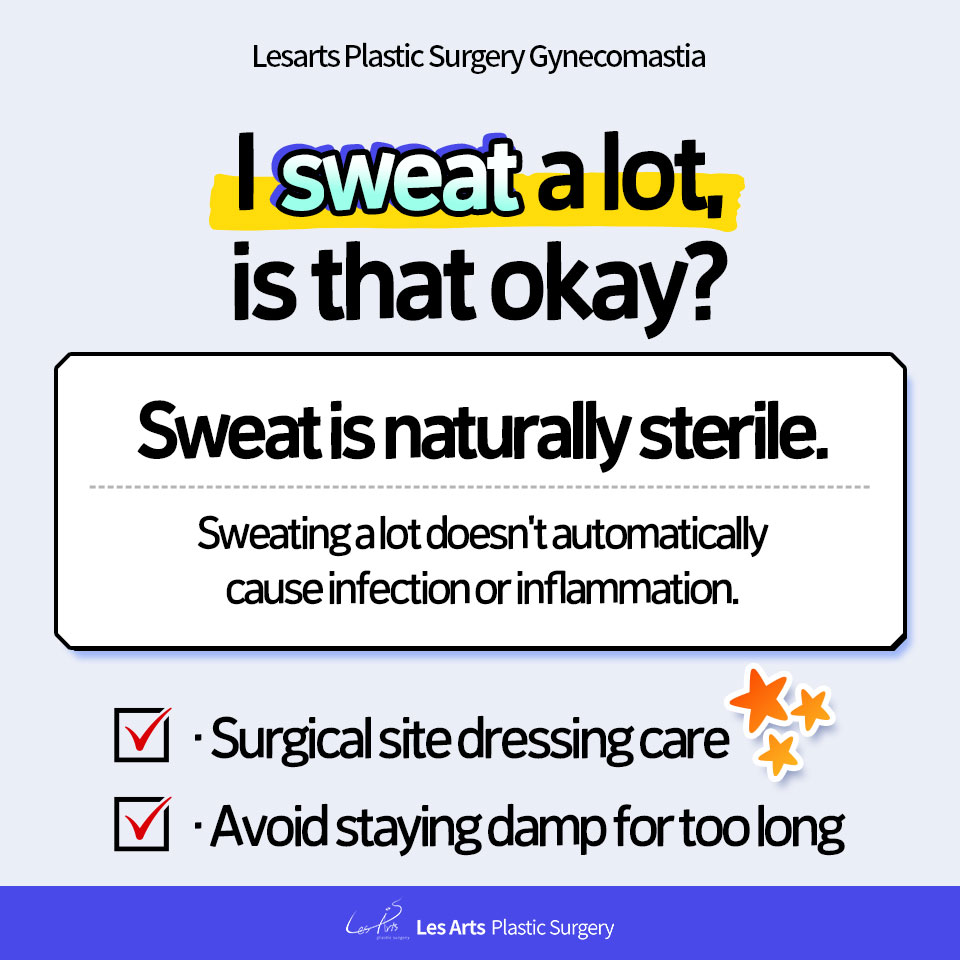
2. “What If I Sweat Heavily or Have Hyperhidrosis?”: Thermoregulation and Post-Op Care Facts
During consultations, some patients express reluctance because they naturally run warm and perspire significantly.
For individuals prone to higher body heat or active perspiration,
wondering whether sweat reaching the surgical site could trigger inflammation
is a completely understandable concern.
However, this is also readily and safely managed through modern clinical wound protocols.
※ Medical Fact Check ※
Sweat secreted by the human body is inherently a sterile fluid upon production.
Perspiration itself does not directly cause bacterial colonization or surgical site infection.
A concern arises only if prolonged perspiration causes waterproof dressings to detach,
or if moisture remains trapped in unventilated conditions for extended durations, encouraging resident cutaneous flora to proliferate.
For patients prone to heavy sweating, specialized dressings offering breathable skin adhesion and moisture sealing are utilized,
accompanied by detailed guidance on proper hygiene management should perspiration occur during daily activities.
Therefore, being naturally prone to perspiration is neither a medical contraindication to gynecomastia surgery
nor a factor that inherently elevates complication rates.
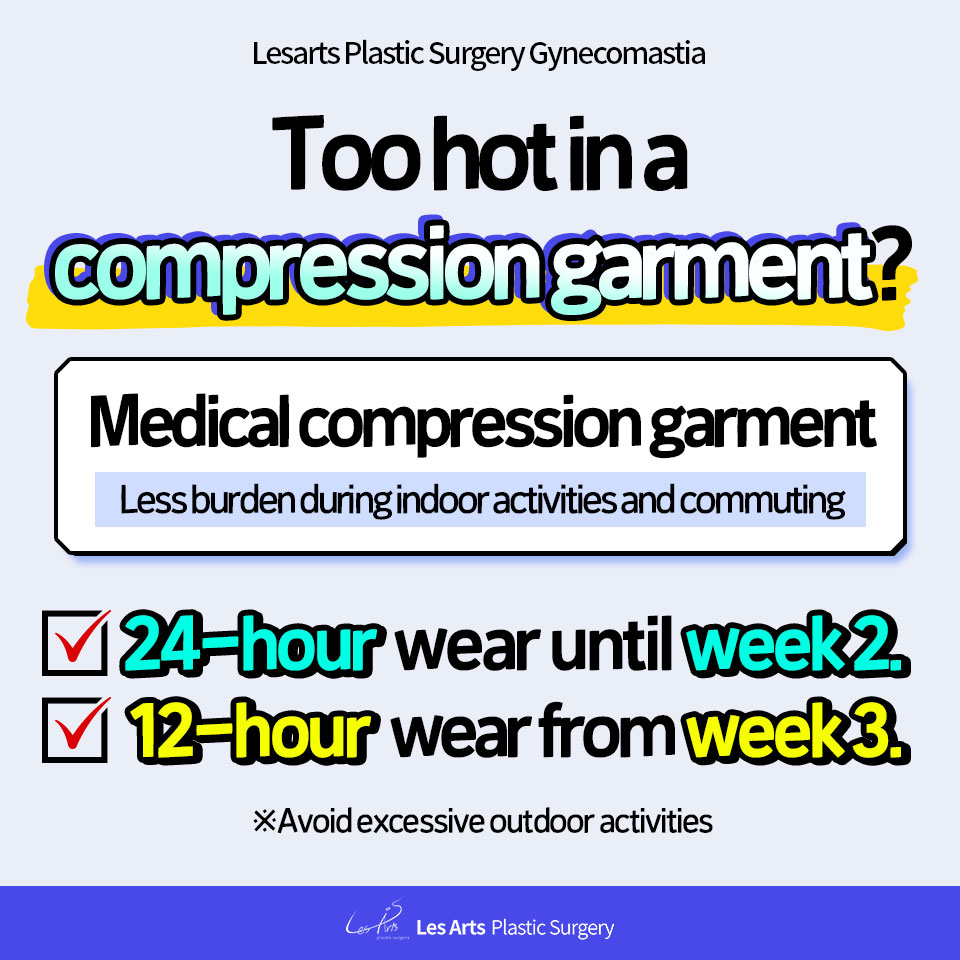
3. Compression Garment Considerations: Managed Through Indoor Climate Control and Technical Textiles
Another practical factor leading to seasonal hesitation is
the daily discomfort of wearing a compression garment for approximately one month post-surgery during warmer weather.
Wearing compressive garments in midsummer heat can understandably seem inconvenient.
However, most indoor spaces modern professionals occupy (workplaces, homes, transit systems, commercial facilities) are fully climate-controlled,
meaning that provided prolonged outdoor exertion is avoided, garment-related warmth is easily managed within comfortable indoor settings.
Furthermore, while 24-hour wear is advised during the initial 2 weeks,
usage can often be transitioned to roughly half-day wear starting from week 3 based on clinical progress, noticeably easing daily wear demands.
Modern medical compression garments prescribed for gynecomastia are constructed from breathable, moisture-wicking technical textiles,
minimizing skin fatigue even in summer while drying rapidly after laundering.
This significantly mitigates odor and perspiration accumulation.
Moreover, compared to thick, rigid winter outerwear that exerts friction, lightweight summer cotton garments can be worn comfortably over the vest,
presenting a notable advantage by reducing extraneous mechanical friction and pressure against the surgical site.

4. Summary: No Need to Endure Lightweight Clothing Concerns by Postponing Care
For men experiencing chest projection and palpable glandular tissue, summer often brings heightened aesthetic stress.
While others comfortably wear light t-shirts,
layering heavy clothing, wearing only dark tops to conceal the chest, and adopting a rounded posture
creates profound psychological self-consciousness that can weigh heavily on daily life.
Reluctance toward summer surgery is largely an outdated preconception lacking modern medical basis.
When precise surgical care is delivered within controlled sterile operating suites
and postoperative guidelines are diligently observed, the external season has no negative bearing on clinical outcomes or safety profiles.
“The optimal timing for surgery is determined not by external seasons, but by the moment a patient decides to address their personal aesthetic concern.”
Postponing treatment until autumn or winter simply because of warmer weather unnecessarily extends months of emotional and physical discomfort,
especially when summer vacation schedules often afford convenient recovery windows.
Rather than delaying care, addressing the condition now can serve as a dependable turning point
to regain comfort and confidence in summer attire.
Gynecomastia FAQ
Q1. Why is the idea that "summer surgery leads to inflammation and poor healing" considered an unfounded myth in modern medicine?
A. Modern clinical environments maintain continuous temperature and humidity regulation year-round,
and refined micro-incision techniques, targeted medical therapy, and breathable waterproof dressings
render the likelihood of temperature-related wound complications extremely low.
Q2. Is it safe for patients who naturally sweat heavily to undergo gynecomastia surgery in the summer?
A. Yes, it is safe. Freshly secreted sweat is sterile and does not inherently cause surgical site infection.
By utilizing breathable, waterproof dressings and adhering to practical hygiene protocols following activity,
patients can recover safely without elevated infection risks.
Q3. How can the warmth and perspiration associated with post-op compression garments be managed in summer?
A. Most indoor settings are air-conditioned, making ambient temperature manageable during daily routines.
Additionally, modern compression garments are crafted from quick-drying, moisture-wicking technical textiles, and wear time can often be tapered to half-days starting from week 3.
Q4. What unexpected benefit does lightweight summer clothing offer during postoperative recovery?
A. Unlike heavy, stiff winter outerwear that can rub against the torso,
summer lightweight clothing minimizes unnecessary friction and physical constriction over the surgical area.
Q5. What are the key factors determining the clinical outcome and success of gynecomastia surgery?
A. Success depends not on the calendar season, but on meticulous surgical technique that minimizes tissue trauma,
alongside patient adherence to post-care protocols, particularly early abstinence from alcohol and tobacco and proper garment compliance.
Dr. Jihoon Moon


Cases finding
similar to my profile
Customer Diagnostics


Select the surgery and
area you are interestedto see real
before andafter changes.


we
make you,
the art
Clinic hours
MON - FRI
10 am – 7pm
SAT
10 am – 4pm
Holiday
SUN, HOLIDAY
Location
Lesarts Moon Clinic Tower 4-5F, 40, Nonhyeon-ro 168-gil,
Gangnam-gu, Seoul, Republic of Korea

Medical institution name Lesarts Plastic Surgery
Address Lesarts Moon Clinic Tower 4-5F, 40, Nonhyeon-ro 168-gil, Gangnam-gu, Seoul, Republic of Korea
Representative Moon sung jun
