




Online Consultation
Please accurately enter the information below.
Quick Cost Consultation
Quick Consultation & Reservation
Cases finding
similar to my profile






Doctor's Note
Medical columns by our surgeons
Extended Abdominoplasty | Postpartum Abdominal Laxity & Rectus Diastasis: 3-Month Progress with L-type Surgery
2026-08-31
Extended Abdominoplasty | Postpartum Abdominal Laxity & Rectus Diastasis: 3-Month Progress with L-type Surgery [Doctor's Note by Dr. Kukhan Lee]
If postpartum abdominal laxity extends toward the flanks, is extended abdominoplasty indicated?
The surgical scope of abdominoplasty is not determined solely
by the degree of lower abdominal sagging alone.
Clinical evaluation must simultaneously assess upper and lower abdominal laxity, rectus diastasis,
and whether tissue redundancy extends across the pelvis toward the lateral flanks.
In this clinical case, extensive tissue laxity warranted a coordinated surgical plan
combining L-type extended abdominoplasty, rectus plication,
and targeted abdominal liposuction.
▶ View Lesarts Abdominoplasty Clinical Cases
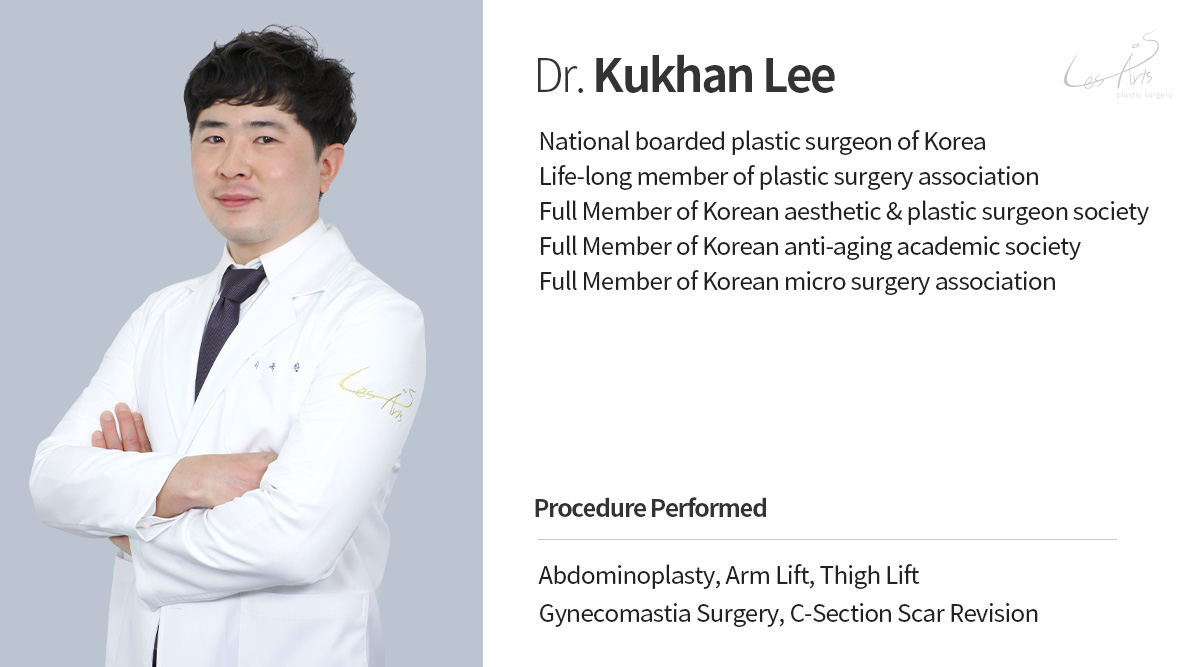
Hello, I am Board-Certified Plastic Surgeon Dr. Kukhan Lee.
Throughout pregnancy and childbirth,
a woman's abdomen undergoes substantial physiological and anatomical changes.
Even after reducing weight gained during pregnancy,
the overstretched skin and underlying abdominal musculature
often do not contract back to their baseline condition.
Particularly when consistent exercise and nutritional discipline fail to resolve
downward skin laxity or a rounded, protruding anterior abdominal contour,
the underlying issue is often more than simple adiposity.
This presentation typically reflects the combined influence of structural skin redundancy
and diastasis recti (separation of the rectus abdominis muscles) resulting from pregnancy.
Below, we review the 3-month clinical follow-up of a patient who underwent
L-type extended abdominoplasty to correct generalized abdominal skin laxity
and rectus diastasis following substantial gestational weight gain.
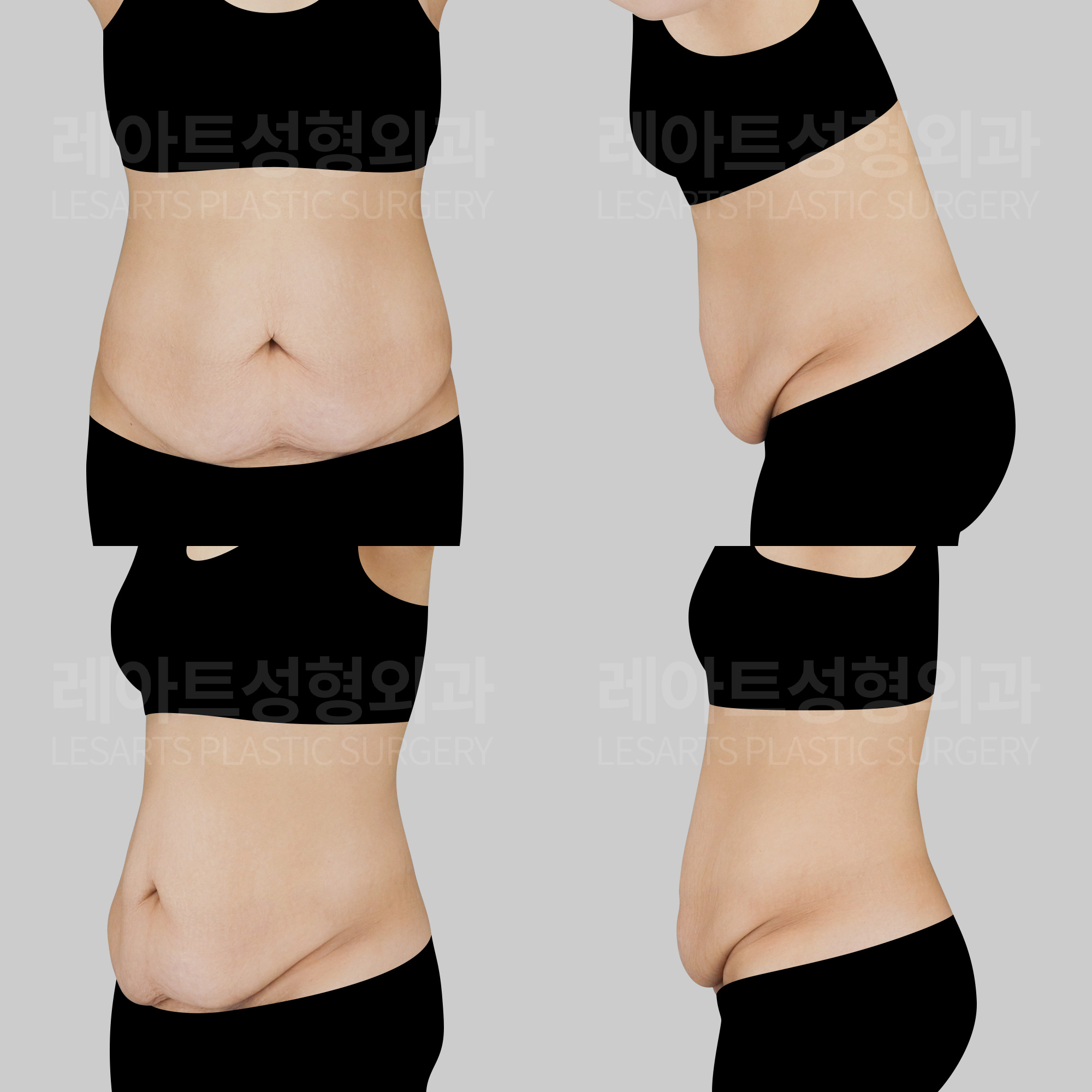
[Residual Abdominal Skin Laxity Following Three Spontaneous Vaginal Deliveries]
Patient Profile
Age: 30s
Height: 164 cm
Weight: 64 kg
Obstetric History: Three spontaneous vaginal deliveries
Peak Gestational Weight: 99 kg
The patient had delivered three children,
with body weight peaking at 99 kg during pregnancy.
Through disciplined postpartum exercise and dietary control,
she successfully reduced her weight to 64 kg at initial presentation, with plans
for further gradual weight reduction.
Nevertheless, generalized abdominal cutaneous laxity, prominent skin folds,
and redundant tissue bulging over the bikini line persisted unchanged.
The rounded, protruding contour that remained unresponsive to fat loss,
alongside overall silhouette imbalance,
represented her foremost clinical and aesthetic concerns.
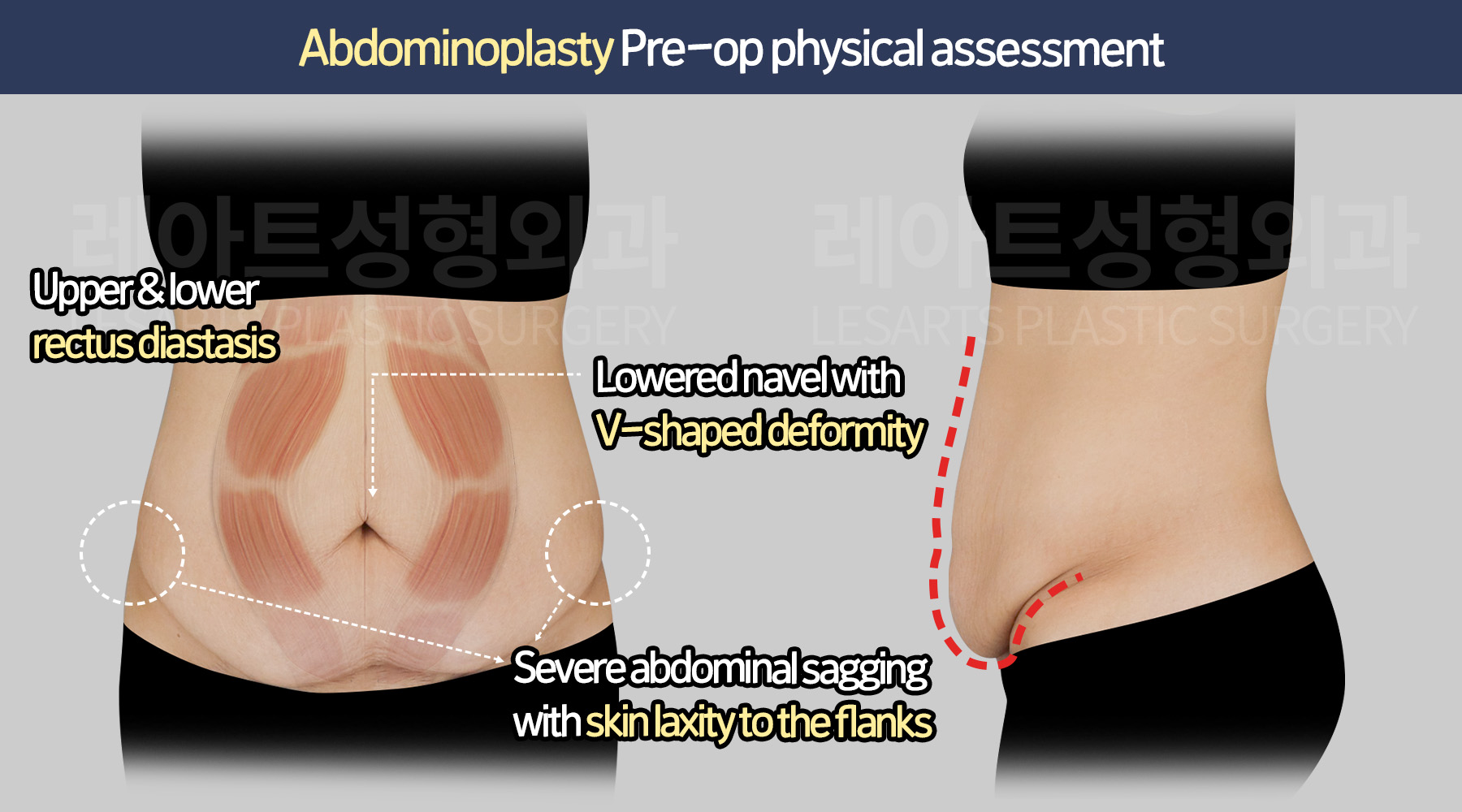
[Preoperative Physical Assessment Findings]
Physical examination revealed substantial cutaneous laxity
involving both the supraumbilical and infraumbilical regions.
As upper abdominal skin descended inferiorly,
the umbilicus had also displaced downward from its ideal anatomical position.
Redundant periumbilical skin hooded the navel,
distorting it into a flattened, inverted-V ('ㅅ') configuration.
In the lower abdomen, loose skin hung over the bikini line,
and the redundancy extended laterally past the iliac crests
into the flanks.
Additionally, marked rectus diastasis caused the entire abdominal wall
to protrude forward in a rounded silhouette.
Musculofascial separation was clearly palpable
across both the upper and lower abdomen.
Rationale for Selecting L-type Extended Abdominoplasty
The surgical strategy was designed not merely to resect lower abdominal skin,
but to comprehensively resolve multi-regional laxity and rebalance torso proportions.
First, to eliminate thickness discrepancies and smooth the final contour transition,
concurrent abdominal liposuction was incorporated.
Most importantly, because the patient's skin laxity extended beyond the infraumbilical zone
laterally across both iliac crests toward the flanks,
an L-type extended abdominoplasty was determined clinically optimal
to effectively excise this broad zone of cutaneous redundancy.
Because abdominoplasty transposes the umbilicus to a newly tailored site,
the pre-existing inverted-V deformity was planned for concurrent aesthetic correction.
Furthermore, plication of the attenuated rectus abdominis fascia
was incorporated to reapproximate the separated muscular pillars.
Surgical Scar Considerations During Decision-Making
The primary factor requiring extensive deliberation for the patient
was the resulting surgical scar.
Having delivered all three children via spontaneous vaginal delivery,
her abdomen had no prior surgical incisions, making the introduction of an extended transverse scar a significant psychological consideration.
In addition, having previously undergone clinical treatment for a keloid scar,
she was particularly cautious regarding the potential development of hypertrophic or keloid scarring along the incision line.
However, extensive cutaneous laxity and structural diastasis recti
faced clear anatomical limits with non-surgical interventions alone.
We thoroughly explained that close postoperative scar monitoring and preventative clinical therapies would be employed to manage scar maturation,
and that multimodal protocols could be promptly initiated should atypical scar changes occur,
allowing her to proceed with confidence.
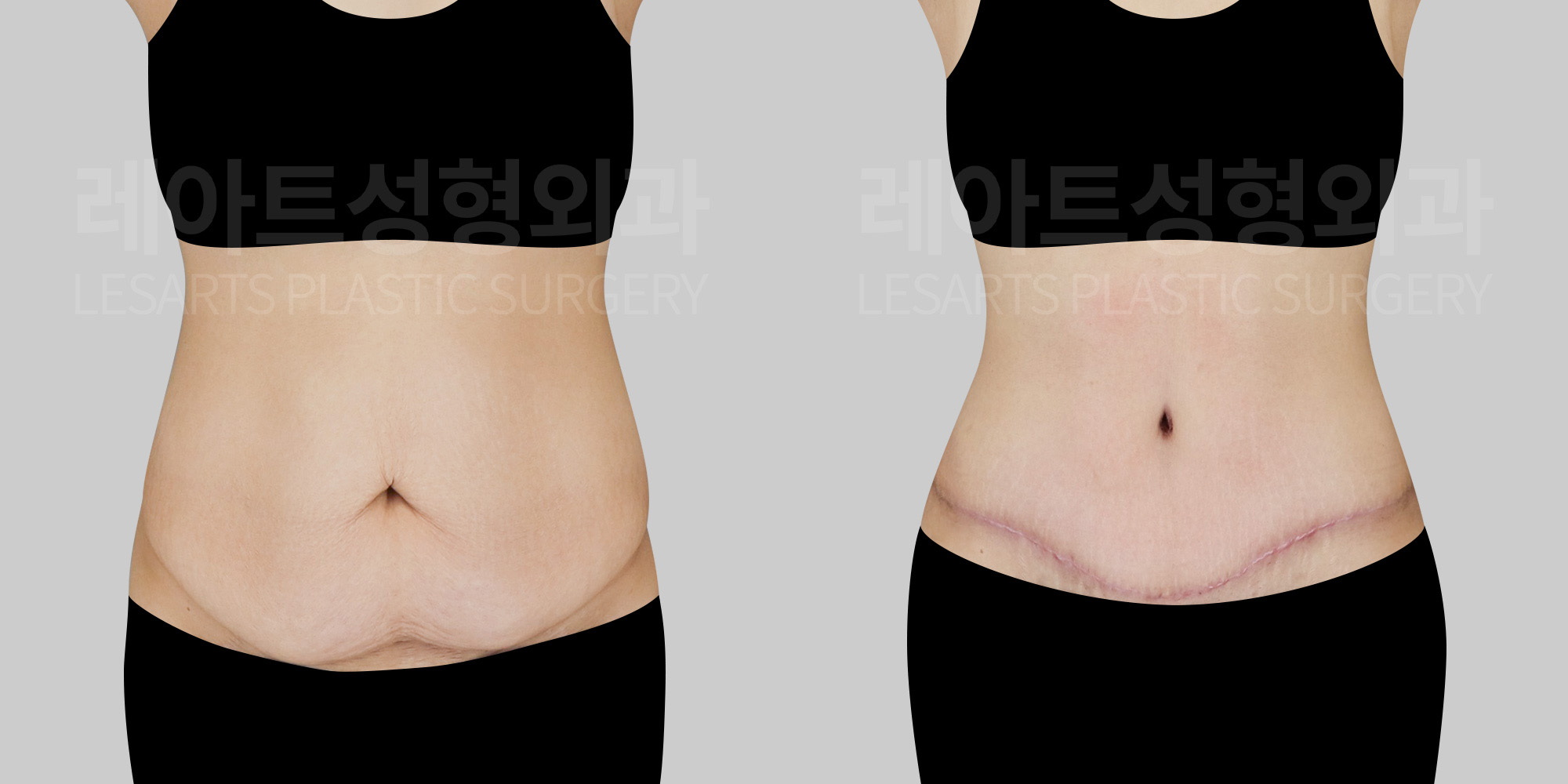
[Improvement in Abdominal Skin Laxity at 3 Months Post-Extended Abdominoplasty]
Here is the patient's presentation at 3 months postoperatively.
With generalized redundant skin excised,
both the upper and lower abdominal walls have transitioned
into a visibly firmer, smoother contour.
The low-set umbilicus has been repositioned into a balanced vertical orientation,
restoring natural anatomical proportions across the abdominal wall.
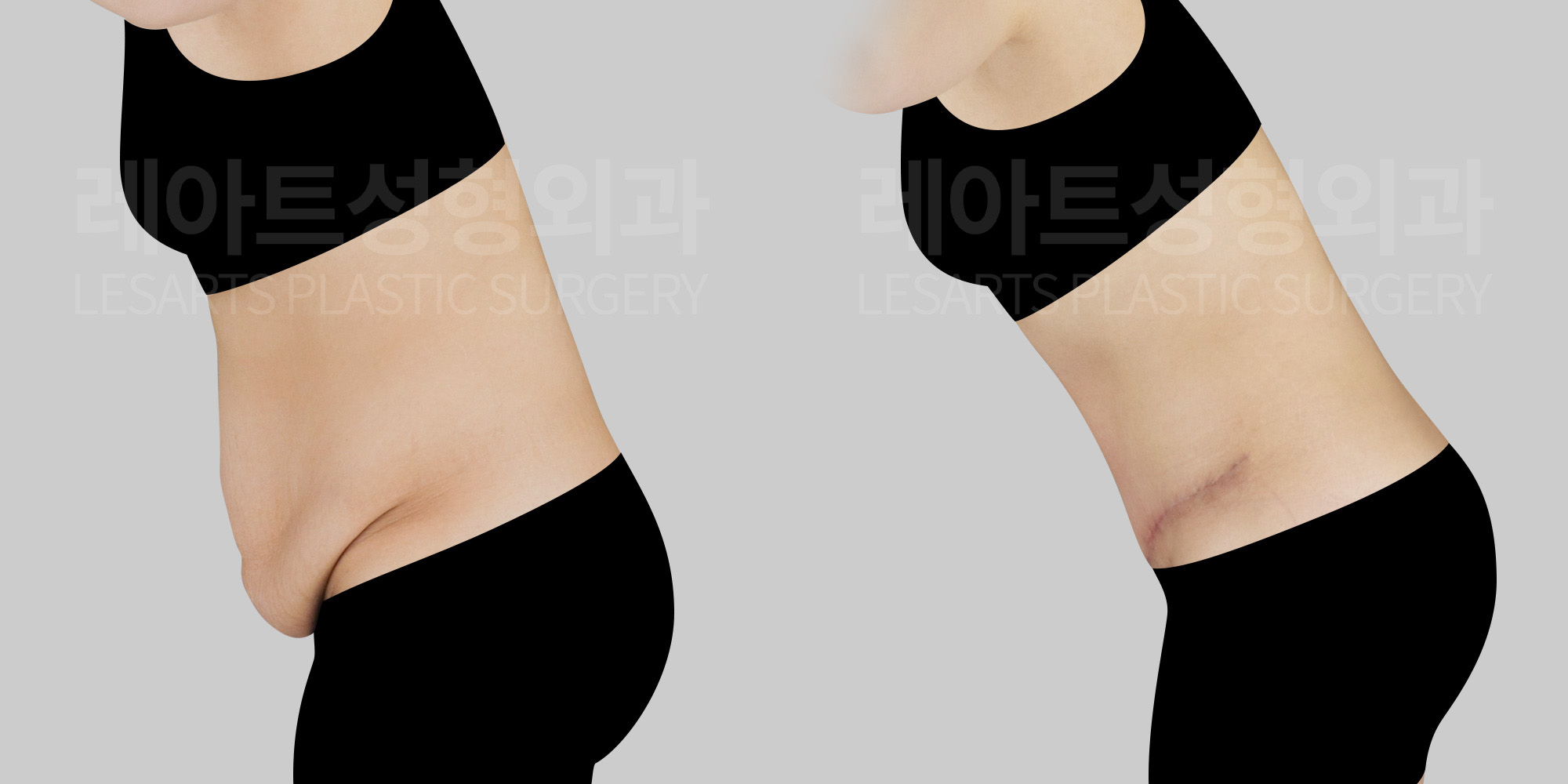
[Lesarts Abdominoplasty: Abdominal Contouring and Rectus Plication Outcomes]
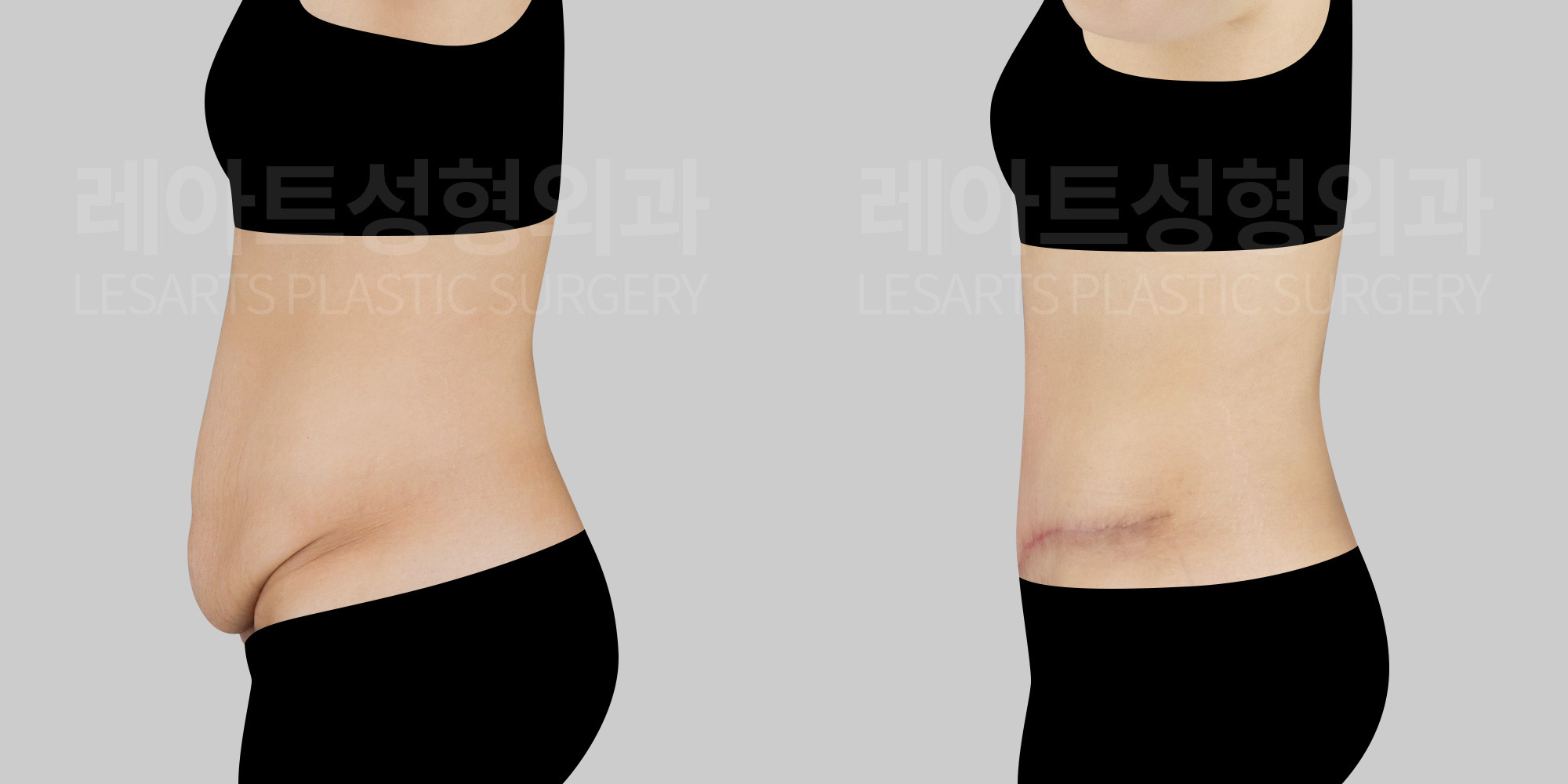
[Postpartum Abdominoplasty Before & After (3-Month Follow-Up) - Dr. Kukhan Lee, Lesarts]
Preoperatively, separation of the rectus muscles
caused the abdominal profile to appear globally rounded and pushed forward.
By repairing the attenuated fascial plane during surgery,
the anterior projection at 3 months has flattened
into a supported, stable abdominal wall.
Because tissue laxity extended well beyond the lower midline toward the lateral flanks,
an L-type extended incision was implemented, resulting in a comparatively longer scar line.
At 3 months, this design has effectively addressed the bilateral redundant folds
that previously draped over the iliac margins.
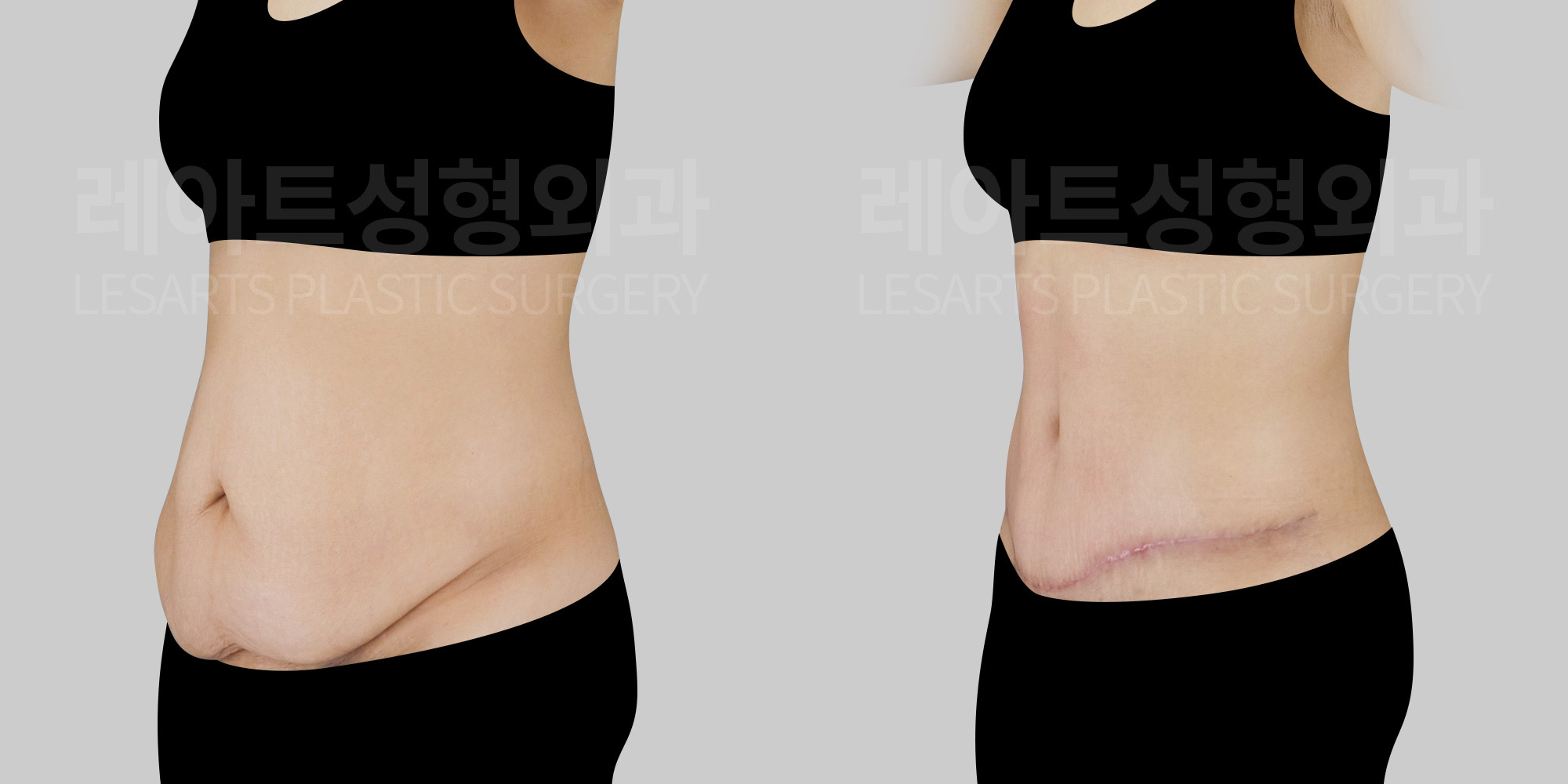
[Improvement of Abdominal Laxity via Abdominoplasty - Dr. Kukhan Lee, Lesarts]
Targeted liposuction performed in conjunction with excision
helped refine the waistline and lateral flanks, resulting in a smoother, more harmonized torso silhouette.
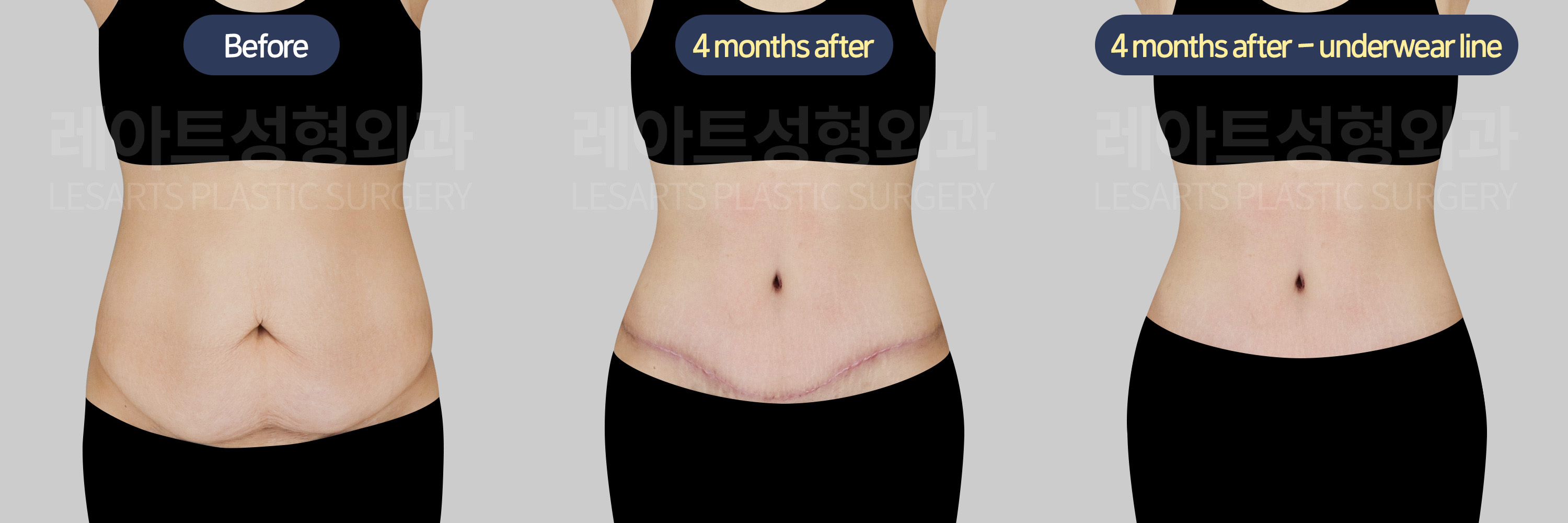
[Extended Abdominoplasty Incision Length and Position]
At just over 3 months postoperatively,
tissue healing and scar remodeling remain in an active phase.
Scar maturation is progressing relatively slowly,
with expected erythema and mild transient hyperpigmentation visible along the incision line.
While focal areas demonstrate minor scar thickening,
excessive keloid-like nodular elevation—her foremost preoperative concern—
has not developed to date.
We will continue to monitor scar progression closely
and administer maintenance treatments as needed.
In addition, mild induration from residual postoperative healing tissue (bio-band) remains palpable in select areas.
Incorporating radiofrequency therapy, gentle mobilization, and progressive activity
will facilitate the gradual softening and natural remodeling of the deep tissues.
Following pregnancy, childbirth, and major weight fluctuations,
attenuated abdominal skin and separated rectus musculature frequently persist
despite reaching target body weight.
Although this patient reduced her gestational peak weight of 99 kg down to 64 kg
through dedicated fitness and nutrition, widespread cutaneous redundancy
persisted from the epigastrium to the flanks.
Because marked rectus diastasis coexisted across both upper and lower zones,
combining L-type extended abdominoplasty, fascial plication,
and liposuction provided a comprehensive structural solution.
At 3 months post-op, redundant cutaneous tissue has been smoothed,
and structural fascial repair has transformed the anterior abdominal protrusion
into a supported, flatter plane.
Flank contouring in conjunction with excision has also helped establish
a more balanced, streamlined transition along the waist.
Regarding the surgical scar, typical 3-month healing signs including erythema,
pigmentation, and localized firming remain present.
While exuberant keloidal proliferation has not been observed,
diligent post-op management and routine clinical follow-up will continue.
Abdominoplasty represents a surgical modality designed to address
residual skin redundancy and rectus diastasis resulting from pregnancy
or rapid weight transitions.
Because an incision line is an inherent component of excisional surgery,
evaluating the precise anatomical distribution of laxity, muscular integrity,
and individual scar tolerance through thorough consultation is vital
when selecting the surgical scope.
▶ View More Lesarts Abdominoplasty Cases
Extended Abdominoplasty FAQ
Q1. How does standard abdominoplasty differ from L-type extended abdominoplasty?
Procedural scope corresponds to the anatomical distribution of redundant skin.
Because this patient presented with laxity extending beyond the infraumbilical zone
across the iliac margins into the flanks, an L-type extended approach was selected.
Q2. Why can the abdomen remain rounded and protruding despite substantial weight loss after delivery?
When rectus diastasis persists following pregnancy,
the separated abdominal wall musculature allows intra-abdominal contents to project forward,
maintaining a rounded contour regardless of adipose reduction.
Q3. Does extended abdominoplasty involve a longer surgical scar?
Because wider zones of cutaneous redundancy require proportional excision,
the transverse incision line must be extended to prevent contour irregularities.
In this case, addressing tissue laxity extending to the lateral flanks required an extended incision length.
Q4. Can abdominoplasty be performed if a patient has a history of keloid scar treatments?
A history of atypical scarring warrants thorough preoperative assessment.
This patient discussed her prior keloid treatments during consultation,
and the procedure was planned alongside a structured postoperative scar maintenance protocol.
Q5. Is erythema or induration normal along the scar line at 3 months post-abdominoplasty?
Erythema, temporary pigmentary changes, and localized induration
are expected clinical findings during the active 3-month remodelling phase.
As tissue maturation progresses over several months, continuous follow-up
and directed dermatologic maintenance support optimal long-term settling.
Dr. Kukhan Lee


Cases finding
similar to my profile
Customer Diagnostics


Select the surgery and
area you are interestedto see real
before andafter changes.


we
make you,
the art
Clinic hours
MON - FRI
10 am – 7pm
SAT
10 am – 4pm
Holiday
SUN, HOLIDAY
Location
Lesarts Moon Clinic Tower 4-5F, 40, Nonhyeon-ro 168-gil,
Gangnam-gu, Seoul, Republic of Korea

Medical institution name Lesarts Plastic Surgery
Address Lesarts Moon Clinic Tower 4-5F, 40, Nonhyeon-ro 168-gil, Gangnam-gu, Seoul, Republic of Korea
Representative Moon sung jun
