Thigh Liposuction | Stubborn Lower Body Fat Despite Exercise: Slender Leg Contour Changes at 8 Months [Doctor's Note by Dr. Yongseung Seo]
If thigh fat persists despite diet and exercise, can liposuction help?
Even with consistent weight management and exercise routines,
subcutaneous fat in specific areas like the thighs can remain relatively resistant.
Rather than simply extracting as much fat as possible,
it is crucial to evaluate the inner, outer, anterior, and posterior contours alongside underlying muscle structures,
calibrating the aspiration volume across each individual zone.
▶ View Lesarts Thigh Liposuction Cases
Hello, I am Dr. Yongseung Seo of Lesarts Plastic Surgery.
Liposuction is not merely a procedure for weight reduction;
rather, it is a method to refine localized fat deposits that resist
prolonged exercise and dietary discipline, contouring the overall body silhouette.
Because the anterior, lateral, medial, and posterior aspects of the thigh
form an interconnected anatomical structure,
establishing overall balance is far more important
than excessively debulking any single isolated zone.
When overall body fat percentage is elevated or
subcutaneous fat is evenly distributed throughout the thighs,
patients often encounter limits in achieving desired thickness
and contour refinement through workout regimens alone.
This patient had also consistently maintained weight training routines,
yet felt troubled by a disproportionately high ratio of subcutaneous fat in the thigh region
relative to her overall physique.
Rather than accentuating dramatic curves in a single area,
she desired comprehensive contouring of the thighs
to achieve a slender, streamlined leg silhouette.
[Preoperative Assessment: Thigh Liposuction]
[Patient Profile]
Age: Late 20s
Height: 169 cm
Weight: 59 kg
BMI: 20.7 kg/㎡
Body Fat Percentage: 31.5%
※ Clinical outcomes of liposuction may vary based on fat distribution and muscular anatomy,
even among individuals with similar physical measurements.
[Preoperative Assessment: Thigh Liposuction]
Working in a beauty clinic, the patient
consistently performed resistance and weight training routines.
She had a past medical history of hormone replacement therapy following thyroid cancer surgery,
which was currently well-managed within standard clinical parameters.
Because thyroid function correlates directly with systemic metabolism,
we noted that maintaining consistent long-term endocrine health remains essential.
Ultrasound evaluation recorded the following
subcutaneous fat thickness measurements across the thighs:
Lateral: 33 / 27 mm
Medial: 16 / 15 mm
Anterior: 17 / 17 mm
Posterior: 12 / 13 mm
Knee: 11 / 12 mm
Treatable subcutaneous fat was distributed comprehensively across all planes,
with the lateral trochanteric and saddlebag areas
projecting most prominently.
Consequently, the horizontal width of the thighs appeared broad,
giving the legs a comparatively heavier and shorter visual proportion.
[Thigh Liposuction Surgical Approach - Lesarts Plastic Surgery]
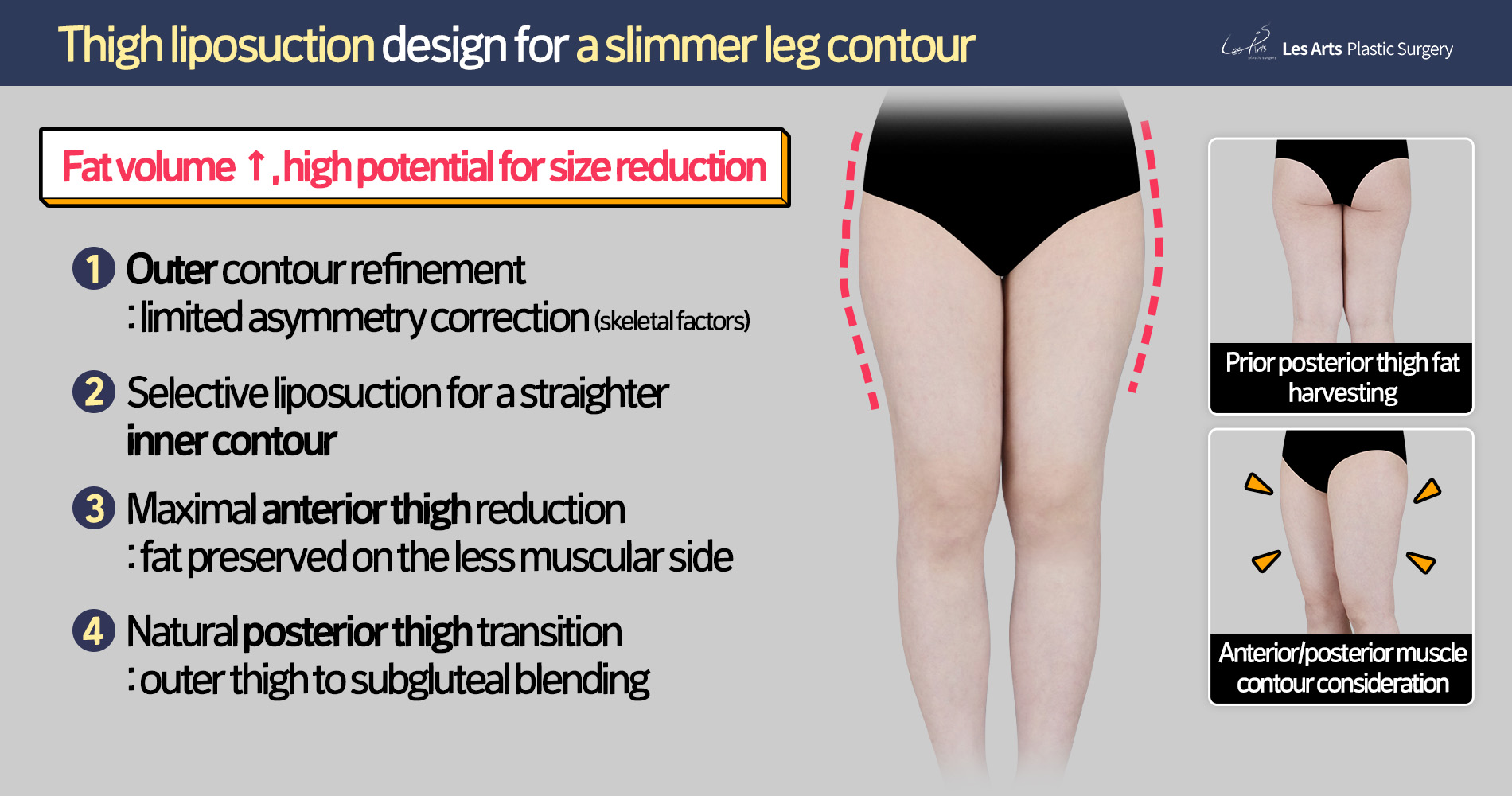
[Surgical Design for a Slender Leg Silhouette]
Given the patient's elevated proportion of thigh subcutaneous fat
and sufficient aspirable layers,
a favorable contour transformation and noticeable circumferential reduction
were anticipated following surgery.
Because the primary aesthetic concern resided in the lateral thigh,
we prioritized thorough reduction in this zone.
Conversely, because she had a prior history of posterior thigh fat harvesting
for a forehead fat grafting procedure,
we noted that surgical dissection in this area could be technically more demanding
compared to virgin tissue planes;
accordingly, postoperative symptoms such as bruising, swelling, and soreness might feel more pronounced,
and we explained in advance that residual fibrous tissue texture could remain palpable
regardless of fat removal.
Additionally, if adipose tissue connecting the infragluteal fold
and thigh is evacuated indiscriminately,
underlying muscular margins can become sharply demarcated,
which may cause the legs to appear shorter and heavier.
To sculpt a smooth lateral line and elongate the thigh silhouette,
we planned to retain a subtle buffer of adipose tissue
to ensure a natural transition between the buttock and thigh.
The patient presented with baseline bilateral asymmetry
and a marked difference in fat volume between sides.
While surgical execution focused on optimizing symmetry,
we clarified that complete mathematical symmetry is constrained by underlying anatomy.
Along the medial thigh, if fat is removed entirely,
the mid-segment indents relative to the proximal groin and knee,
accentuating adjacent bulges and making the limb look shorter,
contrary to her goal of a sleek, straight line.
Therefore, we planned to preserve a measured buffer to establish a continuous straight line.
For the anterior thigh, extensive debulking was planned without intricate contour adjustments;
however, where muscular volume discrepancies exist between legs,
thickness asymmetry can become more visible.
Because thickness differences are more perceptible than contour line variances,
we decided to retain a thin layer on the side with less muscle volume
to align overall bilateral diameter as closely as possible.
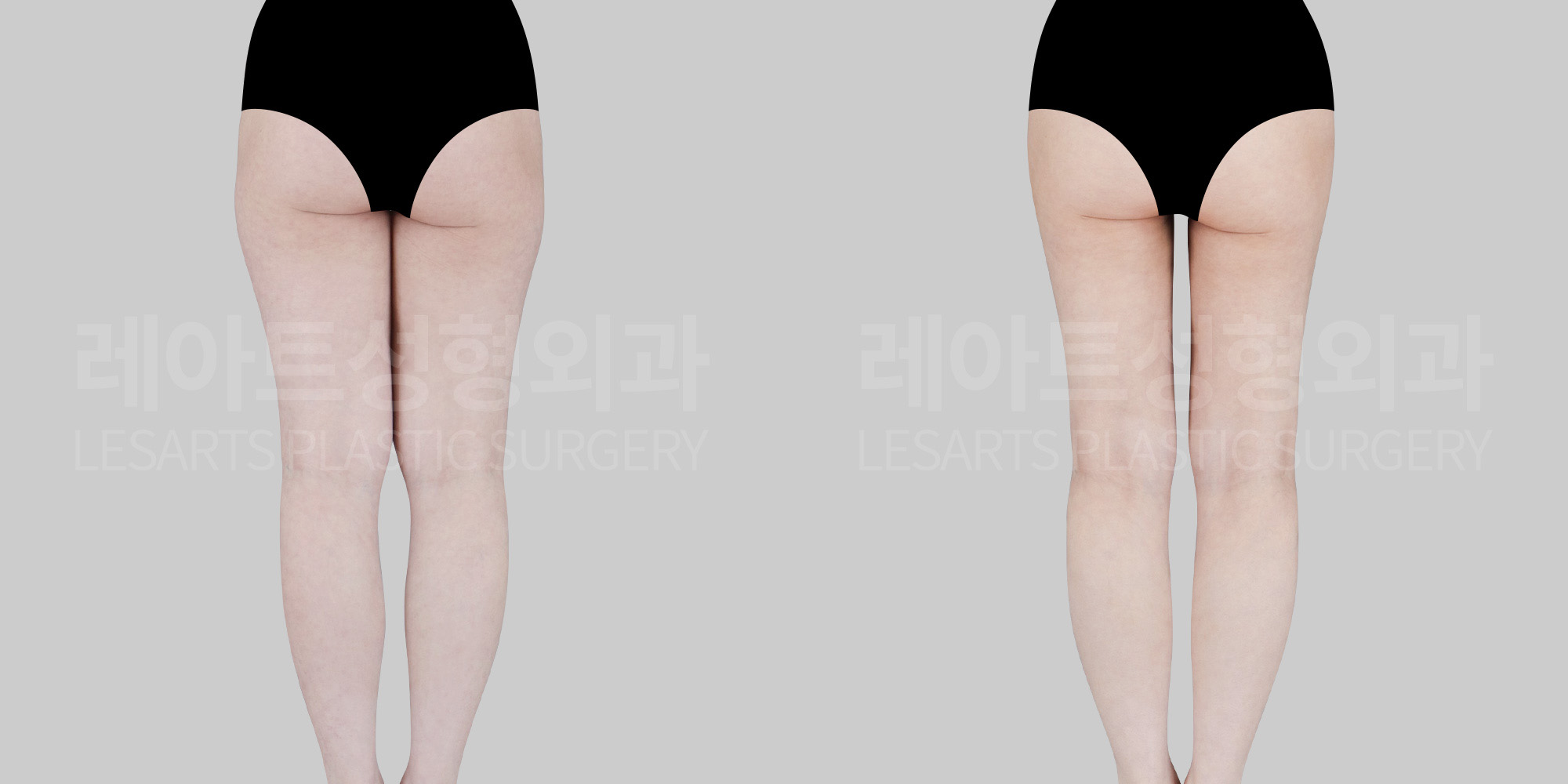
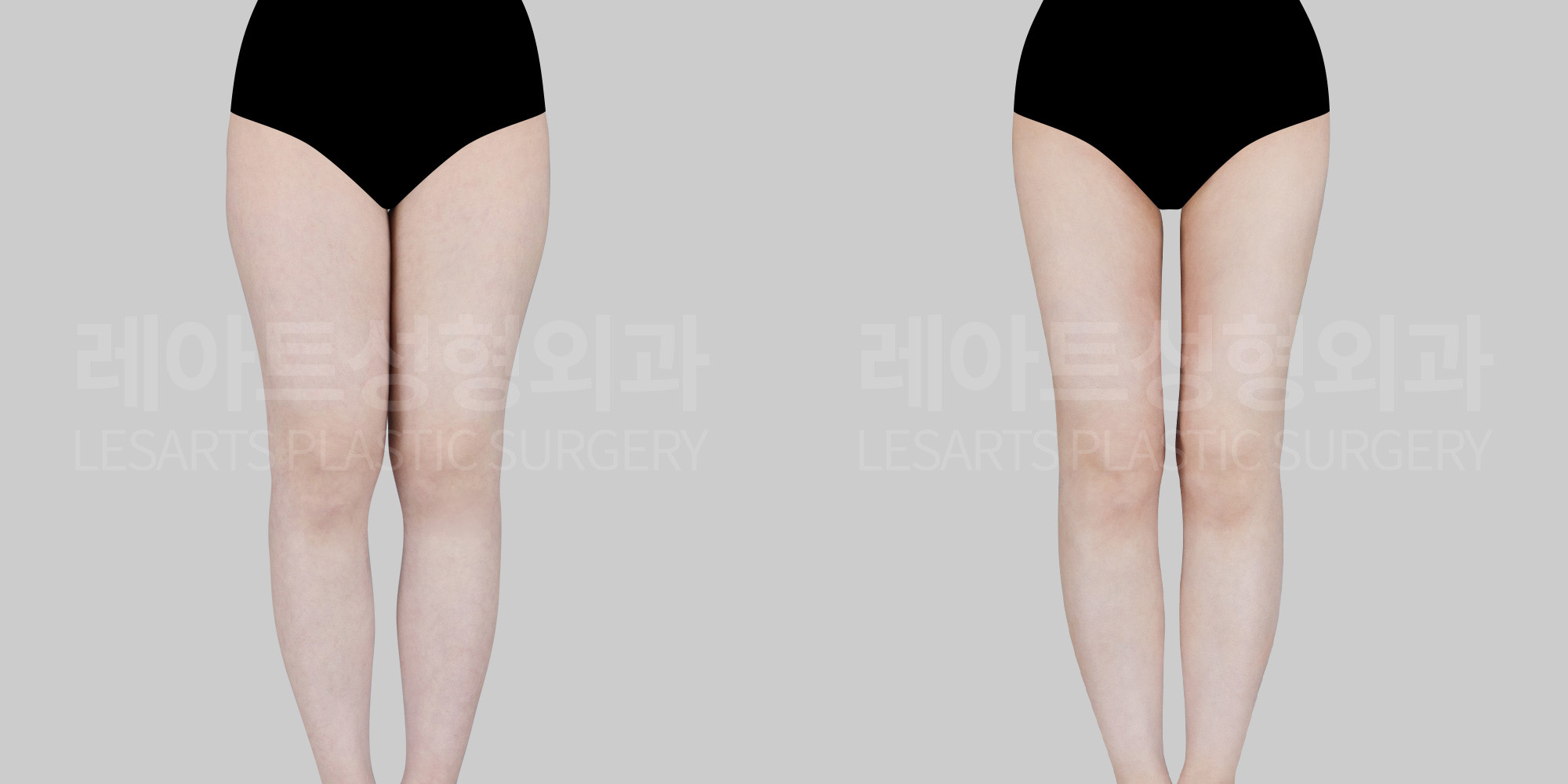
[Before & After Thigh Liposuction Comparison]
(Photographed 8 months postoperatively under identical lighting and clinical conditions)

[Thigh Liposuction Before & After - Dr. Yongseung Seo, Lesarts]
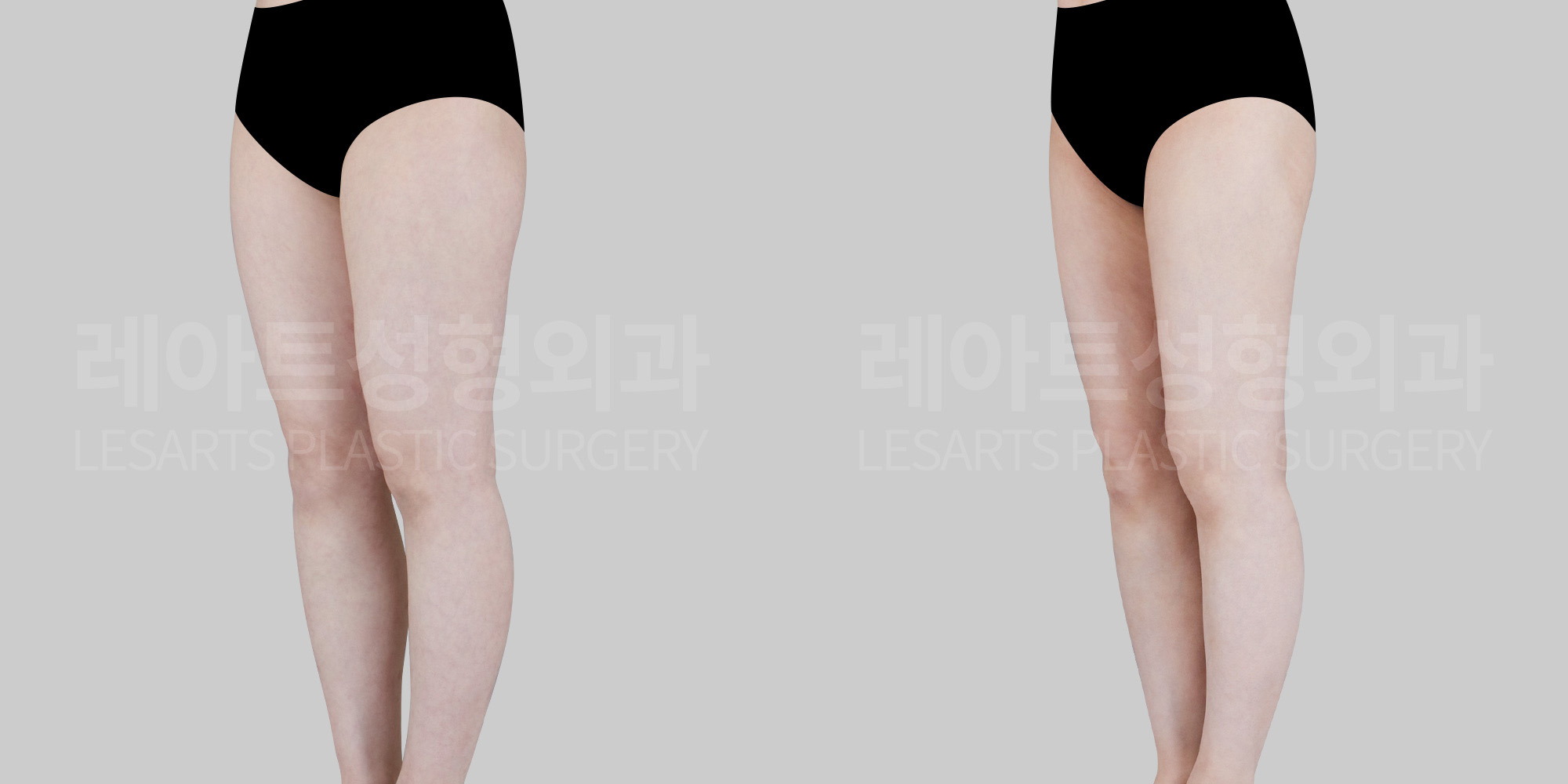
To achieve the slender, streamlined contour the patient desired,
liposuction was performed to the maximum safe limit
while maintaining overall anatomical harmony.
Consequently, the prominent lateral saddlebag bulges and
the thick, irregular medial contours
transitioned into a sleek, continuous vertical line,
helping the legs appear visually longer and thinner.

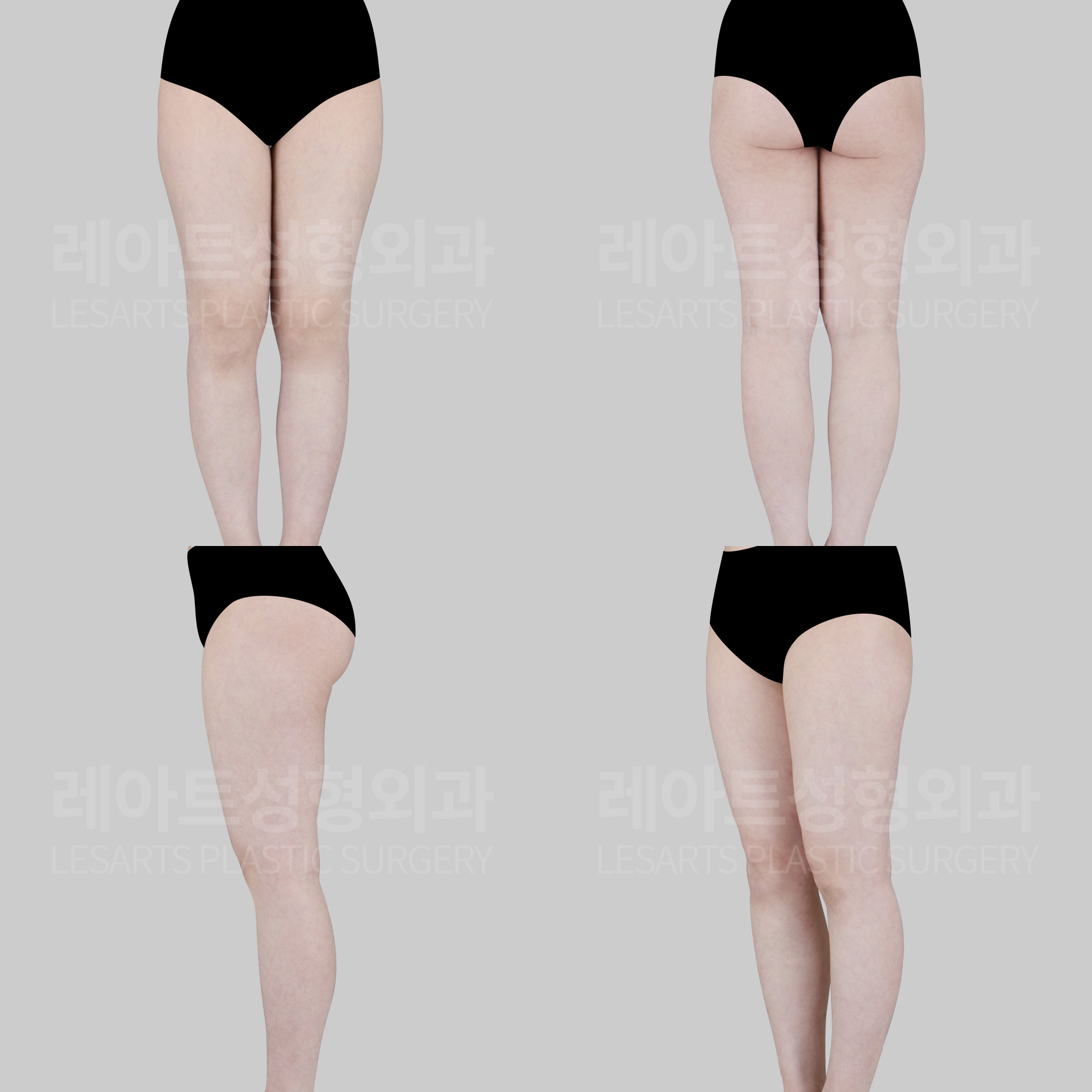
[Anterior Thigh Liposuction Before & After - Dr. Yongseung Seo, Lesarts Plastic Surgery]

[Anterior Thigh Liposuction Before & After - Dr. Yongseung Seo, Lesarts Plastic Surgery]
Because the anterior quadriceps naturally possesses forward convexity,
it did not form an absolute linear profile like the medial and lateral planes,
yet it achieved a far softer, smoother, and flatter contour compared to baseline.

[Asymmetrical Thigh Liposuction - Dr. Yongseung Seo, Lesarts Plastic Surgery]
Overall bilateral symmetry also settled into a balanced outcome,
without noticeable discrepancies on visual inspection.
Many individuals working on body composition encounter plateaus where diet and exercise hit natural limits.
Rather than becoming discouraged by resistant local fat stores,
targeted clinical contouring can provide a structured, permanent resolution
for anatomical concerns.
Liposuction extends beyond simple adipose removal;
it is a clinical intervention that restores self-confidence
and enhances daily lifestyle vitality.
If persistent thigh dimensions have long caused hesitation
when choosing desired attire,
exploring tailored medical contouring can help you discover
a redefined, lighter silhouette.
For that final 2% of contour refinement,
Lesarts Plastic Surgery is dedicated to safely guiding you
through your journey toward a balanced, slender profile.
Thigh Liposuction FAQ
Q1. Can thigh fat resist reduction even with consistent exercise?
Even as total body weight decreases, depending on regional adipose distribution,
subcutaneous fat in specific areas like the thighs and saddlebags can remain resistant.
In such cases, evaluating the subcutaneous layers and muscular framework helps determine
the realistic scope for liposuction.
Q2. Is maximum fat extraction always optimal in thigh liposuction?
Not necessarily. Along anatomical transitions such as the infragluteal junction
or the mid-medial thigh,
preserving a delicate layer of adipose tissue is necessary
to maintain smooth, natural lines without abrupt step-offs.
Q3. Can liposuction be performed if fat was previously harvested from the thighs?
Areas with previous fat harvesting history can present scarring and fibrosis,
making dissection technically more demanding than in virgin tissues.
Potential variations in recovery reactions such as bruising, swelling, or lingering firmness
should be thoroughly evaluated and discussed prior to surgery.
Q4. Can bilateral thigh asymmetry be corrected through liposuction?
Differences driven by adipose volume can be balanced
by adjusting aspiration quantities between sides.
However, if underlying skeletal or muscular structures are asymmetrical,
there are inherent anatomical limits to achieving absolute mathematical symmetry.
Q5. Will anterior thighs remain projected after liposuction if quadriceps muscle is developed?
If the anterior contour is strongly governed by underlying muscular volume,
natural muscular curvature will remain after overlying fat is reduced.
Because liposuction targets subcutaneous adipose tissue rather than muscle mass,
contouring must be tailored to harmonize with underlying muscular structure.