




Online Consultation
Please accurately enter the information below.
Quick Cost Consultation
Quick Consultation & Reservation
Cases finding
similar to my profile






Doctor's Note
Medical columns by our surgeons
Gynecomastia Consultation | Attending with a Girlfriend or Wife: Practical Advice
2026-09-04
Gynecomastia Consultation | Attending with a Girlfriend or Wife: Practical Advice [Doctor's Note by Dr. Jihoon Moon]
If a boyfriend or husband hesitates to visit a clinic for gynecomastia, how should you approach the conversation?
Rather than pointing out chest appearance or insisting on treatment,
it is far more supportive to start by acknowledging
the day-to-day discomforts experienced when dressing or in social settings.
Approaching a clinic visit not as a process of "fixing" an issue,
but as an objective step to understand the cause and explore ways
to live more comfortably together, helps ease emotional hesitation.
▶ View Lesarts Gynecomastia Clinical Cases
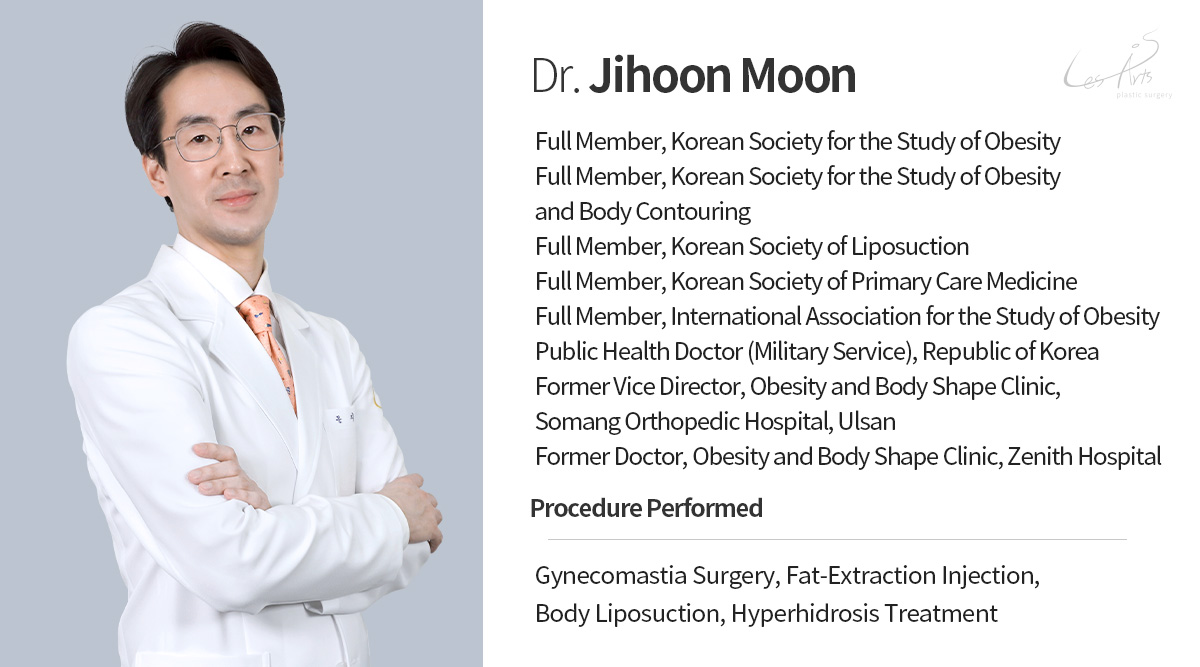
Hello, I am Dr. Jihoon Moon of Lesarts Plastic Surgery.
For many men, aesthetic concerns involving the chest can be sensitive
and tied closely to personal self-esteem, making them difficult to discuss even with loved ones.
This dynamic often applies within romantic relationships and marriages as well.
Hesitating to wear lightweight t-shirts in the summer,
or feeling noticeably self-conscious about chest contour
during visits to the pool or recreational activities are subtle signs
that often lead a girlfriend or spouse
to gently suggest a medical consultation.

[Gynecomastia Consultation - Lesarts Plastic Surgery]
Today, I would like to discuss consultations attended together with a partner or spouse
for male gynecomastia concerns.
We will cover how to thoughtfully suggest a clinical visit without causing hurt,
as well as helpful consultation room etiquette
to keep in mind when attending an evaluation together.
1. Thoughtful Ways to Bring Up the Topic Without Hurting Feelings
Men experiencing gynecomastia often feel vulnerable or self-conscious,
as though their most guarded insecurity has been brought to light
in front of someone they care deeply about.
Consequently, if a partner directly comments,
“I think your chest looks enlarged; should we see a doctor?”
it can inadvertently trigger a defensive response,
embarrassment, or frustration.
To suggest an evaluation while respecting his feelings,
how the conversation is framed is just as vital as the intention behind it.

[Attending a Gynecomastia Consultation with a Guardian - Dr. Jihoon Moon, Lesarts]
① Focus on Comfort and Health Rather Than Physical Appearance
It is best to avoid direct critiques such as “Your chest shape looks off” or “You need to lose more weight.”
Instead, lead by acknowledging the daily discomforts he experiences
when selecting clothing or navigating social settings.
“I’ve noticed you often seem stressed when picking out shirts in the summer, and that weighed on my mind."
"I read that it’s often an issue of glandular tissue rather than simple weight.
Why don’t we schedule a consultation just to check your health and see if there are ways for you to dress more comfortably?”
Framing the discussion around understanding his daily comfort
feels supportive rather than judgmental.

[Gynecomastia Care - Dr. Jihoon Moon, Lesarts Plastic Surgery]
② Frame It as a Shared Journey Rather Than “Your Problem”
Avoid unilateral statements such as
“There’s a problem with your body, so let’s go get it fixed.”
Such phrasing can make him feel singled out,
prompting an understandably defensive reaction.
Instead, view the evaluation as a shared step to help both of you live more comfortably
and enjoy shared activities freely.
Using an upcoming vacation or shared hobby can offer a natural opening:
“We planned that beach trip for our vacation,
and I’d feel bad if you spent the whole time feeling self-conscious about what to wear.
Let’s look into it together this year so you can feel completely comfortable taking photos next time.”
For someone who exercises regularly, you might frame it like this:
“You work out so consistently, and it bothered me to see you frustrated with this one specific area when dressing.
Let’s visit a clinic together to see what options exist.
We can make a trip out of it this weekend, and I’ll help look for a comfortable clinic for your consultation.”
2. Understanding a Male-Centered Clinical Setting

[Male-Specialized Plastic Surgery for Gynecomastia - Lesarts Plastic Surgery]
Even after thoughtful conversations lead to a clinic visit,
male patients in the waiting area often appear visibly tense
or reserved.
Even while casually browsing a phone,
they may feel acutely aware of their surroundings.
Here is an important context for accompanying partners: at our clinic, the vast majority of gynecomastia patients attend consultations independently.
Furthermore, because both patient and physician are male,
examinations are conducted independently without unnecessary female chaperones or staff present unless specifically requested.
This setup is intentionally designed so male patients can discuss
their anatomical concerns openly and comfortably with a male physician.
Under these conditions, many men find it easier to articulate their concerns candidly.
In other instances, a partner attends the consultation directly
to offer support and listen to the medical explanations together.
When joining him inside, keeping a few practical consultation room courtesies in mind can be very helpful.
3. Consultation Room Courtesies for Accompanying Partners
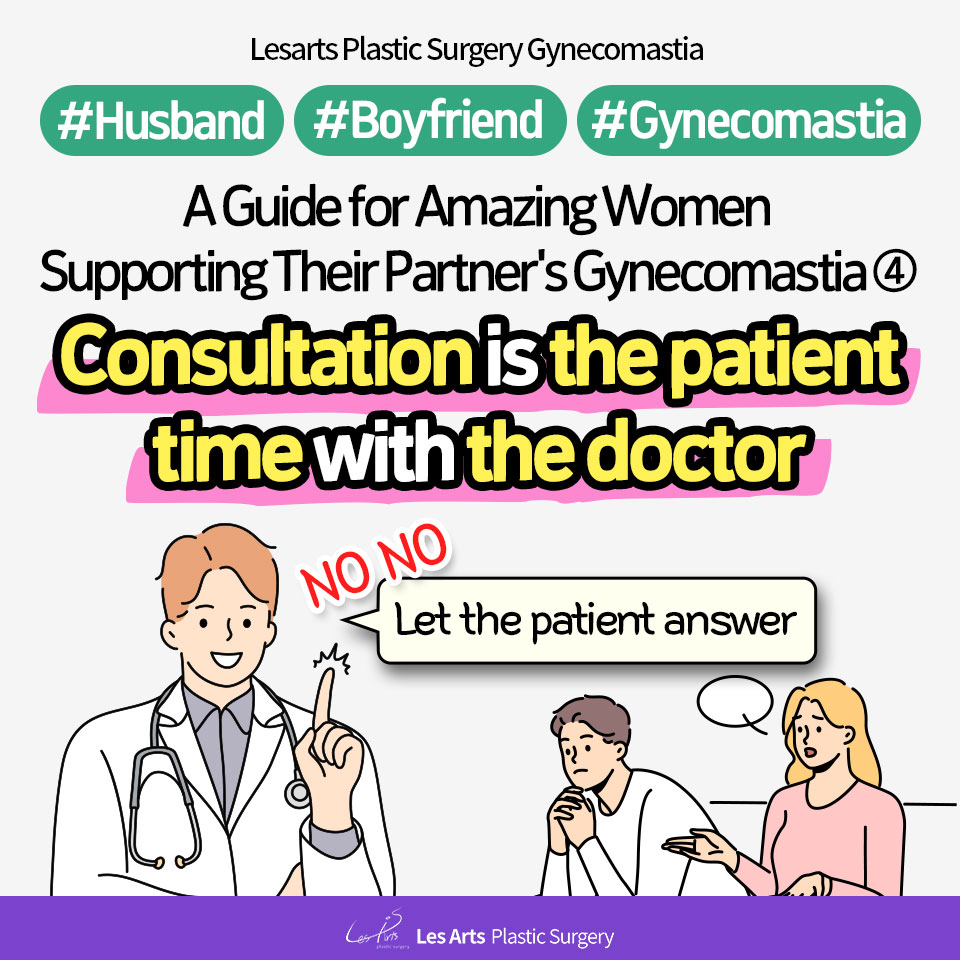
[Gynecomastia Diagnostics, Consultation, and Surgical Planning - Dr. Jihoon Moon, Lesarts]
① Let the Patient Take the Lead in Answering Questions
During the evaluation, the physician typically asks questions such as,
“When did you first notice this fullness?” or “Do you experience tenderness upon contact?”
At times, a well-meaning partner might step in to answer:
“He’s had this since we started dating,” or “No, he usually says it doesn't hurt.”
While done with helpful intentions,
answering for him can inadvertently cause him to feel more reserved.
In clinical diagnostics, it is essential for the patient to personally describe his timeline, symptoms, and sensations.
Even if his explanation seems hesitant, allowing him the space to express his own experience is best.
Listening quietly without rushing him is an effective way to show support.

[Gynecomastia Diagnostic Protocols - Dr. Jihoon Moon, Lesarts Plastic Surgery]
② Discreetly Avert Your Gaze During Physical Examination and Palpation
A key part of the consultation involves palpation to assess the presence and extent of glandular tissue.
Because this requires removing the shirt for examination,
it can feel vulnerable and uncomfortable for the patient.
While our clinic ensures privacy between physician and patient,
having a partner in the room can make a patient acutely aware of being observed.
During the physical exam, discreetly looking away or browsing clinic informational brochures
offers him comfortable breathing room.
This allows him to focus on the examination without self-consciousness.
4. Words of Reassurance After Leaving the Consultation Room

[Evaluating Gynecomastia Procedures and Establishing a Treatment Plan - Lesarts Plastic Surgery]
Once the consultation concludes and you step outside,
sharing warm encouragement is invaluable.
“I’m really glad you took the step to come today. Hearing the doctor’s explanation made me feel coming was the right decision.”
“It must have been stressful carrying this on your own. Now that we understand the cause, we can take our time thinking about it together.”
Gynecomastia extends beyond physical chest appearance;
it often represents prolonged emotional stress affecting daily clothing, fitness routines, and social confidence.
Obtaining an objective medical evaluation and exploring appropriate clinical options
is a constructive step toward resolving long-standing daily discomforts,
not merely altering aesthetics.
Having a partner acknowledge an insecurity that was difficult to voice
and accompany him to the clinic provides immense reassurance.
While the physician provides medical diagnoses and treatment plans,
it is the empathy and thoughtful support of a partner
that makes taking that step comfortable and reassuring.
Gynecomastia Consultation FAQ
Q1. What is the best way to suggest a gynecomastia evaluation to a boyfriend or husband?
Rather than critiquing physical appearance,
it is far better to acknowledge the practical discomforts he feels with clothing or daily activities.
Framing the visit as an informational consultation to check underlying health
rather than an insistence on surgery helps reduce emotional resistance.
Q2. Can a girlfriend or wife sit in during the gynecomastia consultation?
Yes, a partner may accompany the patient to hear the medical explanations together.
However, it is recommended to let the patient lead the conversation
so he can describe his symptoms and timeline directly.
Q3. What examinations are performed during a gynecomastia consultation?
The evaluation involves visual inspection, manual palpation to assess glandular proliferation,
and high-resolution breast ultrasound to measure tissue depth and composition.
Specific diagnostic steps are tailored to the individual presentation.
Q4. How should an accompanying partner handle the physical examination portion?
Removing one’s shirt for examination can feel vulnerable for the patient.
Discreetly looking away or browsing informational brochures in the room during palpation
helps him feel comfortable and at ease during the exam.
Q5. Is it appropriate for a male patient to attend the consultation alone?
Yes, attending individually is completely common.
In fact, many men find it easier and more comfortable to speak candidly
about personal physical concerns in a private, one-on-one setting with a male physician.
Dr. Jihoon Moon


Cases finding
similar to my profile
Customer Diagnostics


Select the surgery and
area you are interestedto see real
before andafter changes.


we
make you,
the art
Clinic hours
MON - FRI
10 am – 7pm
SAT
10 am – 4pm
Holiday
SUN, HOLIDAY
Location
Lesarts Moon Clinic Tower 4-5F, 40, Nonhyeon-ro 168-gil,
Gangnam-gu, Seoul, Republic of Korea

Medical institution name Lesarts Plastic Surgery
Address Lesarts Moon Clinic Tower 4-5F, 40, Nonhyeon-ro 168-gil, Gangnam-gu, Seoul, Republic of Korea
Representative Moon sung jun
