




Online Consultation
Please accurately enter the information below.
Quick Cost Consultation
Quick Consultation & Reservation
Cases finding
similar to my profile






Doctor's Note
Medical columns by our surgeons
Arm Liposuction | “Posterior Bulges That Resist Weight Loss: Resolving Upper Body Contour Concerns”
2026-09-18
Arm Liposuction | “Posterior Bulges That Resist Weight Loss: Resolving Upper Body Contour Concerns”
Q. What is the key surgical approach to achieving smooth, streamlined lines without surface irregularities when removing persistent posterior arm fat?
A. Avoiding excessive over-aspiration, preserving a delicate buffer layer along deltoid boundaries to prevent harsh muscular demarcation, and minimizing the taper discrepancy between the upper and lower brachium are vital.
Contouring the posterior bulge while refining contiguous regions—such as the scapula and bra line—prevents dermal adhesions or step-offs,
sculpting a sleek, straight arm contour that falls cleanly under clothing.
Learn More About Lesarts Arm Liposuction
Written by Dr. Yongseung Seo, Lesarts Plastic Surgery
This column was authored directly by our medical staff.
※ Unauthorized copying, editing, or redistribution is strictly prohibited. ※
Even after dedicated dietary regimens and targeted fitness routines, many women share similar frustrations:
“Scale weight has dropped, yet my posterior upper arms still bulge outward, compromising clothing fit.”
“Whenever I wear fitted tops, the posterior bulge stands out, making my upper frame appear heavy and broad.”
“Losing weight everywhere except my stubborn arm fat leaves my upper body proportions feeling awkward and unbalanced.”
Even with rigorous triceps exercises and strict caloric control, prominent, fibrous posterior arm fat frequently persists unchanged.
Often, weight loss manifests only in unintended areas such as the face or bust, disrupting natural body balance.
Consequently, an increasing number of individuals consider professional arm liposuction, yet they often express common concerns during consultation:
“I want maximum volume reduction, but I worry that aggressive extraction could cause indentations, unevenness, or unnatural contours.”
Sculpting a graceful, feminine upper body line relies not merely on the volume of aspirated fat,
but on calculating underlying muscular morphology, overall frame proportions, and the resulting silhouette beneath daily attire
to establish a balanced, straight-line aesthetic.
Rather than indiscriminate debulking,
the priority lies in a customized, refined surgical design that eliminates posterior bulges while preserving a straight arm line and respecting natural deltoid transitions.
When stubborn upper arm bulges persist despite lifestyle efforts,
seeking an accurate clinical diagnosis and customized design from a board-certified plastic surgeon offers a definitive path forward.
Today, through a clinical case from our clinic, we examine how a balanced, natural upper body contour can be sculpted.
[Patient Profile & Baseline Specifications]
Height: 167 cm
Weight: 69.7 kg (peak weight at baseline)
BMI: 25.0 kg/m² (borderline overweight)
Body Fat Percentage: 34.7%
※ Clinical outcomes may vary individually depending on subcutaneous fat depth, muscular development, and dermal elasticity, even among patients with similar physical measurements.

Preoperative Upper Body Assessment
[Consultation & Diagnostic Evaluation]
“I want a natural, slender line tailored to my frame.
I want to avoid over-aspiration that could cause skin indentations or uneven surface textures.”
The patient experienced ongoing distress from posterior upper arm bulges projecting outward in fitted tops.
Having undergone abdominal liposuction elsewhere and witnessed acquaintance complications with surface irregularities from over-extraction,
she strongly preferred “a smooth, straight contour line harmonizing naturally with her full-body frame” over aggressive debulking down to the skeletal plane.
With arms resting naturally at her sides, posterior triceps fullness bulged prominently, an effect further accentuated in fitted clothing,
causing the upper frame to appear heavy and wide.
Furthermore, the lateral margin of the posterior bulge was clearly visible on frontal view, visually broadening the torso.
In-Clinic Ultrasound Diagnostic Findings:
Posterior Arm (Subcutaneous Adipose Depth): 20 / 18 mm
Anterior Arm (Subcutaneous Adipose Depth): 12 / 12 mm
Scapular Back Region: 15 / 11 mm
Bra Line Region: 12 / 12 mm
Deltoid Muscle Thickness: 20 / 18 mm
Sufficient subcutaneous fat layers were identified across the upper frame, with notable adipose depth concentrated along the posterior arm.
Because ample subcutaneous fat was present, significant circumferential reduction and contour refinement were anticipated via targeted liposuction.
[Customized Upper Body Design Harmonizing Muscle & Fat]
Along with treatable subcutaneous fat, the patient presented with well-developed deltoid musculature.
In such anatomical frames, aggressive large-volume debulking without regard for muscular lines risks exposing sharp deltoid margins through the skin, creating a rugged, masculine appearance.
Beyond cosmetic distortion, it markedly elevates risks of dermal fascial adhesions, step-offs, and skin compromise.
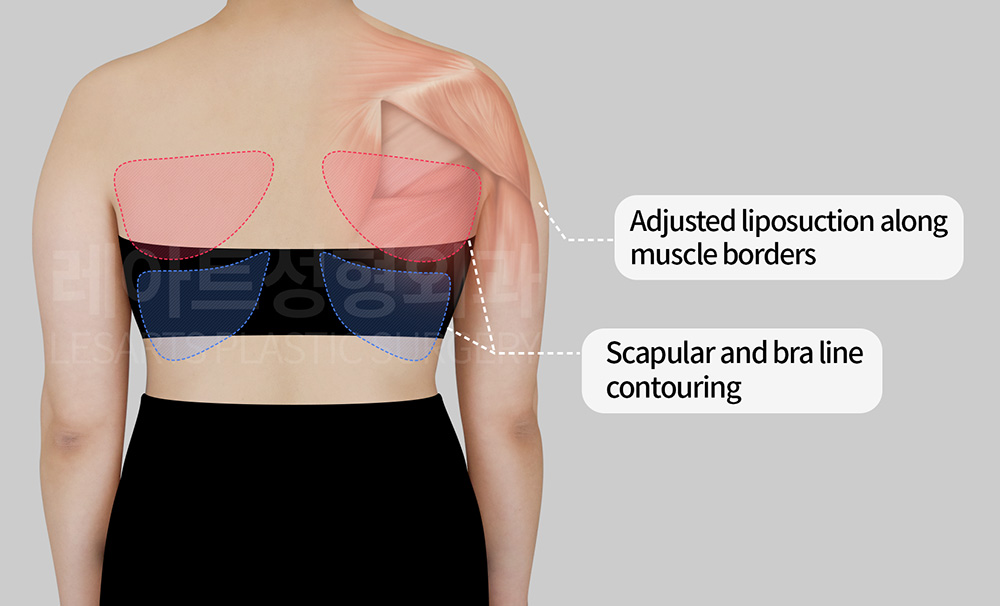
Arm Liposuction Operative Plan
Addressing the patient's concerns regarding complications,
we established aspiration volumes within safe thresholds to reduce circumference while preventing indentations or adhesions, sculpting a soft, feminine contour.
A thin buffer of subcutaneous fat was retained along the junction where the deltoid meets the brachium,
focusing on creating a smooth, straight arm silhouette.
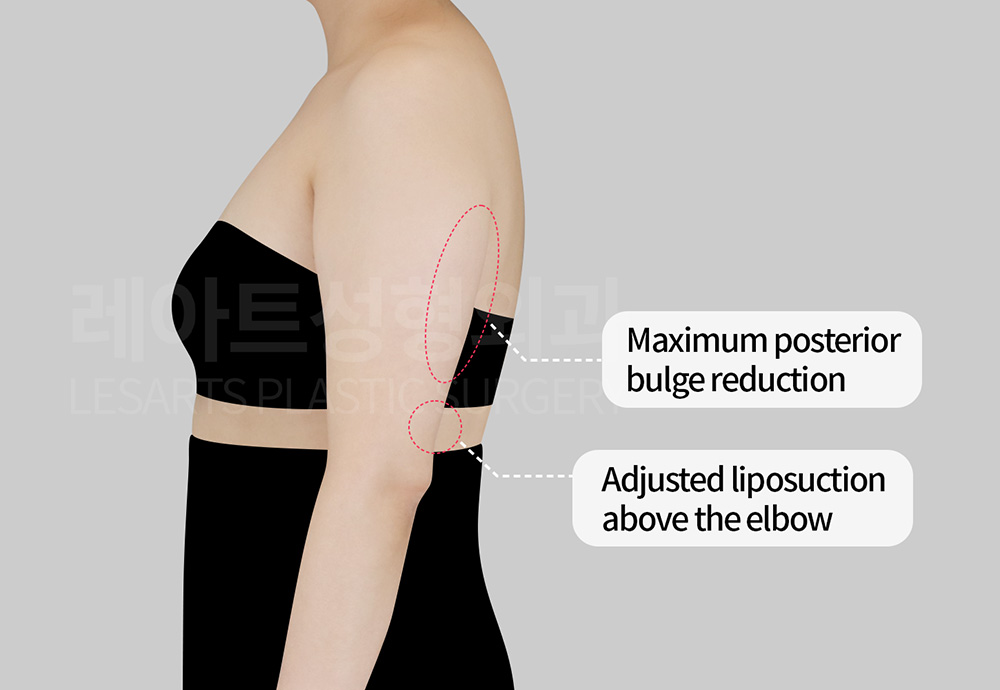
Arm Liposuction Surgical Strategy & Design
The posterior arm bulge serving as her main concern was meticulously sculpted to refine wardrobe silhouette,
while slightly more subcutaneous fat was preserved along the lower brachium relative to the upper segment,
minimizing taper contrast that could otherwise make the posterior fullness appear prominent.
While the scapular and bra line regions exhibited moderate fat thickness, their anatomical properties carry lower risks of surface irregularities or ptosis compared to the arms,
allowing for more definitive debulking in these areas.
Regarding compression garment wear timelines,
we explained that medical garments serve as supportive aids to manage early swelling, ease movement discomfort, and assist lymphatic circulation rather than dictating final contour outcome.
Once initial wound healing stabilizes and daily activities are comfortable without tightness or discomfort, wear time can be tapered,
with most patients comfortably discontinuing garments around 6 weeks postoperatively, subject to individual recovery pace.
[Before & After 5-Month Follow-Up: Arm, Scapular & Axillary Contouring]
(※ Photographed 5 months postoperatively under identical lighting and clinical conditions.)
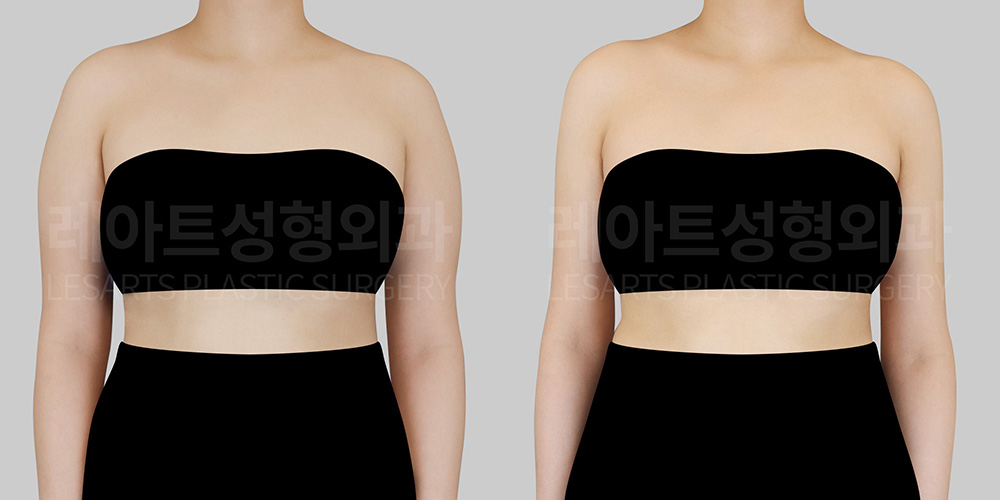
Upper Body Contouring Before & After (5 Months Post-Op) - Dr. Yongseung Seo, Lesarts
Preoperatively, the posterior bulge projected outward when arms rested naturally,
causing the upper frame to appear heavy and shortening visual arm length; postoperatively,
the outer arm contour falls in a sleek, straight line extending continuously from the clavicle and acromion.
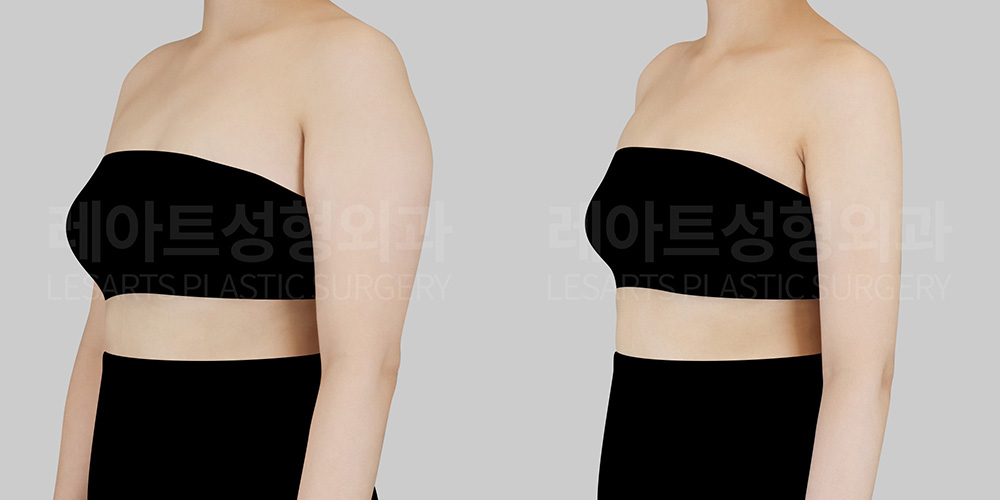
Posterior Arm Liposuction - Lesarts Plastic Surgery
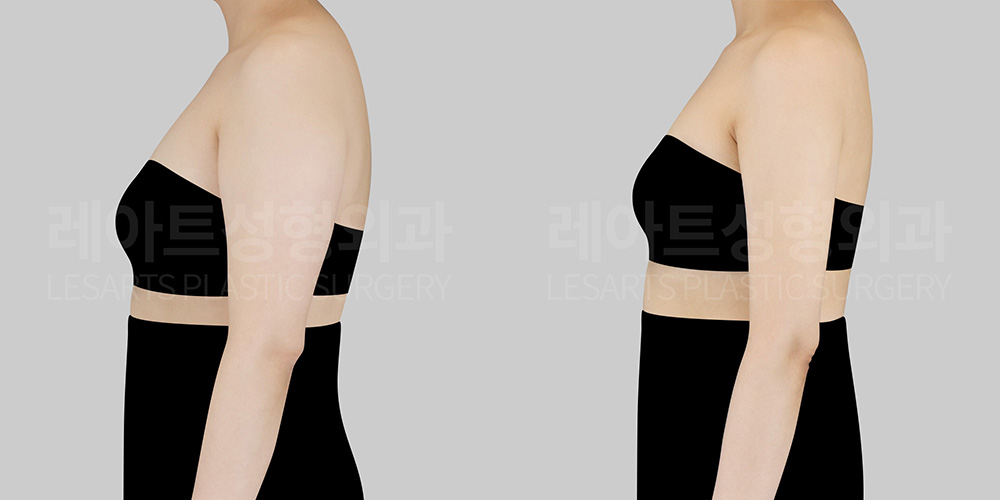
Arm Liposuction Contour Outcomes - Lesarts Plastic Surgery
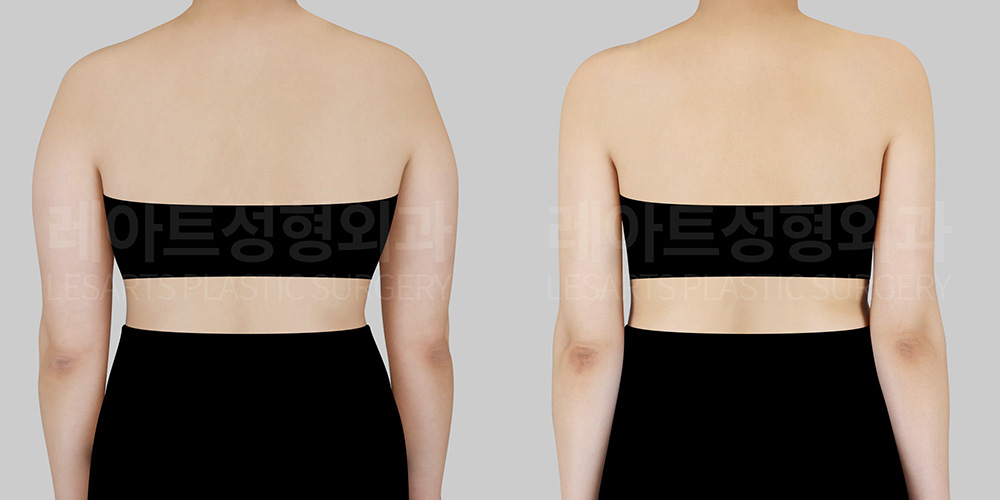
Arm Slimming via Liposuction - Dr. Yongseung Seo, Lesarts Plastic Surgery
On lateral and posterior views, upper arm thickness previously stood out prominently in fitted garments;
following liposuction, anteroposterior thickness decreased substantially, allowing slender tops to drape smoothly.
By minimizing the diameter discrepancy between the upper and lower brachium, the posterior bulge resolved into an elongated line.
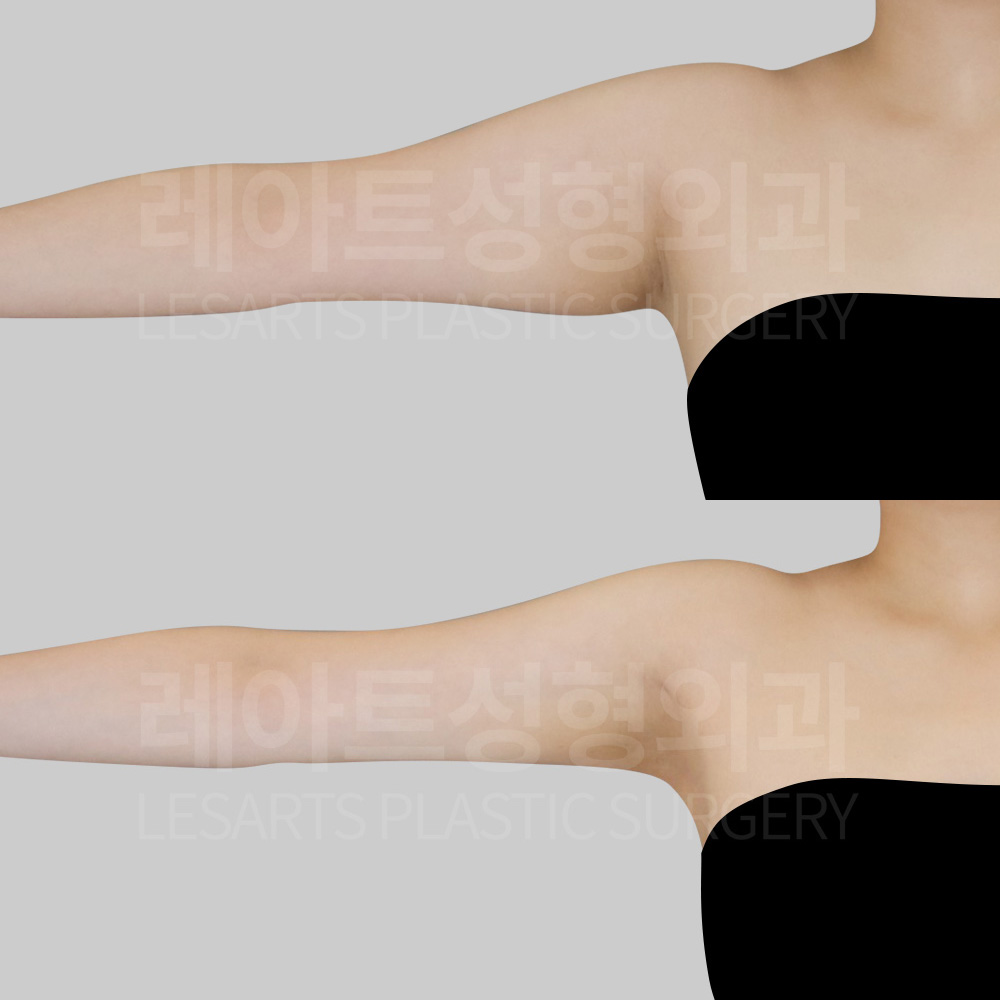
Circumference Reduction Before & After Arm Liposuction
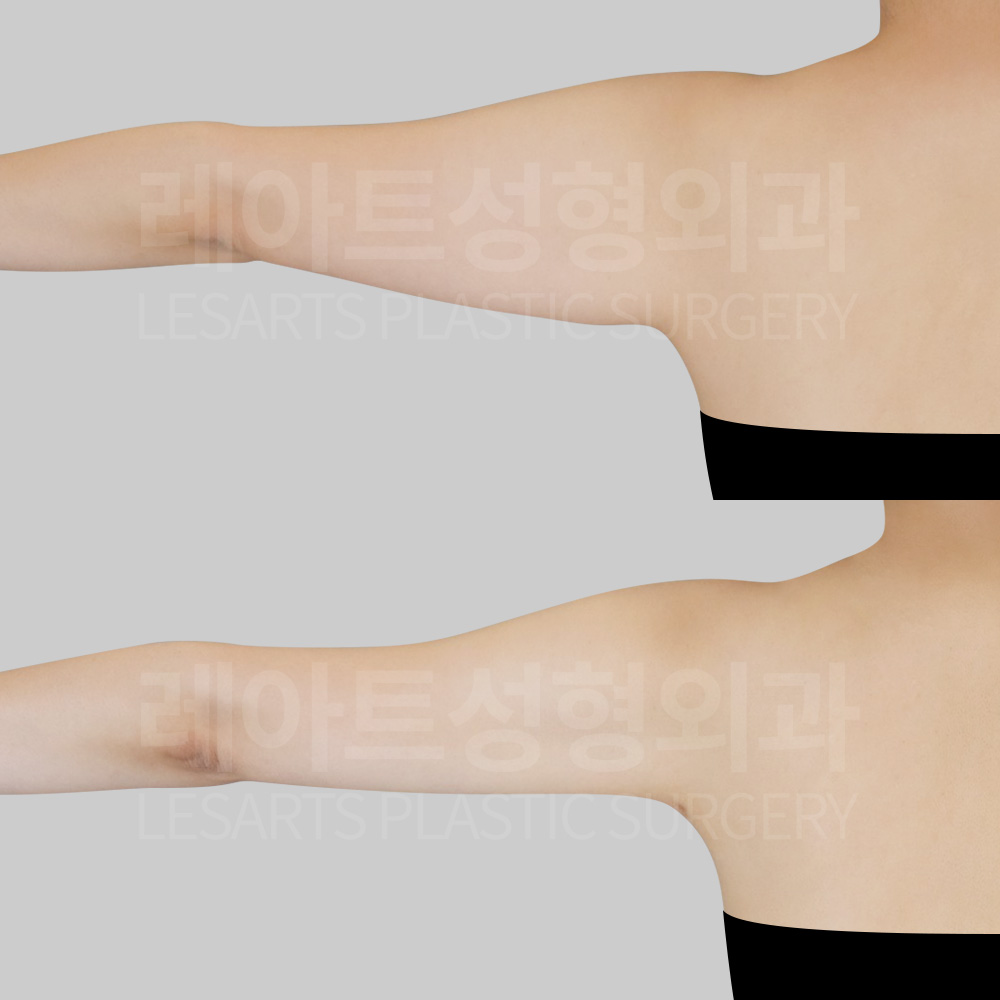
Posterior Triceps Contour Transformation
When abducting the arms laterally, previously sagging posterior fat deposits created a heavy, crowded appearance;
post-surgically, posterior volume settled cleanly,
maintaining a balanced feminine contour without sharp muscular demarcations along the deltoid.
Concurrently, contouring the medial axillae, scapulae, and bra line balanced transitions between the arms and back,
producing a noticeable visual frame reduction across the upper torso.
By prioritizing customized design over uncalibrated over-aspiration,
smooth, resilient skin lines were established without indentations or irregularities.
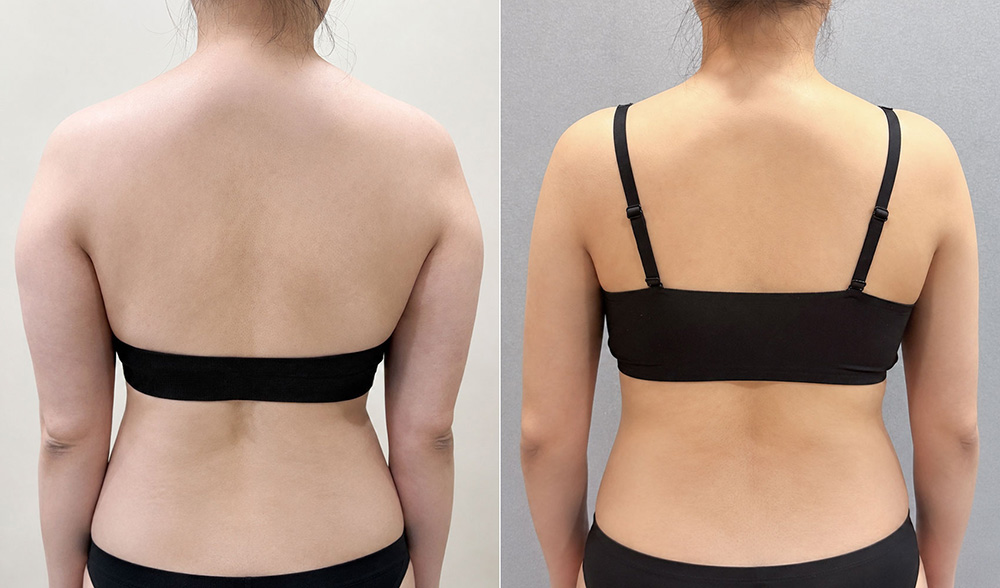
Patient Follow-Up Photograph at 3 Months Post-Op

Arm Liposuction Before & After Comparison - Lesarts

Wardrobe Fit After Arm Liposuction - Dr. Yongseung Seo, Lesarts Plastic Surgery
The patient expressed high satisfaction seeing her long-standing posterior bulge resolved,
noting that armhole fit in tops felt comfortable and her wardrobe silhouette had transformed completely.
Many patients visit our clinic noting, “Weight dropped elsewhere, yet this single posterior arm bulge refused to budge.”
Simultaneously, concerns regarding surface indentations and uneven skin texture remain common.
While liposuction provides an effective contouring modality, focusing solely on extraction volume can precipitate challenging adhesions or unnatural lines.
Even without overt complications, disrupting bodily balance leads to suboptimal results; evaluating individual skeletal structure and muscular form preoperatively is essential.
If persistent upper arm lines remain unresolved despite lifestyle regimens, we welcome you to consult with Lesarts Plastic Surgery.
Our board-certified plastic surgeons will work with you to establish natural, balanced contours tailored to your frame.
Arm Liposuction FAQ
Q1. Why does a posterior arm bulge make the upper body appear heavier than actual weight?
A. With arms resting naturally, the outward curve of the posterior bulge is visible from the front.
This widens the horizontal span from shoulder to arm, creating visual distortion that makes the upper torso appear broad and short.
Q2. What issues can arise from aggressive over-aspiration in frames with muscular deltoids?
A. Underlying muscle borders can become starkly defined, yielding a masculine, rugged contour.
Furthermore, risks of fascial tethering, skin irregularities, and soft-tissue step-offs increase substantially, making buffer fat preservation along muscular boundaries essential.
Q3. Why is slightly more fat preserved along the lower brachium compared to the upper segment?
A. Balancing the diameter between the upper and lower arm eliminates the taper contrast that accentuates posterior bulges.
Equalizing thickness across the arm establishes a straight, uninterrupted line whether arms are resting or elevated.
Q4. What visual benefits result from contouring the scapulae and bra line alongside arm liposuction?
A. Contouring contiguous back deposits reduces three-dimensional torso thickness and harmonizes transitions with the arms.
This smooths posterior contours beneath fitted attire, producing an overall visual slimming effect across the upper frame.
Q5. Is prolonged compression garment wear mandatory after arm liposuction? What is the recommended timeline?
A. The primary purpose of garments is managing early discomfort and edema rather than dictating final line formation.
Once initial healing stabilizes and movement is comfortable, wear time can be tapered, with most patients discontinuing garments around 6 weeks post-op.
Dr. Yongseung Seo


Cases finding
similar to my profile
Customer Diagnostics


Select the surgery and
area you are interestedto see real
before andafter changes.


we
make you,
the art
Clinic hours
MON - FRI
10 am – 7pm
SAT
10 am – 4pm
Holiday
SUN, HOLIDAY
Location
Lesarts Moon Clinic Tower 4-5F, 40, Nonhyeon-ro 168-gil,
Gangnam-gu, Seoul, Republic of Korea

Medical institution name Lesarts Plastic Surgery
Address Lesarts Moon Clinic Tower 4-5F, 40, Nonhyeon-ro 168-gil, Gangnam-gu, Seoul, Republic of Korea
Representative Moon sung jun
