




Online Consultation
Please accurately enter the information below.
Quick Cost Consultation
Quick Consultation & Reservation
Cases finding
similar to my profile






Doctor's Note
Medical columns by our surgeons
Abdominal Liposuction | Lower Abdominal Bulge That Dieting Cannot Resolve: What Is the Cause?
2026-09-22
Abdominal Liposuction | Lower Abdominal Bulge That Dieting Cannot Resolve: What Is the Cause?
Written by Dr. Yongseung Seo, Lesarts Plastic Surgery
This column was authored directly by our medical staff.
※ Unauthorized copying, editing, processing, or redistribution is strictly prohibited. ※
If body weight is within the normal range but only the lower abdomen bulges, can liposuction improve it?
If sufficient subcutaneous fat is distributed in the lower abdomen,
liposuction can refine both circumference and contour lines.
However, concurrent factors such as visceral adiposity must also be evaluated.
[Lesarts Abdominal Liposuction Guide]
Many working women note that despite watching their diet and exercising consistently,
“My scale weight is normal and I lean toward slender, yet my lower belly bulges noticeably.”
“Without a defined waistline, clothes lack silhouette, and folding belly fat when sitting causes persistent concern.”
These shared frustrations are voiced frequently during consultations.
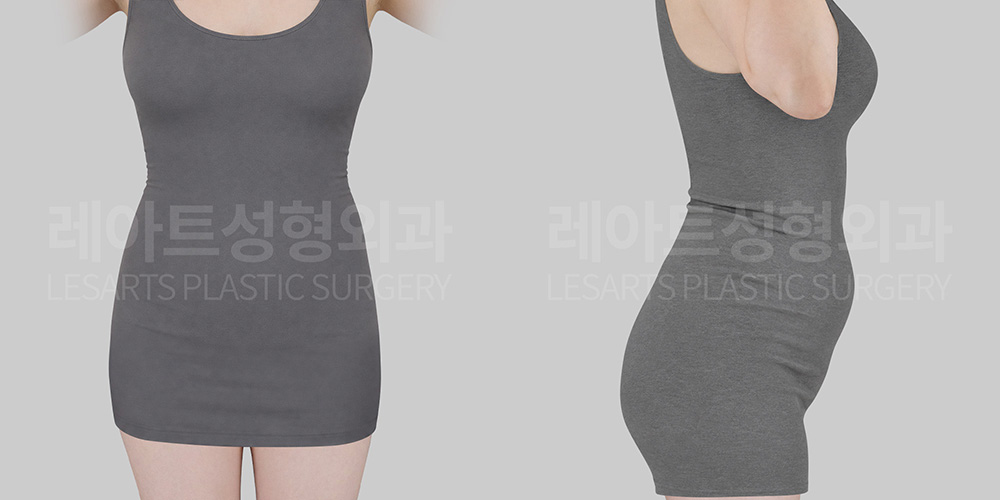
[Preoperative Dress Fit Before Abdominal Liposuction - Lesarts Plastic Surgery]
When total body weight remains stable but adipose tissue lingers disproportionately in the lower abdomen,
the proportional balance between the upper and lower torso can appear disharmonious in the mirror.
Even when wearing fitted dresses or high-waisted trousers,
lower abdominal fullness projects forward, drawing visual focus directly to the infraumbilical zone.
Even when abdominal core muscles are strengthened through targeted workouts, if visceral adiposity coexists,
the outward projection of the abdominal wall may not diminish as readily as hoped.
Conversely, attempting to resolve this through extreme weight reduction
often depletes volume in the face, arms, or limbs first before the abdomen,
occasionally making full-body proportions appear more unbalanced.
Therefore, lower abdominal fullness should not be viewed merely as generic weight gain;
it requires careful analysis of individual body frame, daily lifestyle habits, and prior surgical histories.
Rather than prioritizing indiscriminate extraction volume,
it is essential to design operative boundaries and contour lines
that accentuate the waistline while maintaining natural, continuous transitions.
The patient presented today fell within standard reference body weight,
yet experienced persistent discomfort wearing preferred attire due to prominent lower abdominal projection.
When localized contours cause distress rather than numeric scale weight,
liposuction functions not merely as simple debulking,
but as a tailored contouring procedure that harmonizes overall bodily proportions.
Rather than worrying in isolation, establishing an accurate anatomical assessment
clarifies tissue composition and guides an operative design matched to your frame.
[Patient Profile]
Age: Mid-20s
Height: 158 cm
Weight: 50 kg (baseline maintained at 45–47 kg, peak at 54 kg)
BMI: 20.0 kg/m²
Body Fat Percentage: 33.0%
Visceral Fat Level: 7
※ Clinical outcomes of liposuction may vary individually depending on tissue distribution, muscular anatomy, and dermal condition, even among patients with similar physical specifications.
[Preoperative Assessment & Surgical Plan]
“My lower abdomen stands out noticeably compared to my weight. I want to highlight my waistline.”
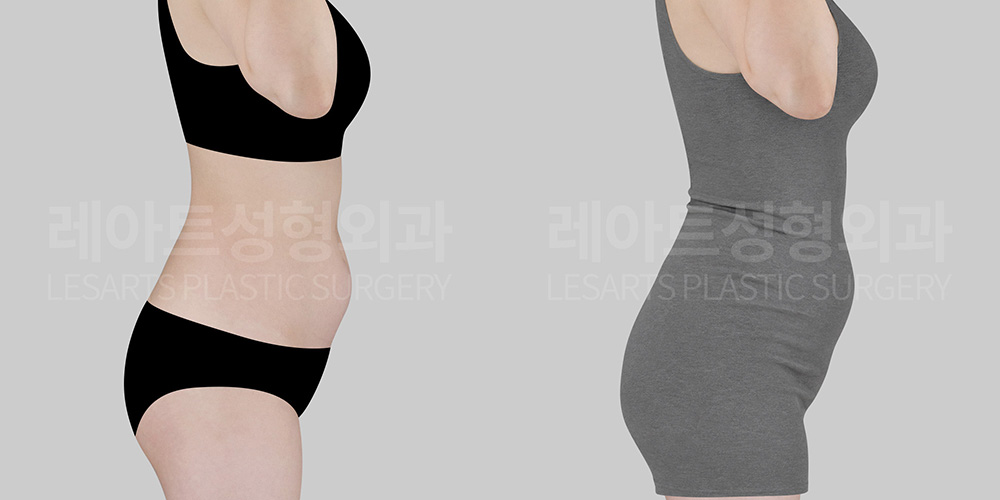
[Preoperative Lower Abdominal Projection - Lesarts Plastic Surgery]
Lower Abdomen
Although total body weight was within standard parameters,
her body fat percentage was comparatively high relative to weight,
presenting with a physique where the lower abdomen projected forward noticeably compared to other regions.
Diagnostic ultrasound recorded subcutaneous adipose depth at:
Upper and Lower Abdomen: 22 / 34 mm
Flanks: 18 / 16 mm
Love Handles: 18 / 18 mm
confirming substantial subcutaneous adipose deposits throughout the abdominal wall.
Because a thick subcutaneous adipose layer was concentrated in the infraumbilical area,
favorable potential existed to reduce lower belly diameter
and smooth abdominal contours through liposuction.
However, because her visceral fat level was also elevated (Level 7),
liposuction targeting subcutaneous fat alone could face limits in completely flattening the anterior abdominal wall.
We thoroughly explained that sustaining balanced nutrition and lifestyle management postoperatively
is vital to addressing internal visceral volume.
Additionally, she noted that an approximate 5 cm uterine myoma had recently been detected during a gynecological check-up for menstrual irregularities.
Although her gynecologist verified that liposuction was clinically permissible,
we informed her that the dimensions, configuration, and internal position of the mass
could potentially contribute to subtle post-surgical bilateral contour asymmetry.
Therefore, if surgical myomectomy was planned for the future,
we recommended completing that treatment prior to undergoing abdominal liposuction.
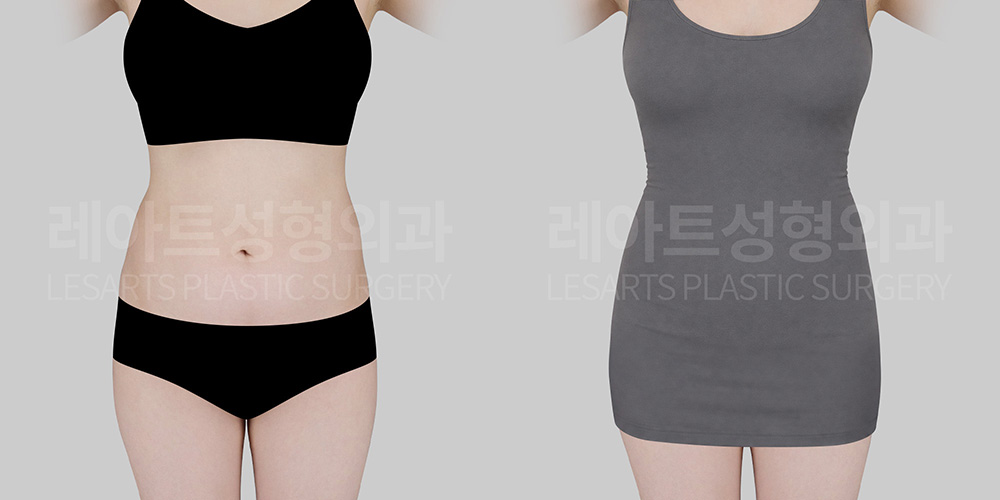
[Preoperative Flank Fullness Obscuring Waist Definition - Lesarts Plastic Surgery]
Flanks & Waistline
The patient desired clearer waistline definition.
Rather than evacuating adipose tissue between the costal margins and iliac crests uniformly,
aspiration was calibrated to focus more intensively along the flank region contiguous to the pelvis.
Deepening the lateral waist curvature established a balanced structural contrast with the hips,
designed to accentuate the waistline whether sitting or standing in fitted garments.
Anatomical Considerations & Limitations
The patient presented with localized internal tissue adhesion over a prior costal cartilage harvest site.
Because such fibrous adhesion zones may not feel completely uniform in contour following liposuction,
this anatomical reality was thoroughly reviewed preoperatively.
[Before & After Comparison: Abdominal Liposuction]
(Photographed 3 months postoperatively under identical lighting and clinical conditions)
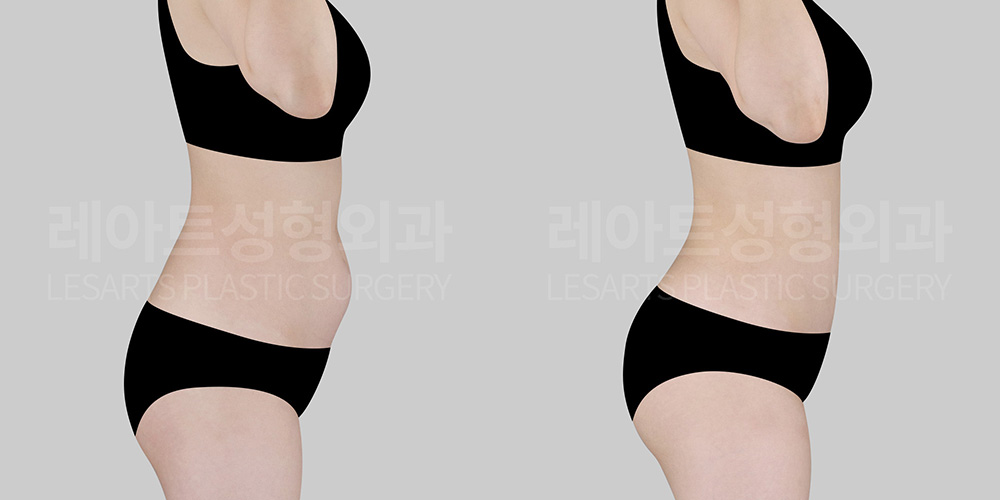
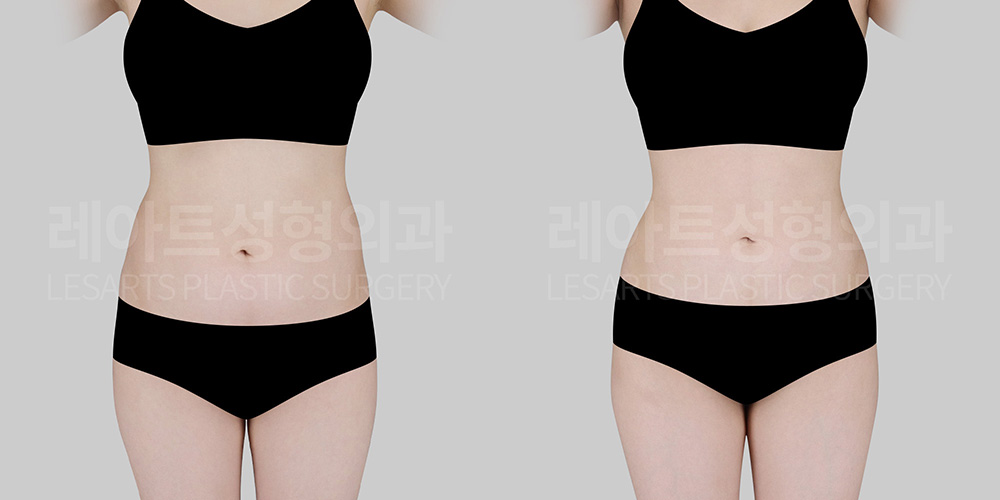
[Pre- and Post-Liposuction Comparison of Lower Abdominal Projection - Dr. Yongseung Seo]
[Waistline Definition Following Abdominal Liposuction - Lesarts Plastic Surgery]
Prior to surgery, disproportionate lower abdominal protrusion
visually elongated the torso and left full-body proportions appearing somewhat awkward.
Postoperatively, debulking concentrated infraumbilical volume
aligned the abdominal wall into a natural, harmonious silhouette.
Furthermore, refining the supraumbilical epigastrium alongside the lower abdomen
established a flatter, smoother anterior plane across the entire abdominal envelope.
[Pre- and Postoperative Flank Line Comparison - Dr. Yongseung Seo, Lesarts Plastic Surgery]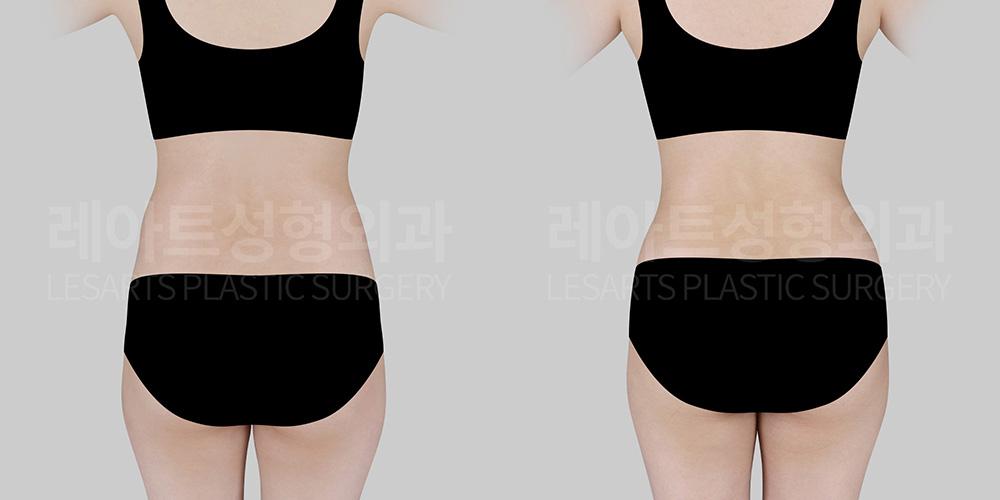
[Clinical Outcomes of Abdominal Liposuction - Dr. Yongseung Seo]
While minor asymmetry over the prior costal cartilage harvest site remained perceptible,
it blended smoothly into the global contour without causing significant personal concern.
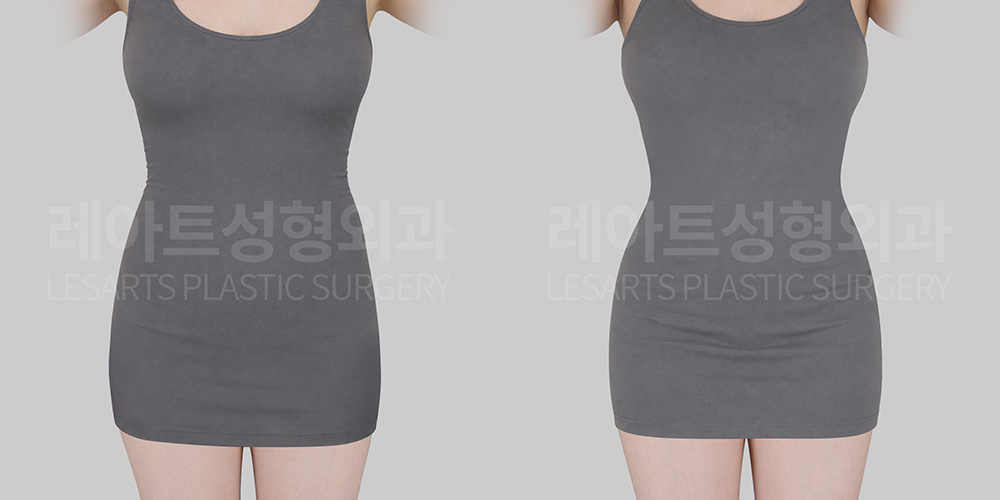
[Flank and Lower Belly Resolution via Abdominal Liposuction]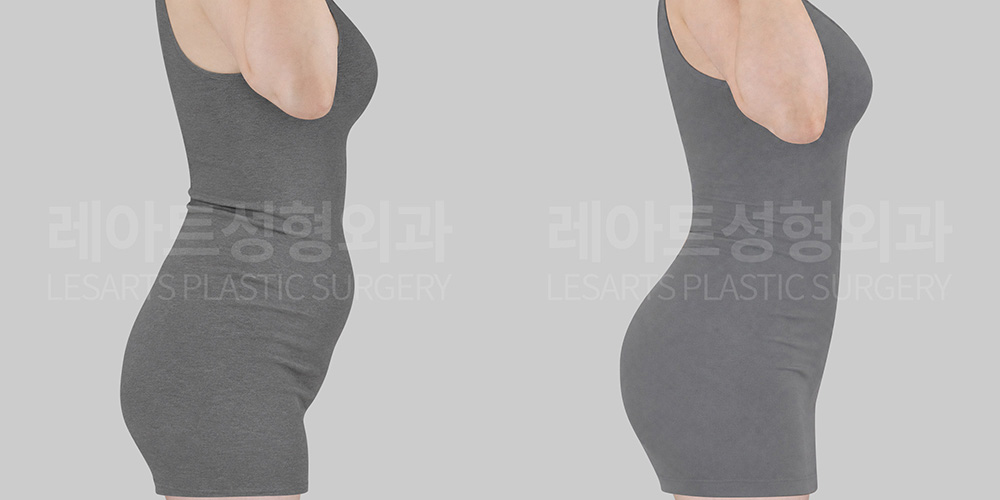
[Wardrobe Fit Transformation Post-Liposuction - Dr. Yongseung Seo]
Before surgery, an indistinct waistline compromised the fit of clothing.
Postoperatively, waist tapering sculpted a balanced, feminine curve.
Contouring the flanks into smooth transitions
substantially improved upper-to-lower body structural balance.
↓ View Various Abdominal Liposuction Cases by Body Type ↓

As in this case,
“Why does only my lower belly remain noticeable when my weight is normal?”
is a question that brings many to our clinic.
However, assuming liposuction alone will instantaneously resolve all abdominal fullness is an oversimplification.
Forward projection of the lower abdomen is
rarely caused solely by localized subcutaneous fat accumulation.
Preoperative diagnostic screening must identify underlying factors
to establish an accurate plan,
ensuring both safety and balanced aesthetic outcomes.
Because each patient presents with unique skeletal proportions, medical histories, and lifestyle patterns,
evaluating achievable surgical possibilities alongside inherent anatomical boundaries
is central to successful body contouring.
If persistent lower abdominal fullness and waistline concerns remain unresolved,
we welcome you to consult with Lesarts Plastic Surgery to find a personalized clinical solution.
FAQ
Q1. Can the lower belly protrude noticeably even at a normal body weight?
Yes. Even if overall body weight is within standard ranges, an elevated body fat percentage or concentrated subcutaneous adipose deposits in the lower abdomen can make the area appear comparatively prominent.
Q2. Can abdominal liposuction completely eliminate a bulging lower belly?
When visceral adiposity is elevated, liposuction targeting subcutaneous fat alone cannot fully eliminate anterior abdominal wall projection.
Q3. Is dietary management necessary after abdominal liposuction?
When visceral fat levels are elevated, sustaining post-surgical nutritional control and consistent lifestyle habits is essential to maintaining flat abdominal contours.
Q4. How is the surgical design structured to accentuate the waistline?
In this clinical case, aspiration was focused more intensively along the flank region contiguous to the pelvis, deepening the lateral waist curve and highlighting natural waistline definition.
Q5. Can prior surgical history affect abdominal liposuction outcomes?
In this patient, internal tissue adhesion over a prior costal cartilage harvest site was identified, and we counseled her preoperatively that subtle contour irregularities could remain perceptible in that localized area.
Dr. Yongseung Seo


Cases finding
similar to my profile
Customer Diagnostics


Select the surgery and
area you are interestedto see real
before andafter changes.


we
make you,
the art
Clinic hours
MON - FRI
10 am – 7pm
SAT
10 am – 4pm
Holiday
SUN, HOLIDAY
Location
Lesarts Moon Clinic Tower 4-5F, 40, Nonhyeon-ro 168-gil,
Gangnam-gu, Seoul, Republic of Korea

Medical institution name Lesarts Plastic Surgery
Address Lesarts Moon Clinic Tower 4-5F, 40, Nonhyeon-ro 168-gil, Gangnam-gu, Seoul, Republic of Korea
Representative Moon sung jun
