




Online Consultation
Please accurately enter the information below.
Quick Cost Consultation
Quick Consultation & Reservation
Cases finding
similar to my profile






Doctor's Note
Medical columns by our surgeons
Gynecomastia Surgery | When to Have It Before Enlistment? 6–8 Week Recovery Guide
2026-10-06
Gynecomastia Surgery | When to Have It Before Enlistment? 6–8 Week Recovery Guide [Doctor's Note by Dr. Jihoon Moon]
When Is the Best Time for Gynecomastia Surgery Before Military Enlistment?
Q. If you are preparing for military enlistment, when is the optimal time to undergo gynecomastia surgery?
A. Although returning to daily light activities is possible relatively quickly following gynecomastia surgery,
an adequate recovery timeline must be secured when considering demanding recruit training—
such as full-gear ruck marches and individual combat drills—that impose strong mechanical force and friction across the upper body.
This column recommends undergoing surgery approximately 1.5 to 2 months (6 to 8 weeks) prior to your enlistment date,
allowing you to progressively increase physical activity levels in accordance with each recovery stage.
[ View More Real Lesarts Gynecomastia Cases ]
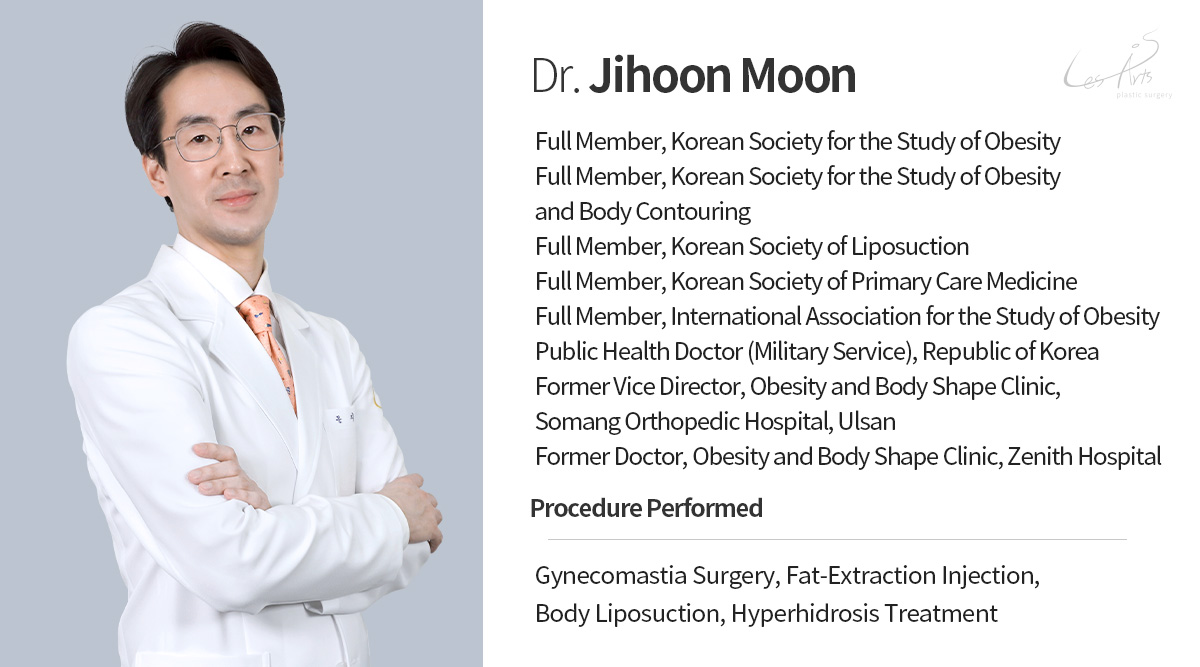
Written by Dr. Jihoon Moon, Lesarts Plastic Surgery
This column was authored directly by our medical staff.
※ Unauthorized copying, editing, or redistribution is strictly prohibited. ※
During consultations with adult male gynecomastia patients,
“When did your chest concerns first begin?”
is a question frequently answered with:
“Ever since middle school.”
“It has bothered me continuously since high school.”
A substantial number of patients share this background.
During one's teenage years, however, pursuing surgical treatment
often faces realistic constraints.
Balancing school schedules makes securing sufficient recovery time difficult
outside of extended school breaks.
Consequently, young men who have endured chronic self-consciousness over chest fullness
often begin formally exploring surgical correction only after reaching adulthood.
Yet upon entering early adulthood, another major milestone awaits.
Mandatory military enlistment.
“Since enlistment is approaching, should I just wait and get surgery after discharge?”
Some consider postponing clinical treatment once again with this thought.
During military service, however, situations where concealing the chest silhouette
is virtually impossible occur repeatedly.
Preoperative Gynecomastia Baseline - Lesarts Plastic Surgery
Indeed, some service members experience heightened psychological stress during active duty,
ultimately using personal leave to undergo surgery before returning to base.
Wearing lightweight military undershirts, changing uniforms in shared barracks,
and showering in communal facilities represent everyday military routines
that place constant visual focus on the chest profile.
In this column, we outline the optimal timing for pre-enlistment gynecomastia surgery
and review the physiological healing stages for young men in their early 20s.

Preoperative Gynecomastia Assessment - Lesarts Plastic Surgery
Because unresolved chest enlargement can significantly amplify stress during service,
some soldiers opt to utilize mid-service leave for surgical treatment.
Here, we detail the key timing considerations for prospective recruits,
explaining how internal tissues stabilize over time and when various physical drills
can be safely resumed across each postoperative milestone.
1. Early 20s and Military Enlistment: Should Surgery Be Deferred Until After Discharge?
After experiencing chronic self-consciousness regarding gynecomastia throughout adolescence,
entering adulthood allows patients to independently explore definitive surgical options.
Yet this period coincides directly with another reality:
military duty.
The early 20s is when young men are either actively preparing for service
or have already received official enlistment notices.
Consequently, patients often ask:
“Since military service spans nearly two years,
would it be better to wait and have surgery after discharge?”
Considering postponing treatment for several years is a common dilemma.
However, based on clinical experience treating patients both before and after enlistment,
entering communal military life with unresolved gynecomastia stress
is generally discouraged.
The military environment is a unique collective setting
where individuals live and train alongside peers throughout the day.
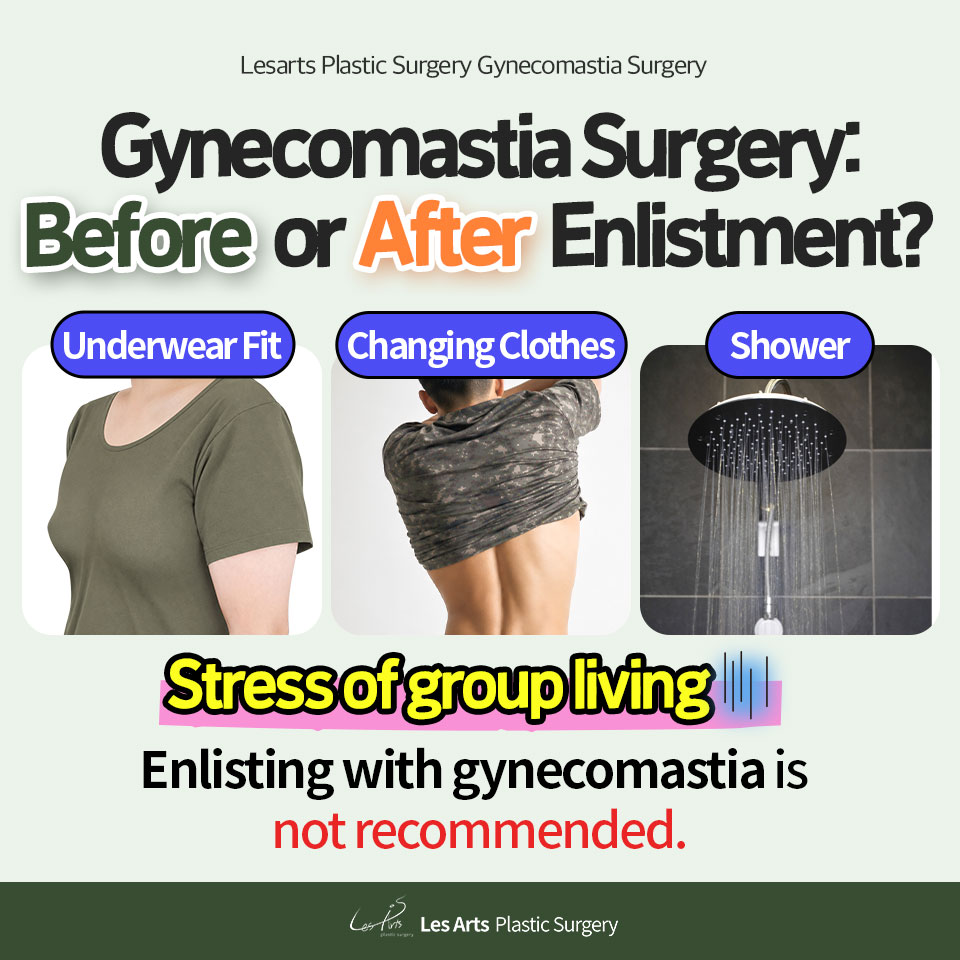
Gynecomastia Surgery and Military Enlistment - Lesarts Plastic Surgery
Wearing thin summer military undershirts, changing in shared barracks,
and using communal showers present recurring scenarios
where the chest profile is openly visible.
For those who have struggled with chest self-consciousness,
environments where concealing the chest is difficult
can trigger persistent psychological inhibition and stress.
Military service already demands substantial physical and mental energy
to adapt to training regimens and communal life.
Rather than carrying aesthetic anxieties into service, if sufficient recovery time
can be secured prior to enlistment, completing surgical treatment beforehand
allows one to begin military life with confidence.
2. When to Have Surgery Before Enlistment: Staged Physical Activity Timeline
Resuming everyday sedentary activities and regaining the capacity
for high-intensity physical training in recruit camp represent distinct recovery phases;
scheduling surgery requires carefully aligning remaining time until enlistment
with the physiological stages of soft-tissue healing.
At what point should young men in their early 20s undergo gynecomastia surgery
to ensure training drills can be performed safely after enlistment?
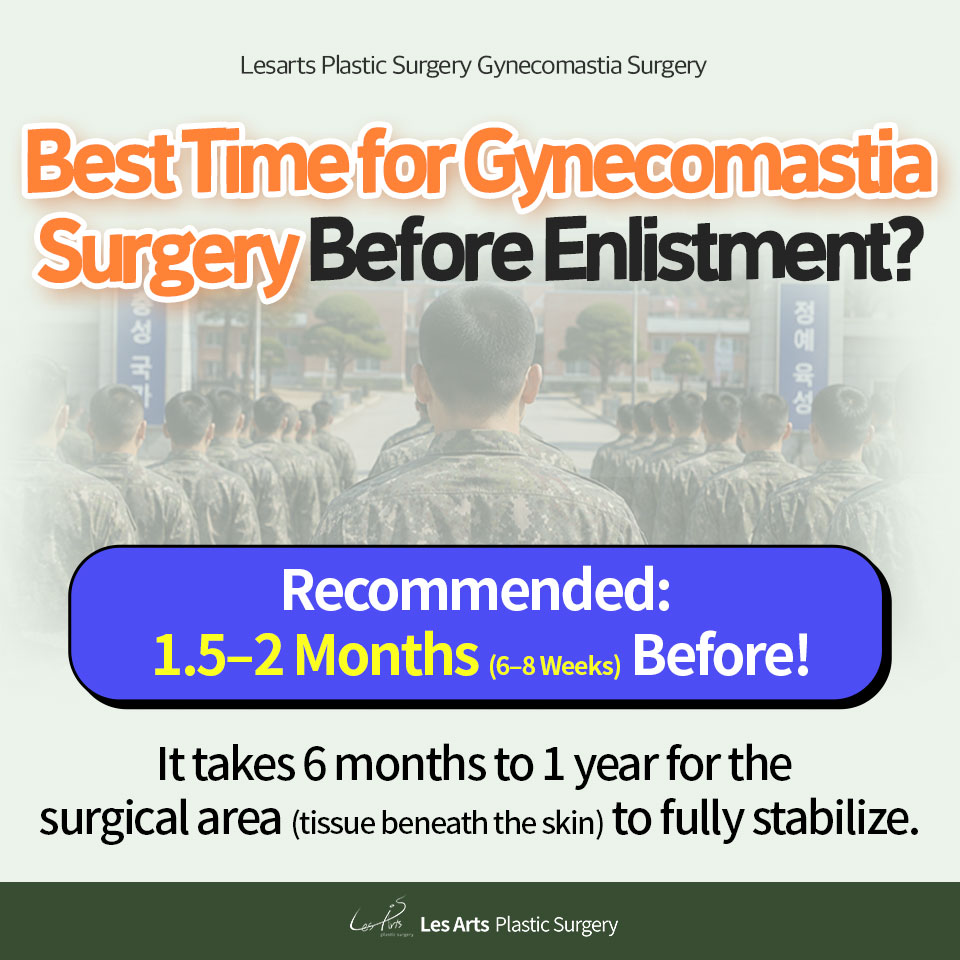
Pre-Enlistment Surgery Timeline - Dr. Jihoon Moon, Lesarts Plastic Surgery
Clinically, undergoing surgery at least 1.5 to 2 months (6 to 8 weeks) prior to your enlistment date
is the safest and most effective protocol.
Gynecomastia surgery involves resecting proliferated glandular parenchyma
and aspirating surrounding subcutaneous fat to establish a flat, natural masculine chest wall.
While the operative procedure takes roughly one to two hours under same-day discharge,
internal tissues require adequate physiological time
to adapt and stabilize.
Tissue Stabilization Window: 6 Months to 1 Year
A common misconception is that internal tissues
are completely healed after just one month.
Anatomically, allowing mobilized skin to adhere firmly to the underlying pectoralis fascia,
permitting new tissue to organize within the evacuated space,
and softening internal induration (bio-bands)
typically spans 6 months to 1 year.
Throughout this period, microscopic remodeling takes place continuously.
Consequently, mild sensory blunting or temporary firmness
may be perceived across the chest for several months, representing an expected healing progression.
Progressive Physical Activity Guidelines
Although full internal stabilization takes over 6 months,
this does not imply that exercise or physical activity must be avoided during that entire span.
Physical intensity can be reintroduced sequentially and progressively
according to distinct recovery milestones.
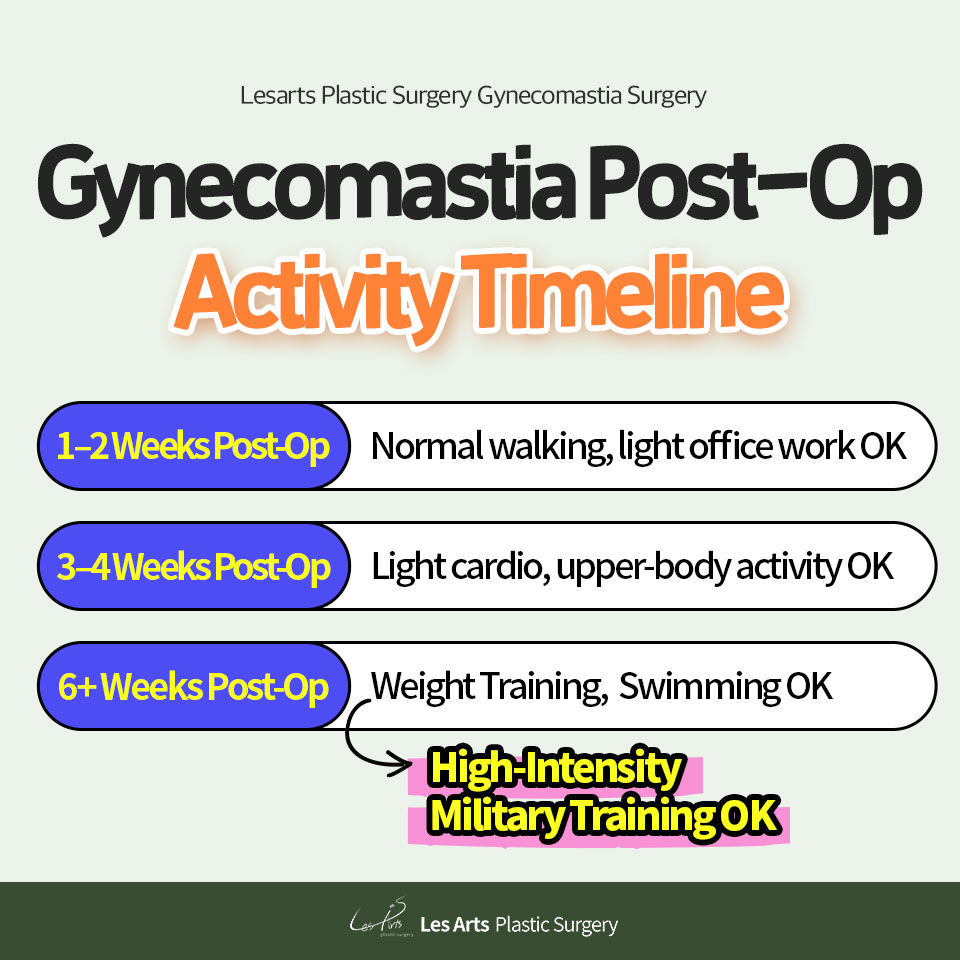
Postoperative Exercise Timeline - Dr. Jihoon Moon, Lesarts Plastic Surgery
✔ Weeks 1–2 Post-Op (Early Recovery Phase)
This period requires the greatest caution.
To minimize bruising and edema while ensuring proper skin redraping,
a customized medical compression garment must be worn 24 hours a day.
Everyday walking and light desk work are permitted,
but straining upper-body muscles or lifting heavy objects must be strictly avoided.
✔ Weeks 3–4 Post-Op (Intermediate Recovery Phase)
Incision portals heal and dermal adherence stabilizes during this window.
Compression garment wear can typically be adjusted to approximately 12 hours daily,
light cardiovascular workouts (ranging from slow walking to brisk walking) are resumed,
and commuting via public transit and light upper-body tasks proceed comfortably.
✔ Week 6 and Beyond (Enlistment & High-Intensity Physical Activity Phase)
By 6 weeks (approximately 1.5 months) post-op, primary internal tissue adherence is well consolidated.
From this point, rigorous upper-body resistance training,
swimming, and high-impact physical activities can be progressively and safely resumed.
From the perspective of recruit training,
drills such as 20+ kg full-gear ruck marches, combat obstacle courses, low crawls, and rifle positions
impose substantial compression, strain, and direct friction across the chest and shoulder girdle.
By securing at least 6 weeks (1.5 months) of recovery before enlistment,
recruits can navigate these high-intensity military training demands
securely without strain or pain at the surgical site.
This represents the clinical foundation for recommending surgery
at least 1.5 to 2 months prior to enlistment.
3. Conclusion
Gynecomastia extends beyond simple cosmetic shape;
persisting from adolescence into the early 20s, it often impacts self-esteem
and psychological comfort.
Even after reaching adulthood, many consider delaying treatment due to upcoming military duty.
Because military life involves continuous communal living and rigorous physical drills,
scenarios where the chest line is noticeable occur frequently.
Rather than scheduling surgery immediately before entering camp, securing 1.5 to 2 months (6 to 8 weeks) of recovery
allows for proper healing and tissue stabilization.
With this adequate timeline, initial wound healing and primary tissue consolidation settle,
allowing recruits to adapt comfortably to physical training drills after enlistment.
If you are preparing for military service and considering gynecomastia surgery,
we encourage you to plan your surgical schedule by evaluating your enlistment date,
required healing milestones, and upcoming activity demands together through professional consultation.

Gynecomastia Surgery 1-Month Follow-Up - Lesarts Plastic Surgery

Gynecomastia Surgery 2-Month Follow-Up - Lesarts Plastic Surgery
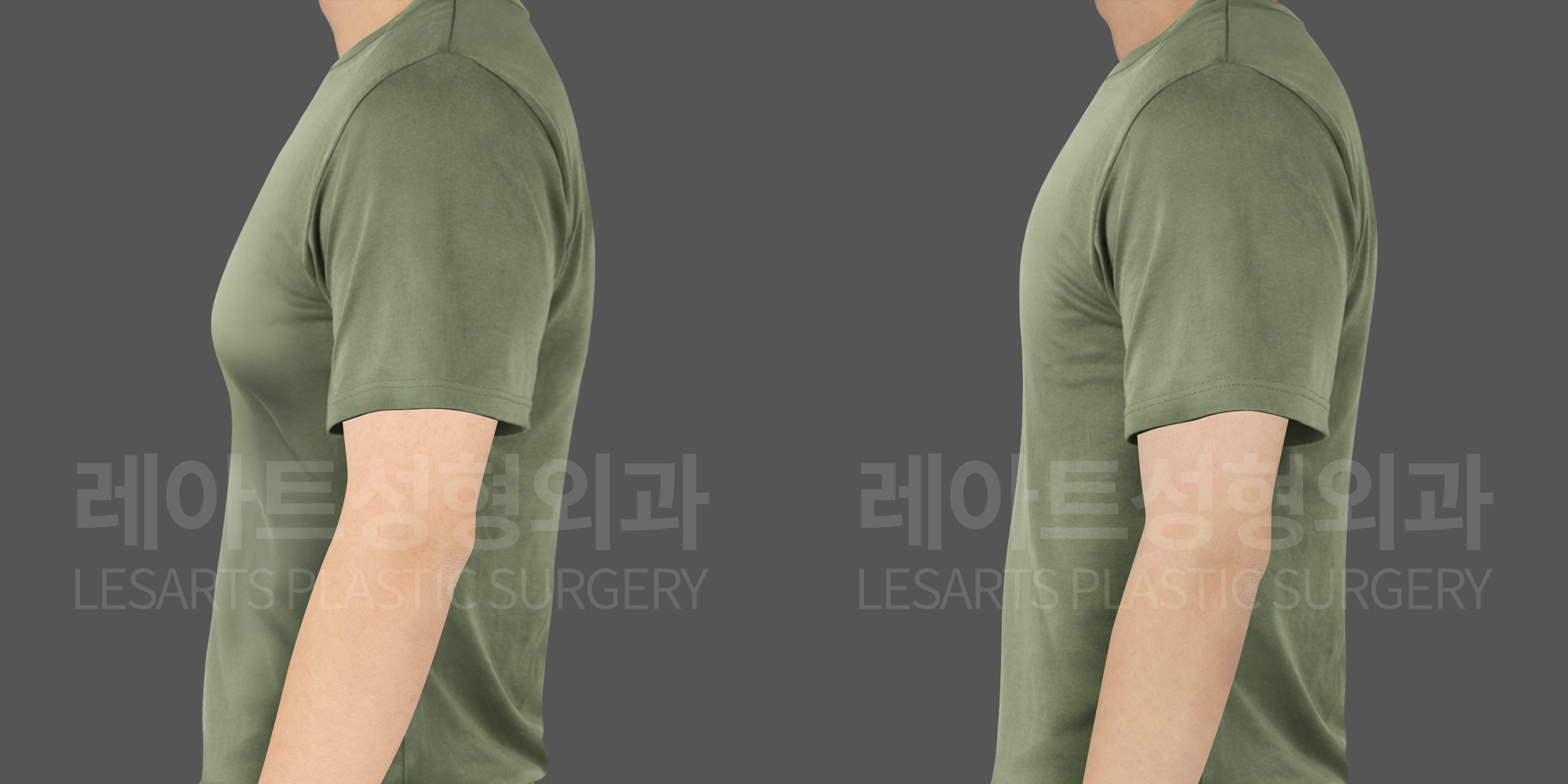
Gynecomastia Surgery 3-Month Follow-Up - Lesarts Plastic Surgery
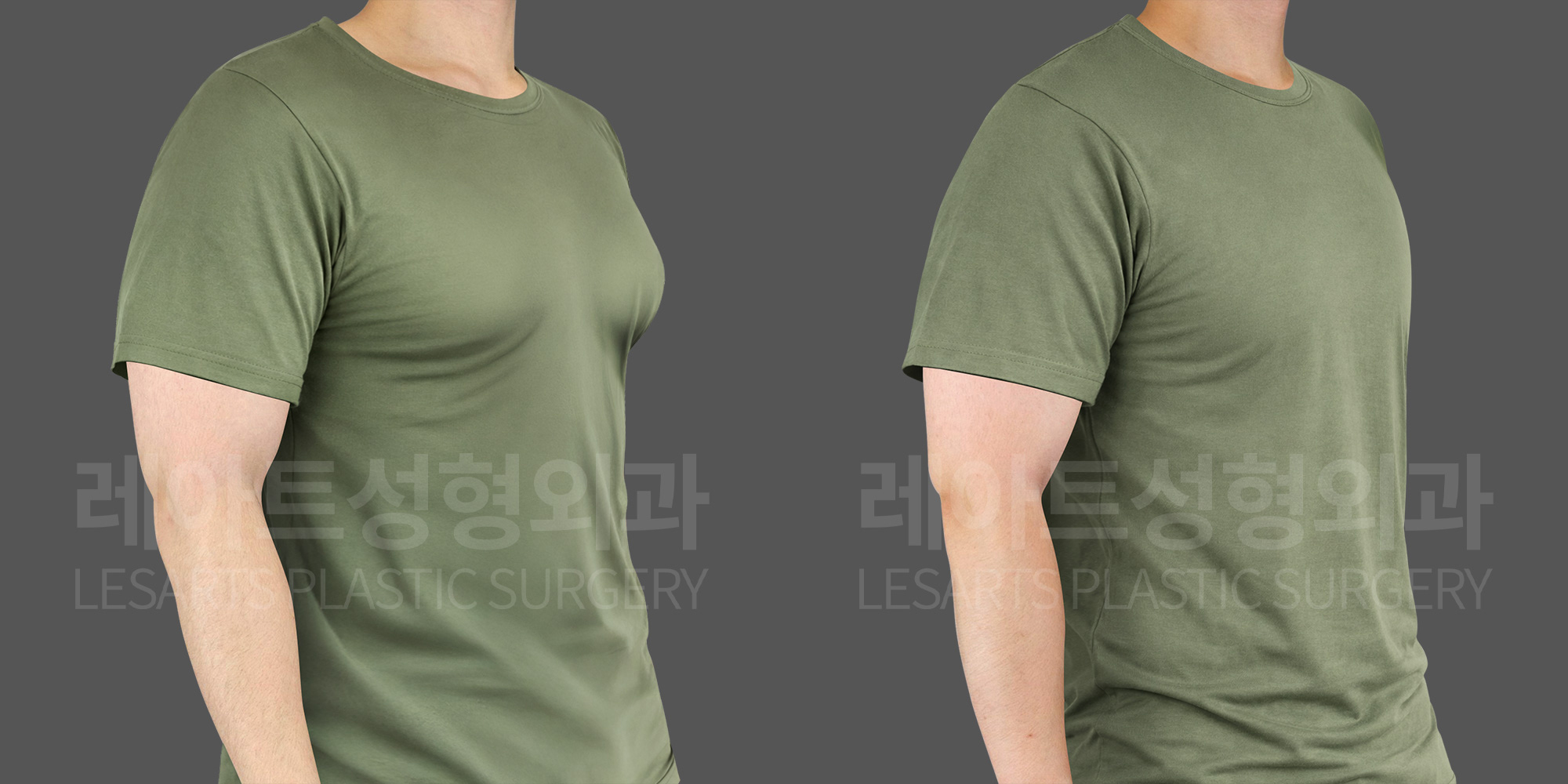
Gynecomastia Surgery 6-Month Follow-Up - Lesarts Plastic Surgery
While internal tissues require approximately 6 months to 1 year
to fully mature and stabilize,
this does not require restricting all activities throughout that period.
By progressively expanding activity levels across recovery milestones—
from light daily routines to cardiovascular workouts, upper-body motions, and strength training—
recruits can smoothly adapt to military training demands and rigorous physical drills.
If you are preparing for enlistment and troubled by gynecomastia,
rather than putting off treatment until the last minute,
we recommend consulting to structure a treatment plan
aligned with your enlistment timeline and required recovery window.
Pre-Enlistment Gynecomastia Surgery FAQ
Q1. Can I undergo gynecomastia surgery one month before enlistment?
Everyday light activities are feasible within one month; however, military recruit camp involves
intense physical stress such as full-pack ruck marches and tactical low crawls.
To accommodate these demands safely, securing at least 6 weeks, and ideally 6 to 8 weeks of recovery, is recommended.
Q2. Can I resume everyday activities immediately after surgery?
Light walking and desk duties are resumed relatively quickly;
however, forceful upper-body exertion and lifting heavy loads
must be avoided during the initial 1 to 2 weeks.
Q3. When can exercise be resumed following gynecomastia surgery?
Recovery begins with light walking, followed by progressive cardiovascular exercise at 3 to 4 weeks.
High-intensity upper-body strength training can generally be resumed gradually from 6 weeks onward.
Q4. Is the surgical site fully healed once 6 weeks have passed?
No. Reaching 6 weeks permits a broader range of physical activities,
but complete internal tissue remodeling and stabilization continue over 6 months to 1 year.
Q5. Is it possible to have gynecomastia surgery during active military service?
Some soldiers utilize personal leave for surgery and return to base;
however, immediate unit training schedules can make securing adequate recovery difficult.
Where possible, planning surgery and recovery prior to enlistment is clinically smoother.
Dr. Jihoon Moon


Cases finding
similar to my profile
Customer Diagnostics


Select the surgery and
area you are interestedto see real
before andafter changes.


we
make you,
the art
Clinic hours
MON - FRI
10 am – 7pm
SAT
10 am – 4pm
Holiday
SUN, HOLIDAY
Location
Lesarts Moon Clinic Tower 4-5F, 40, Nonhyeon-ro 168-gil,
Gangnam-gu, Seoul, Republic of Korea

Medical institution name Lesarts Plastic Surgery
Address Lesarts Moon Clinic Tower 4-5F, 40, Nonhyeon-ro 168-gil, Gangnam-gu, Seoul, Republic of Korea
Representative Moon sung jun
