




Online Consultation
Please accurately enter the information below.
Quick Cost Consultation
Quick Consultation & Reservation
Cases finding
similar to my profile






Doctor's Note
Medical columns by our surgeons
Brachioplasty | Concerns Over Sagging Arm Skin After Rapid Weight Loss: 7-Month Follow-Up After Arm Lift
2026-10-13
Brachioplasty | Concerns Over Sagging Arm Skin After Rapid Weight Loss: 7-Month Follow-Up After Arm Lift
Q. When localized skin laxity develops along the inner upper arm following massive weight loss, what is the surgical strategy to minimize scarring while creating a smooth arm contour?
A. Rather than executing an extensive brachioplasty with an unnecessarily long incision, a limited brachioplasty is performed centered on the proximal medial upper arm (near the axilla) where laxity is concentrated, while the perielbow area is contoured using liposuction.
Positioning the incision line along the anatomical bicipital groove between the biceps and triceps ensures that the scar remains concealed on frontal and posterior views when the arms rest naturally at the sides, completing a smooth, streamlined contour.
[ Learn More About Lesarts Arm Lift ]
Written by Dr. Kukhan Lee, Lesarts Plastic Surgery
This column was authored directly by our medical staff.
※ Unauthorized copying, editing, processing, or redistribution is strictly prohibited. ※
During rapid weight cycling or rigorous diet regimens involving dramatic weight loss,
overextended skin frequently fails to retract back to its original baseline, leaving tissue laxity across various anatomical regions.
Particularly following massive weight loss of tens of kilograms, redundant, stretched skin folds often linger that cannot be resolved through exercise or nutritional control alone.
The upper arms represent one of the primary regions where such cutaneous redundancy and ptosis manifest most conspicuously.
When upper arm skin sags downward, it not only impacts external aesthetics but also creates substantial limitations when selecting clothing,
and during hot summer months, redundant skin-on-skin contact can cause sweat accumulation, chafing, and intertriginous dermatitis.
Because the arms are subjected to constant daily motion and are frequently exposed in short sleeves or sleeveless tops,
patients often experience greater self-consciousness and psychological stress regarding arm ptosis than laxity in other areas.
However, the presence of arm laxity does not automatically mean that an extensive brachioplasty extending all the way down to the elbow or forearm is required.
Evaluating where the redundant tissue is primarily concentrated, the thickness of residual subcutaneous fat, and skin elasticity around the axilla and elbow
to selectively correct only the essential zones is paramount.
In this column, we examine a clinical case where focal skin laxity of the upper arm following massive weight loss was identified,
and smoothly corrected through a combination of arm liposuction and a limited (mini) brachioplasty.
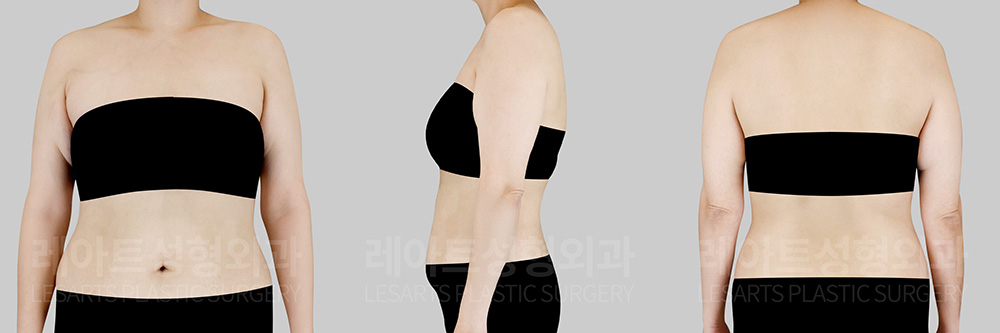
The patient was a female in her 40s with a history of three full-term deliveries.
At her initial consultation, she measured 168 cm and weighed 71 kg.
Her medical history included a peak lifetime weight reaching 98 kg; after reaching a plateau with independent diet and workout regimens, she underwent bariatric gastric bypass surgery approximately two months prior to her visit.
As she continued to lose weight steadily, she sought consultation to resolve the noticeable upper arm skin laxity that unmasked as subcutaneous fat depleted.
Physical examination revealed that severe, generalized skin ptosis did not involve the entire arm length.
Rather, pronounced focal laxity across a specific segment bulged outward, visually exaggerating the perceived looseness of the entire arm.
Specifically, the primary concern was a pouch-like fold of redundant skin and soft tissue sagging along the proximal medial upper arm near the axilla.
The volume of residual subcutaneous fat across the arm was relatively modest, and tissue laxity around the anterior accessory breast and axillary vault was mild.
Therefore, rather than performing an extensive, long-incision arm lift, we determined that a targeted procedure focused precisely on the proximal medial arm where laxity was clustered was the ideal tailored approach.
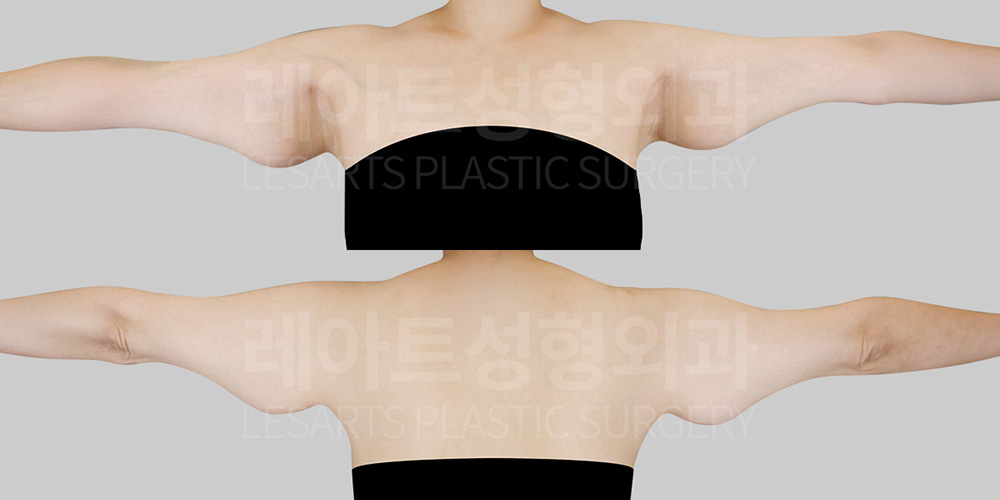
During consultation, the patient initially prioritized tightening the loose skin over minimizing scar length.
In brachioplasty, however, alongside excising redundant tissue, calculating the postoperative scar position, its length,
and how visible the mark will be during daily activities is equally critical.
While extending the incision allows for tightening a broader surface area of loose tissue,
an incision running down toward the cubital joint increases the likelihood that the scar will be visible when wearing short-sleeved tops.
Furthermore, the skin near the elbow is subject to high mechanical tension and frequent joint excursion, elevating the risk of hypertrophic scar formation.
In this clinical case, residual volume and heaviness near the elbow were smoothed via micro-liposuction,
while a customized limited brachioplasty was applied to the proximal medial segment with severe laxity, establishing an optimal balance between tightening redundant skin and minimizing visible scarring.
Below is the clinical appearance at 7 months postoperatively.
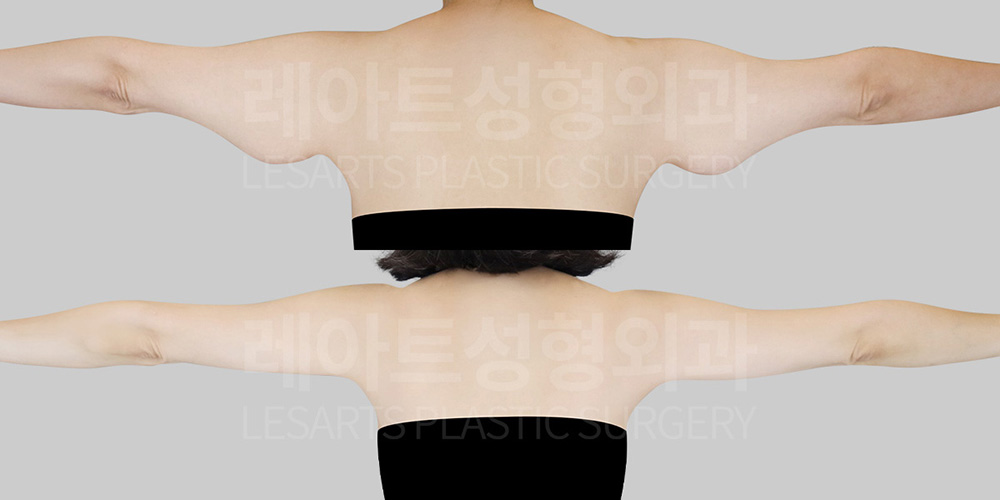
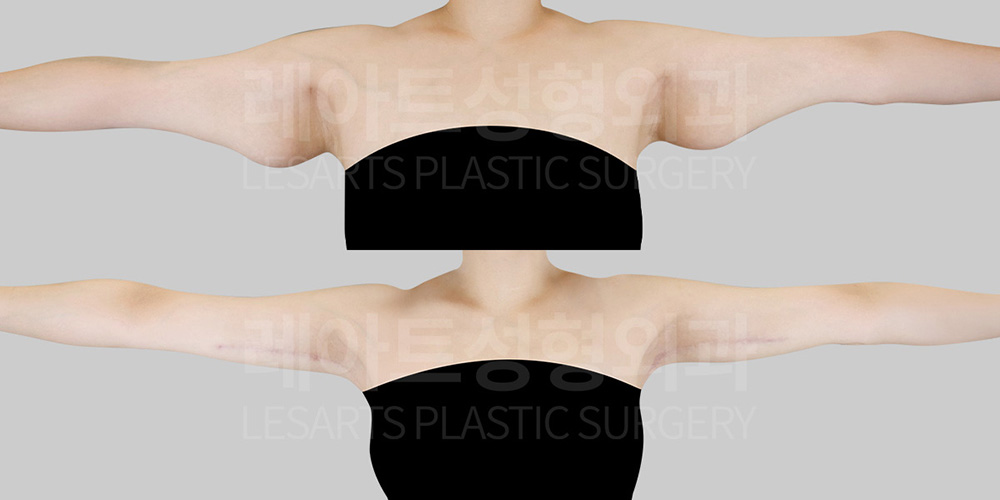
Upon arm abduction, the loose, fluttering soft-tissue fold previously hanging from the inner arm and axilla is smoothly tightened into a taut contour.
Because the incision was tailored specifically to the patient's degree of laxity, while not an ultra-short scar,
the entire outer boundary from shoulder to elbow is refined into a smooth, straight line free of irregularities.
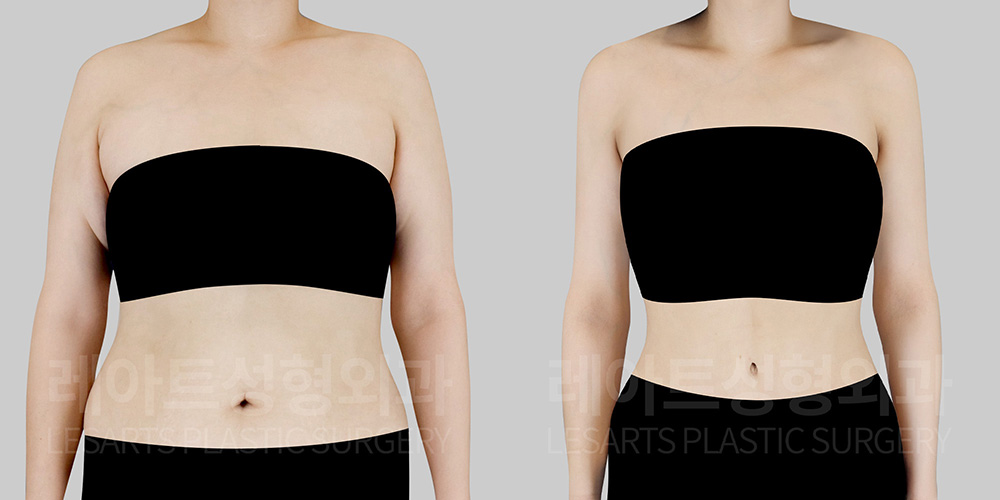
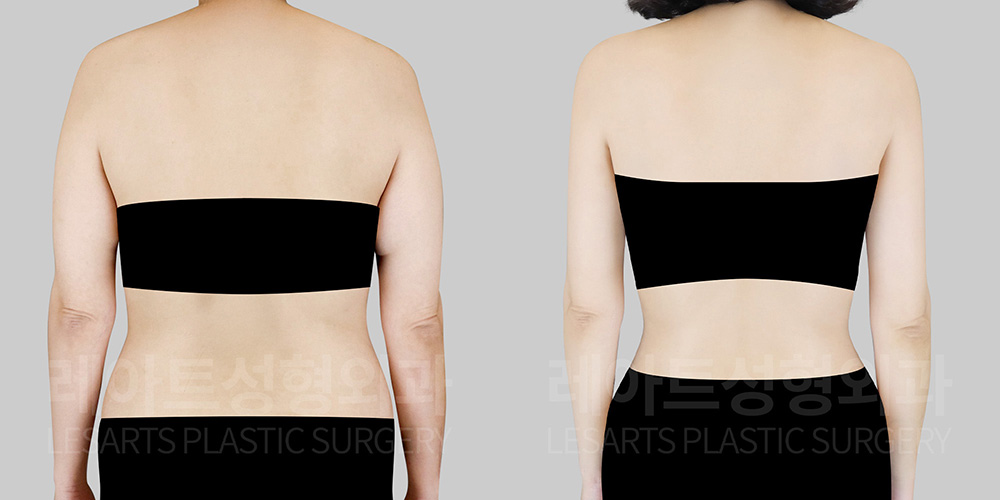
Beyond arm abduction, in a natural standing posture with arms resting at the sides,
the inner bulging fold that previously stood out on frontal and posterior views has significantly improved.
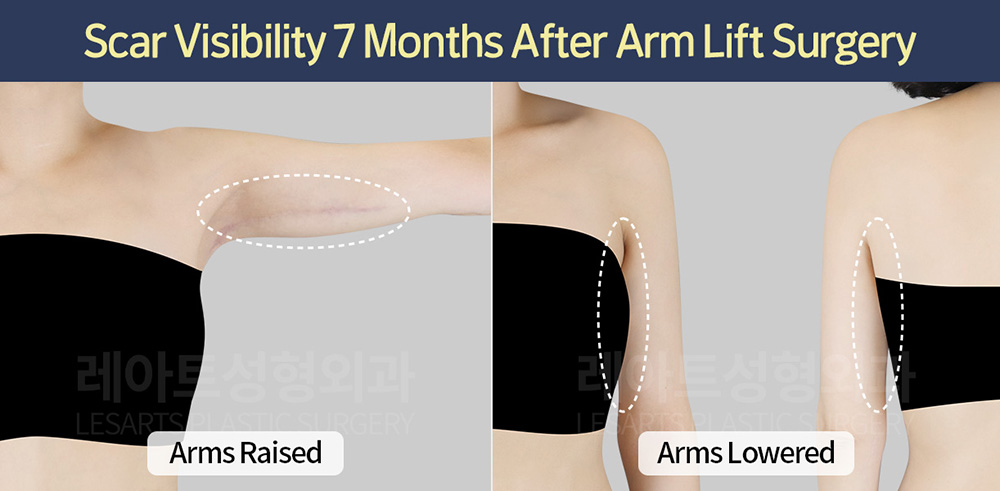
In this procedure, the anatomical placement of the incision line was the central focus.
The incision was designed to settle cleanly along the bicipital groove between the biceps and triceps;
while the scar can be seen when raising the arms overhead, it remains completely hidden from both frontal and rear views when standing naturally with the arms down.
Concealing the incision within the natural concave furrow between muscle groups
preserves natural arm contours while keeping the scar discreet.
At 7 months postoperatively, the scar is undergoing stable physiological maturation.
Surgical scars do not fade immediately; rather, they pass through a remodeling phase spanning several months during which erythema subsides and tissue pliability softens.
With consistent scar care—including hydration, scar gels, and UV protection—the line will fade further toward natural skin tones over 1 to 2 years, blending smoothly into surrounding skin.
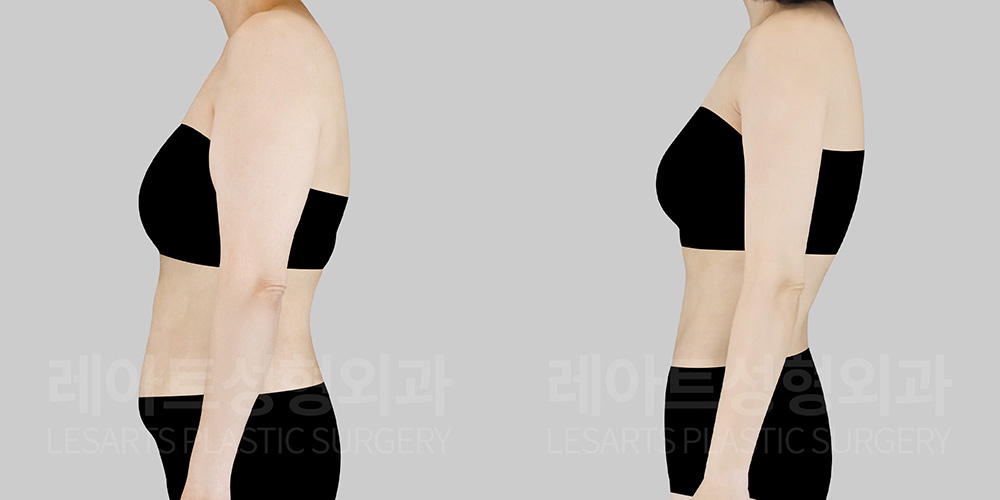
This successful outcome reflects surgical execution combined with the patient's diligent compliance with postoperative scar protocols
and her continued commitment to post-bariatric dietary maintenance and lifestyle habits.
Redundant skin lingering after massive weight loss rarely retracts spontaneously through dieting or cardiovascular workouts alone.
Conversely, placing extensive, long incisions without carefully diagnosing the precise location of laxity and dermal elasticity is equally inadvisable.
When evaluating brachioplasty, analyzing dermal thickness, residual fat, and the focal epicenter of laxity alongside scar placement and everyday visibility is essential to determining the optimal operative scope.
As demonstrated in this case, when focal laxity disrupts overall arm aesthetics rather than generalized ptosis throughout the limb,
a tailored procedure that corrects the problem area while avoiding unnecessarily long scars offers an effective clinical solution. If you are troubled by sagging arm skin following weight loss, we encourage you to schedule a consultation to explore an approach tailored to your anatomy.
[Brachioplasty FAQ]
Q1. Why does skin sag focally in a specific area rather than uniformly across the arm after rapid weight loss from gastric bypass?
A. Rapid weight loss quickly depletes subcutaneous fat, but overstretched dermal elastic fibers along the proximal medial arm cannot spontaneously recoil.
This localized soft-tissue envelope droops downward under gravity near the axilla, creating a visual impression that the entire arm is heavily sagging.
Q2. Why is the incision not extended all the way to the elbow joint when correcting localized arm laxity?
A. To minimize visible scar exposure in short sleeves and reduce the risk of hypertrophic scarring.
The elbow area experiences continuous joint flexion and skin tension that can cause scars to become raised and thick; therefore, contouring the elbow region with liposuction while limiting excisional incisions is clinically safer.
Q3. What is the clinical advantage of placing the brachioplasty incision along the anatomical bicipital groove?
A. The scar remains concealed from both frontal and posterior views in a neutral standing posture.
Because the line settles within the natural anatomical depression between the biceps and triceps,
it remains discreet unless the arms are fully elevated.
Q4. How does the incision scar mature by 7 months post-brachioplasty?
A. Early postoperative erythema gradually subsides as skin texture and scar pliability soften.
The 7-month mark represents the midpoint of collagen remodeling; with consistent scar gel application and taping,
the line progressively fades toward natural skin tones over 1 to 2 years.
Q5. Beyond the surgical procedure itself, what factors are crucial for maintaining smooth arm lines long-term?
A. Structured postoperative scar care and consistent weight maintenance.
Minimizing tension across the operative site prevents scar widening, while maintaining a stable weight without rapid fluctuations
preserves the balanced proportions sculpted between the upper arm and forearm long-term.
Dr. Kukhan Lee


Cases finding
similar to my profile
Customer Diagnostics


Select the surgery and
area you are interestedto see real
before andafter changes.


we
make you,
the art
Clinic hours
MON - FRI
10 am – 7pm
SAT
10 am – 4pm
Holiday
SUN, HOLIDAY
Location
Lesarts Moon Clinic Tower 4-5F, 40, Nonhyeon-ro 168-gil,
Gangnam-gu, Seoul, Republic of Korea

Medical institution name Lesarts Plastic Surgery
Address Lesarts Moon Clinic Tower 4-5F, 40, Nonhyeon-ro 168-gil, Gangnam-gu, Seoul, Republic of Korea
Representative Moon sung jun
