




Online Consultation
Please accurately enter the information below.
Quick Cost Consultation
Quick Consultation & Reservation
Cases finding
similar to my profile






Doctor's Note
Medical columns by our surgeons
Upper Body Liposuction | Severely Obese Female Troubled by a Heavy Upper Torso: 8-Month Transformation of the Arms, Back & Abdomen [Doctor's Note by Dr. Pyongrim Choi]
2026-10-15
Upper Body Liposuction | Severely Obese Female Troubled by a Heavy Upper Torso: 8-Month Transformation of the Arms, Back & Abdomen [Doctor's Note by Dr. Pyongrim Choi]
Q. In severe obesity where the upper body appears disproportionately heavy,
can liposuction transform the upper-to-lower body proportional ratio?
A. Rather than simply extracting large volumes of fat in isolation,
cohesively contouring contiguous zones that build upper body bulk—such as the arms, peribrachial axillary areas, back, and abdomen—is essential.
Narrowing upper body width while concurrently accounting for the transitional ratio flowing from the waist into the pelvis
allows for a transformative shift in the overall bodily silhouette.
[ Learn More About Lesarts Liposuction ]
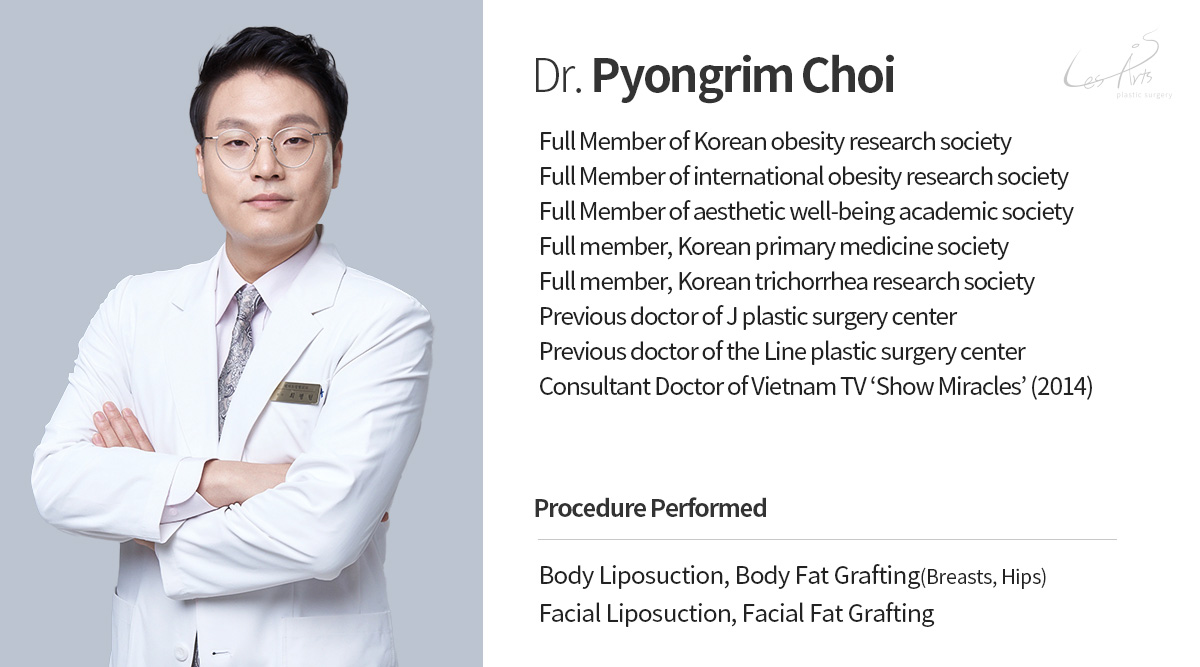
Written by Dr. Pyongrim Choi, Lesarts Plastic Surgery
This column was authored directly by our medical staff.
※ Unauthorized copying, modification, editing, or redistribution is strictly prohibited. ※
During consultations with severely obese female patients, most express the broad concern
“I have gained a massive amount of weight all over.”
However, carefully analyzing their physical anatomy often reveals an issue
distinct from the simple numeric weight on the scale:
namely, a severe breakdown in balance
between the upper and lower torso.
In some patients, heavy volume in the upper torso, arms, back, and abdomen
makes the pelvis and lower body appear relatively narrow by comparison,
while in others, fat concentrates heavily in the lower limbs,
causing the lower body to appear disproportionately broad.
In particular, when upper body volume is excessively heavy, the overall physical frame
appears significantly larger, bulkier, and heavier than the actual weight suggests.
In such presentations, liposuction must extend beyond debulking a single zone in isolation;
it is crucial to reduce upper body width while harmonizing the proportional ratio with the lower body,
restoring a continuous, unbroken bodily silhouette.
In this column, through the clinical case of a female patient in her late 20s (167 cm / 95 kg),
we examine how upper body liposuction was systematically planned in severe obesity
and how harmonious balance between the upper and lower torso was established.
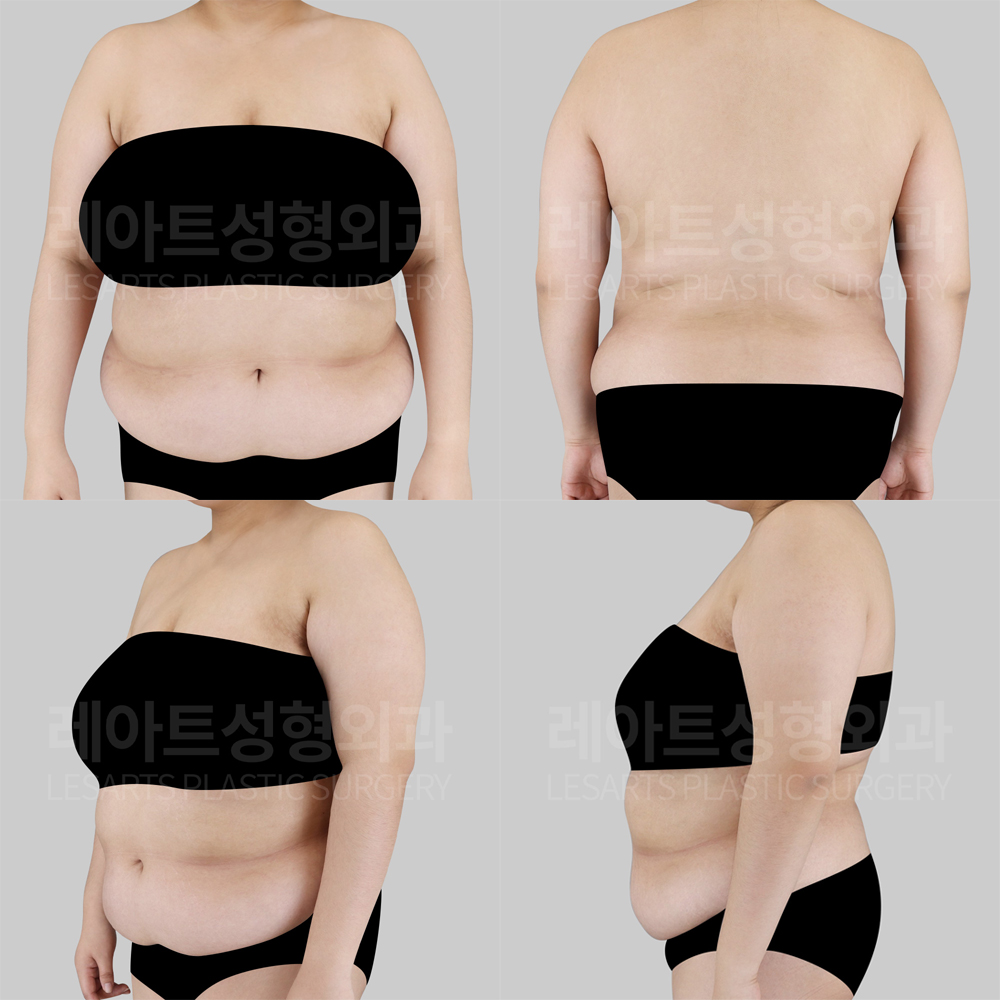
1. Severe Obesity Liposuction: The Greatest Concern Is a Disproportionately Bulky Upper Frame Rather than Scale Weight
The patient presented with severe obesity at 167 cm and 95 kg, with substantial generalized adipose reserves.
During consultation, however, her primary aesthetic concern
was not simply lowering the number on the scale.
Upon physical evaluation, massive volume across the abdomen and upper body dominated her silhouette,
and she prioritized visually minimizing her upper frame
while creating a balanced proportion that transitioned naturally into her lower body.
2. Debulking Upper Body Volume First: Circumferential Arm, Peribrachial, and Back Liposuction
Arm liposuction does not achieve complete line refinement simply by aspirating fat from the inner upper arm.
In this patient, regarding the arms themselves,
smoothing outward lateral bulging
and debulking sagging batwing tissue was vital,
while across peribrachial regions, debulking the anterior accessory breasts, axillae,
and posterior scapular rolls concurrently was essential.
Furthermore, to alleviate posterior upper-body heaviness that broadened her frame from behind,
liposuction across the entire back including the cervicodorsal hump was integrated
to reduce overall upper torso breadth.
In severe obesity, alongside debulking substantial volume,
how seamlessly contiguous zones are connected and sculpted
exerts a profound impact on full-body transformation.
If only the arms are slenderized while back rolls and axillary bulk remain unaddressed,
the visual perception of total upper body downsizing remains strictly limited.
3. Two Weeks Later: Full Abdominal Liposuction to Systematically Refine the Core Torso
Two weeks following arm and back surgery,
full abdominal liposuction was performed.
The abdominal intervention targeted three primary objectives:
- Debulking anterior abdominal wall projection
- Contouring the flanks and waistline
- Restoring a continuous silhouette from upper torso to pelvis
Particularly in heavier patients, anterior abdominal bulging
must never be attributed solely to subcutaneous fat.
Abdominal wall protrusion reflects a complex interplay of subcutaneous fat, visceral adiposity,
musculoskeletal posture, abdominal wall fascial tone, and dermal laxity.
Liposuction physically extracts only the subcutaneous adipose layer.
Therefore, we thoroughly explained preoperatively that underlying visceral fullness pushing outward from within the peritoneal cavity
cannot be eliminated through liposuction alone.
Nevertheless, when abundant subcutaneous fat is present,
calibrated debulking across the anterior abdomen and flanks
substantially reduces external volume and narrows the lateral width of the torso.
Additionally, autologous fat grafting was performed on the relatively narrow pelvic dips.
In this comprehensive procedure, rather than stopping at upper body debulking,
establishing a natural, continuous transition between the upper and lower torso
was regarded as equally vital as the abdominal liposuction itself.
In essence, debulking upper body volume,
smoothly tapering the waistline,
replenishing volume-deficient pelvic hollows, and connecting these lines seamlessly into the lower body
constituted the core of the surgical design.
[8-Month Postoperative Follow-Up: Arm and Abdominal Liposuction]
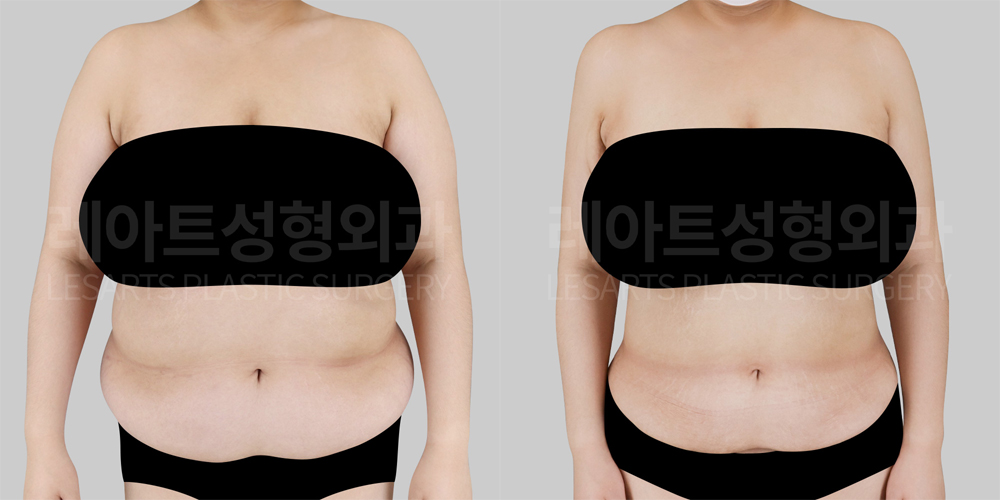
[Upper Body Liposuction in Severe Obesity: Before and After - Dr. Pyongrim Choi, Lesarts Plastic Surgery]
Postoperatively, outward lateral arm bulging resolved,
and with contiguous peribrachial zones contoured concurrently, both arm width and total upper body breadth decreased visibly.
In this patient, surgery did not prioritize stripping fat
to an unnaturally thin subcutaneous layer.
Because severe obesity requires managing tissue laxity and dermal tone alongside fat volume,
the priority focused on contouring arm lines within safe boundaries
to prevent pronounced skin folding or excessive laxity from exaggerating.

[Arm, Abdomen, and Back Liposuction Comparison in Severe Obesity - Dr. Pyongrim Choi]
The back is another critical anatomical region governing perceived upper-body dimensions.
In this case, the entire back and cervicodorsal hump were contoured together.
On posterior view, upper torso breadth diminished significantly,
and the transition between the arms and back
settled into a much smoother contour than before.
Consequently, the visual frame of the upper body narrowed substantially,
as clearly verified on both posterior and frontal profiles.

[Clinical Outcomes of Upper Body Liposuction in Severe Obesity - Dr. Pyongrim Choi, Lesarts Plastic Surgery]
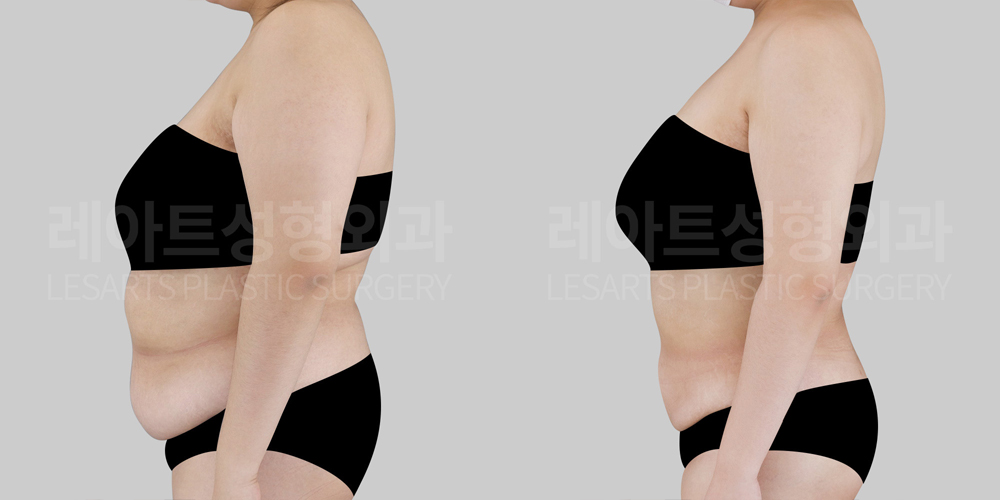
[Arm and Abdominal Liposuction Before & After - Lesarts Plastic Surgery]
In abdominal contouring, analyzing anteroposterior torso thickness
on lateral profile is just as critical as frontal evaluation.
Preoperatively, concurrent anterior bulging and flank fullness
made the entire upper torso appear heavy and thick.
Postoperatively, debulking abdominal volume and refining the flanks
markedly decreased the anteroposterior depth of the torso on lateral profile.
As noted earlier, however,
visceral adiposity contributes to abdominal projection in severe obesity.
Because visceral fat cannot be extracted via liposuction,
rather than pursuing an unrealistic board-flat abdomen,
debulking external subcutaneous volume to improve the global silhouette
represents the sound clinical goal.
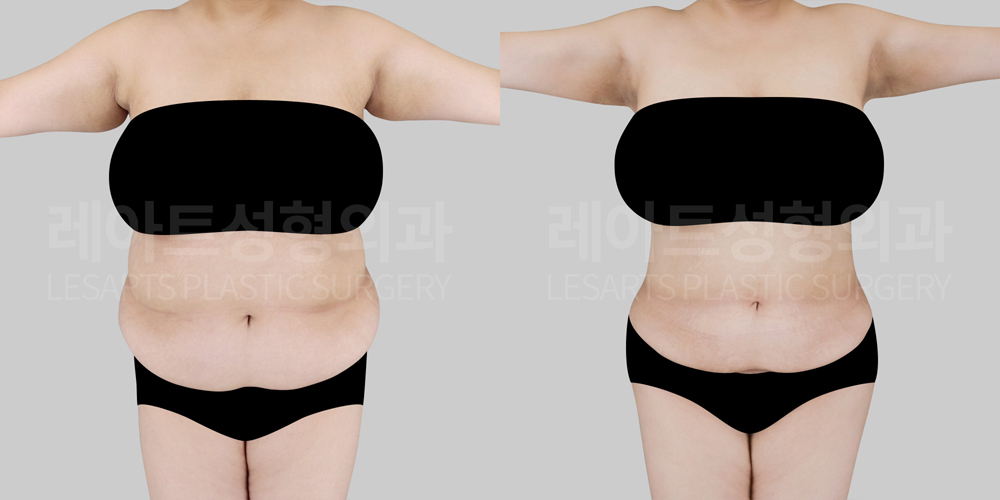
[Waist and Pelvic Contours: Narrowing Upper Body Width to Transition into the Lower Body]
On frontal view, debulking abdominal and flank fullness
allowed the curve flowing from the waist into the pelvis
to connect in a significantly smoother, more natural transition.
The priority here was not narrowing the waist
to an extreme degree in isolation;
the crucial objective was narrowing upper torso breadth to establish a cohesive proportion with the pelvis and thighs.
In this patient, the arms, peribrachial regions, full back,
and abdomen were contoured in staged procedures,
combined with autologous fat grafting into the volume-deficient lateral pelvis.
Consequently, she achieved a balanced proportional transformation between her upper and lower body,
a qualitative structural shift distinct from generic dietary weight loss alone.
[ View More Upper Body Liposuction Cases ]
[Liposuction in Severe Obesity: Why Proportions Matter More Than Numeric Weight]
Ultimately, liposuction functions not merely to alter scale weight,
but as a contouring intervention that selectively reduces stubborn fat depots
to harmonize full-body proportions and silhouette.
Particularly in severe obesity where the upper body is disproportionately bulky,
rather than focusing solely on losing a few kilograms,
the surgical strategy aims to make the upper torso look significantly lighter,
downsizing the visual frame relative to actual body weight.
However, identical transformations cannot be generalized across every patient with severe obesity.
Dermal elasticity, the ratio of subcutaneous to visceral fat,
muscularity, and baseline skin laxity create individual boundaries
regarding achievable outcomes.
Furthermore, whether to treat all areas simultaneously or divide the plan into staged sessions
must be tailored individually according to surgical surface area and systemic safety.
Severe Obesity Liposuction FAQ
Q1. Does liposuction significantly reduce body weight in severe obesity?
The primary objective of liposuction is not large-scale weight reduction,
but debulking localized subcutaneous fat to transform body contours and silhouette.
Q2. If the upper body appears heavy, is arm liposuction alone sufficient?
Upper body heaviness is rarely caused by the arms alone; axillary, accessory breast, scapular, back, and abdominal volume contribute concurrently.
Identifying which specific zones drive upper body breadth is essential before finalizing the operative plan.
Q3. Can abdominal liposuction make a severely obese abdomen completely flat?
Abdominal wall protrusion reflects subcutaneous fat, visceral adiposity, fascial anatomy, posture, and core tone.
Because liposuction evacuates subcutaneous fat, underlying visceral fullness cannot be eliminated surgically.
Q4. Must skin laxity be considered during liposuction in severe obesity?
Extracting large volumes of fat from an overstretched envelope can cause residual skin to look loose or accentuate folds,
depending on baseline elasticity. Preoperative evaluation must weigh both fat depth and dermal recoil.
Q5. Why is upper body liposuction sometimes paired with pelvic fat grafting?
Beyond narrowing upper torso breadth, grafting can balance the continuous line transitioning from waist to pelvis and lower limbs.
The indication and scope of grafting depend on native pelvic morphology and desired contour volume.
Dr. Pyongrim Choi


Cases finding
similar to my profile
Customer Diagnostics


Select the surgery and
area you are interestedto see real
before andafter changes.


we
make you,
the art
Clinic hours
MON - FRI
10 am – 7pm
SAT
10 am – 4pm
Holiday
SUN, HOLIDAY
Location
Lesarts Moon Clinic Tower 4-5F, 40, Nonhyeon-ro 168-gil,
Gangnam-gu, Seoul, Republic of Korea

Medical institution name Lesarts Plastic Surgery
Address Lesarts Moon Clinic Tower 4-5F, 40, Nonhyeon-ro 168-gil, Gangnam-gu, Seoul, Republic of Korea
Representative Moon sung jun
