




Online Consultation
Please accurately enter the information below.
Quick Cost Consultation
Quick Consultation & Reservation
Cases finding
similar to my profile






Doctor's Note
Medical columns by our surgeons
Physiological Changes in the Body After Liposuction
2026-07-23
Physiological Changes in the Body After Liposuction
What physiological changes occur in our body following liposuction?
Beyond the extraction of adipose tissue, liposuction triggers diverse physiological responses including edema, fluid shifts, tissue readaptation,
and transient fluctuations in hemoglobin and white blood cell levels.
Most of these are standard physiological healing processes, and ensuring a safe recovery requires structured postoperative clinical monitoring and dedicated aftercare.
▶ Lesarts Liposuction Procedure Guide ◀
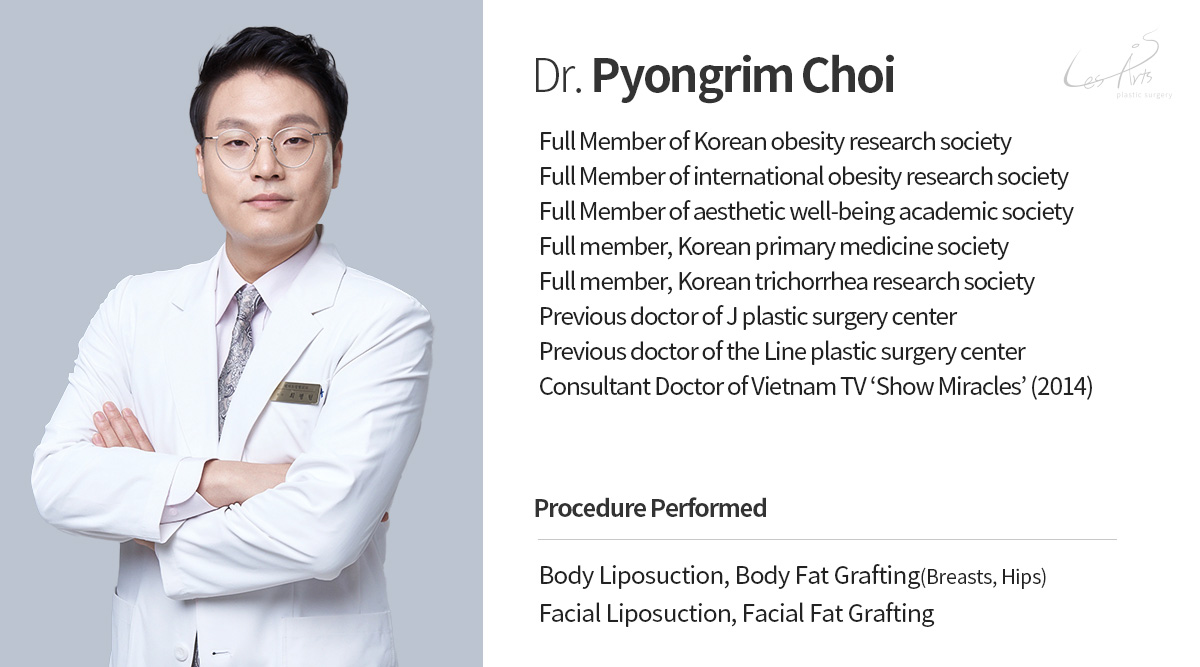
Hello, I am Dr. Pyongrim Choi, Board-Certified Plastic Surgeon at Lesarts Plastic Surgery Clinic.
It is easy to perceive liposuction merely as a cosmetic procedure that removes visible localized fat.
In biological reality, it goes far beyond volume reduction;
it is more accurately understood as 'a systemic healing journey where the entire body responds to surgical stimuli
through a series of dynamic physiological adaptations.'
Following surgery, along with visible silhouette changes,
systemic fluid circulation, hematological markers, immune cell modulation, edema, and inflammatory cascades all interact during recovery.
Understanding these biological recovery stages empowers patients to recover with confidence,
directly supporting long-term aesthetic satisfaction.
In this clinical article, we will examine
the internal physiological shifts that occur after liposuction,
including hematological changes in routine blood tests.
1. Systemic Physical Changes After Liposuction
1) Postoperative Edema and Interstitial Fluid Shifts
Liposuction utilizes specialized micro-cannulas to aspirate
and permanently eliminate adipocytes from subcutaneous planes.
During this mechanical process, micro-vascular changes occur within the subcutaneous matrix,
naturally inducing post-surgical swelling as interstitial fluid accumulates.
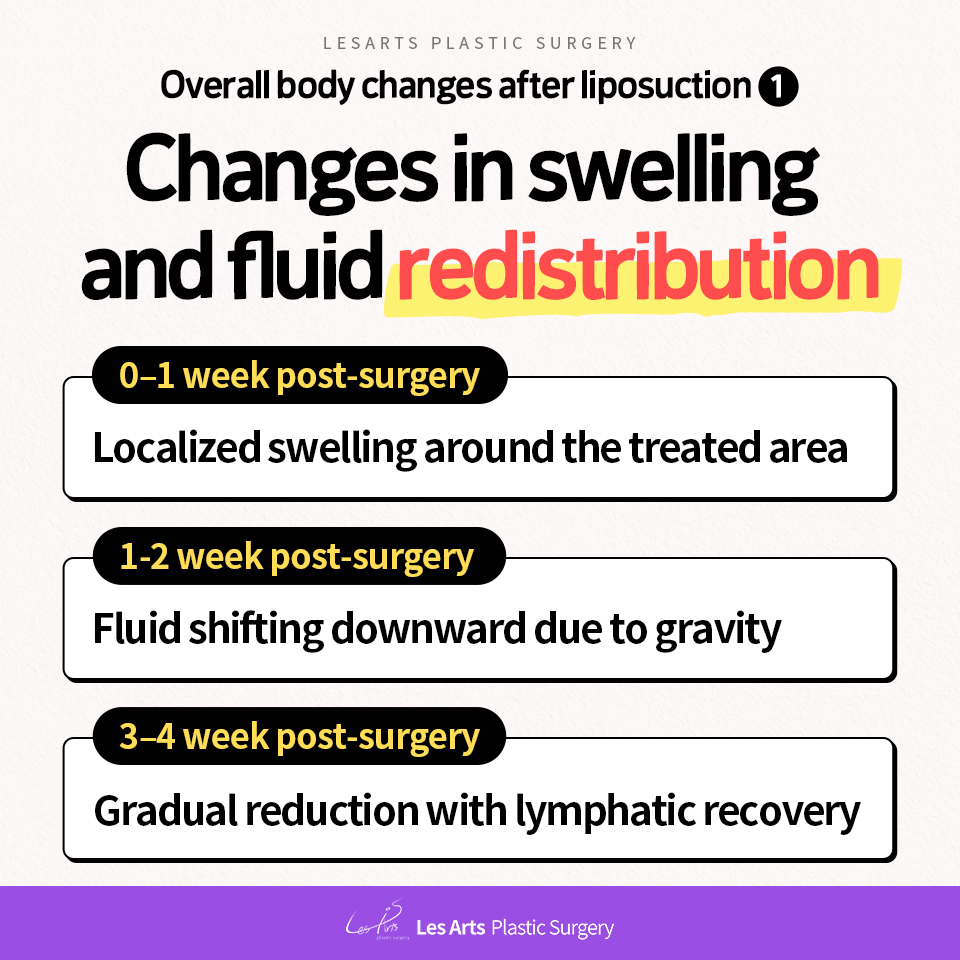
The standard biological edema progression follows these stages:
- Immediate Post-Op to Week 1: Acute localized edema peaks around the treated surgical site
- Weeks 1 to 2: Interstitial fluid migrates along gravitational planes, temporarily expanding dependent swelling
- Week 3 to 4 Onward: Lymphatic drainage channels regenerate, steadily resolving swelling and tissue induration
During this initial phase, the weight of interstitial fluid and swelling
often surpasses the mass of extracted fat,
which is why scale weight may temporarily rise
or appear unchanged at first.
2) Dermal Retraction and Soft-Tissue Readaptation
The subcutaneous space created by fat removal does not remain hollow;
surrounding fascial layers realign over time as the overlying
skin contracts and readapts to the reshaped contour.
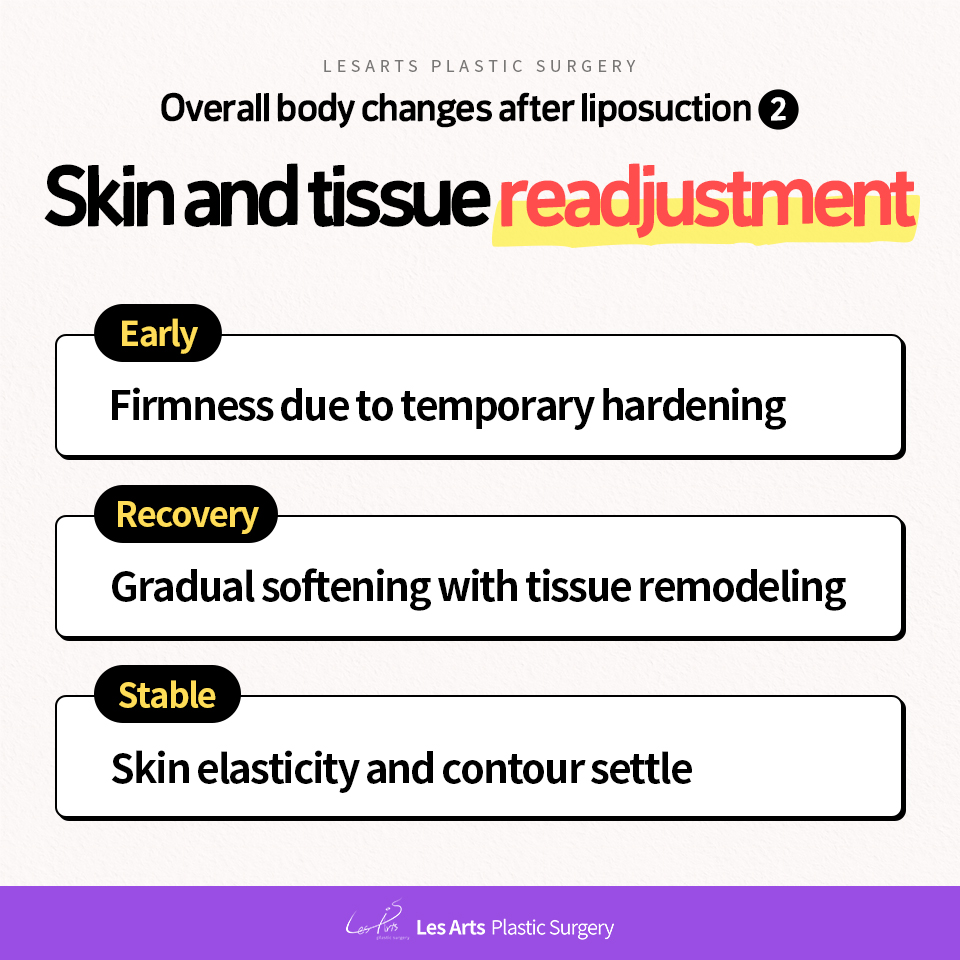
Tissue readaptation typically advances through three phases:
- Early Phase: Temporary firmness and tissue tightness (biobond formation) develop
- Remodeling Phase: Internal fibrotic tissue softens progressively as collagen reorganizes
- Maturation Phase: Skin elasticity normalizes, locking in smooth, refined curves
The rate of soft-tissue readaptation depends on aspirate volume, surgical surface area,
and baseline dermal elasticity and metabolic healing speed.
2. Recovery Evaluated Through Blood Test Biomarkers
While liposuction might seem like a superficial cosmetic treatment,
the human body physiologically interprets it as 'controlled surgical trauma.'
Consequently, routine postoperative blood panels reflect temporary biomarker fluctuations,
the vast majority of which represent completely healthy, expected healing responses.
1) Hemoglobin (Hb) Level Fluctuations
What is Hemoglobin?
Hemoglobin is the vital iron-rich protein in red blood cells
responsible for transporting oxygen to peripheral tissues throughout the body.
When hemoglobin levels dip temporarily,
patients may experience transient fatigue or lightheadedness.
Why Hemoglobin Levels Drop Temporarily After Liposuction
Hemoglobin counts frequently show a transient reduction following liposuction.
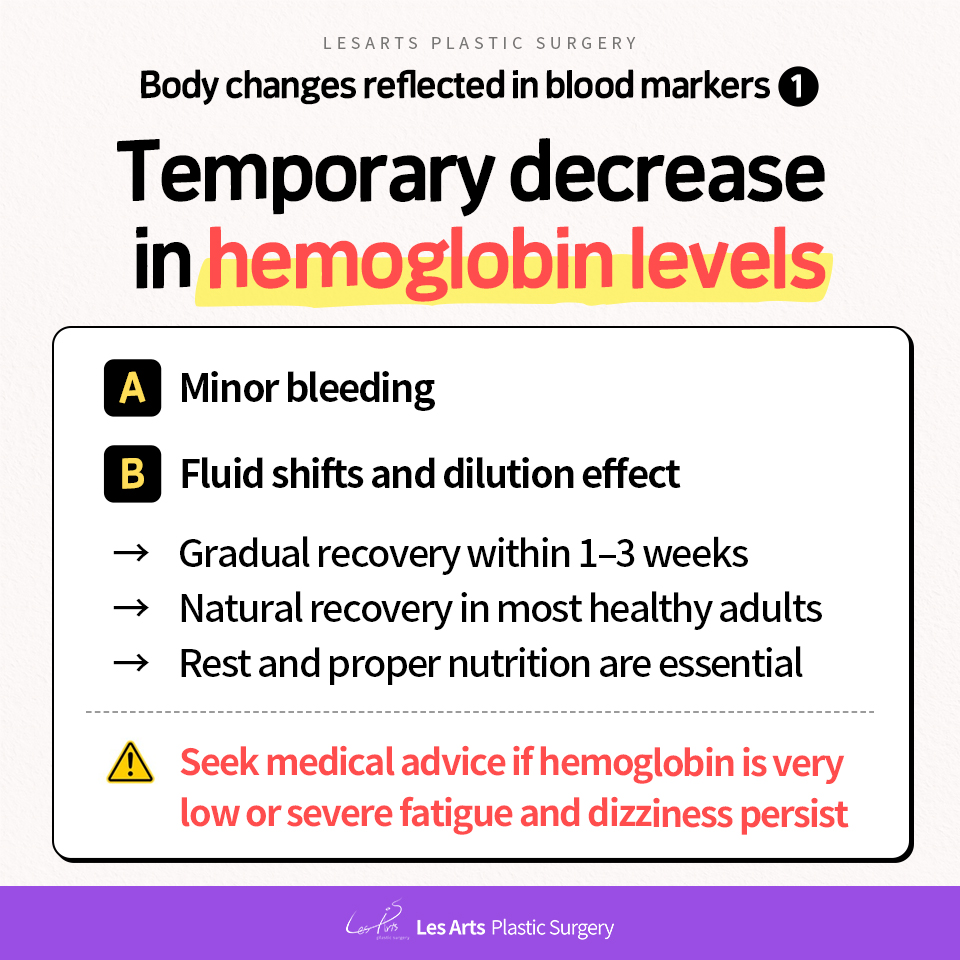
This is an anticipated physiological phenomenon driven by two primary factors:
① Microvascular Blood Loss
During cannula movement through adipose compartments, minor capillary trauma occurs,
leading to minor, contained blood loss alongside aspirated fat and tumescent fluid.
This temporarily lowers circulating red blood cell and hemoglobin mass.
② Fluid Shifts and Hemodilution
Intravenous hydration administered during surgery, combined with postoperative fluid retention,
creates a relative dilutional effect in circulating plasma.
Because the blood volume is temporarily expanded by fluid, measured hemoglobin concentrations read lower than true red blood cell mass.
When Does It Normalize?
In most healthy adults, hemoglobin levels steadily rebound within 1 to 3 weeks post-op,
returning to normal baseline ranges naturally with adequate rest,
proper hydration, and balanced nutritional support.
Clinical Note
If hemoglobin levels drop excessively or if severe dizziness and profound fatigue persist,
prompt clinical evaluation by your surgical team is essential.
2) White Blood Cell (WBC) Count Elevations
What are White Blood Cells?
White blood cells (leukocytes) are the frontline cells of our immune defense system,
rapidly mobilized to repair tissue damage and modulate inflammation.
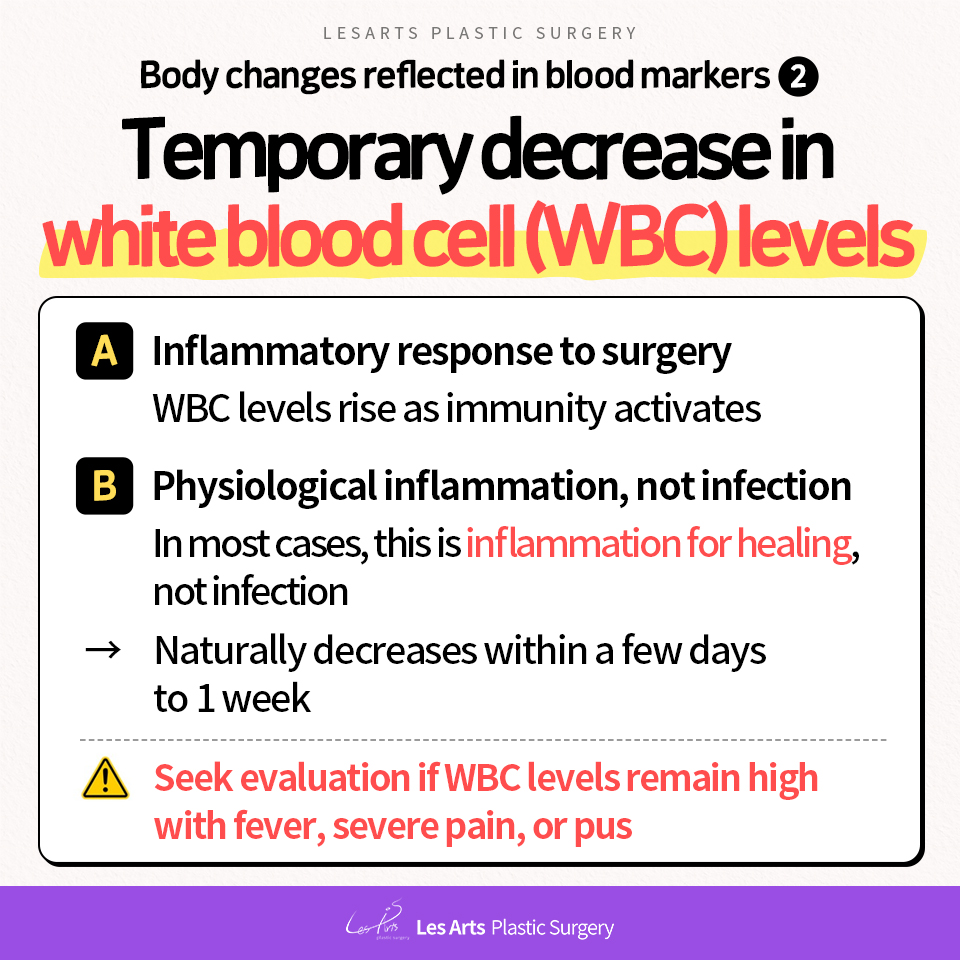
Therefore, a temporary elevation in WBC count after surgery
is a classic physiological reaction during normal wound healing.
Why White Blood Cell Counts Rise After Liposuction
An acute, transient rise in WBC levels following liposuction is almost always
a healthy inflammatory marker of biological tissue repair.
① Surgical Tissue Inflammation
Liposuction involves widespread subcutaneous tissue remodeling.
The body perceives this as an acute wound, triggering an immune cascade
that mobilizes leukocytes into circulation to begin matrix recovery.
② Aseptic Physiological Response (Non-Infectious)
In the overwhelming majority of cases, postoperative leukocytosis reflects sterile wound repair rather than infection.
Low-grade fever, localized warmth, and tenderness frequently accompany this healing process.
When Does It Return to Normal?
As acute inflammation subsides within a few days to one week post-op,
white blood cell counts naturally normalize back to baseline ranges.
Clinical Note
If WBC levels remain persistently elevated or are accompanied by high fever,
escalating pain, or purulent drainage, medical evaluation is required to rule out infection.
3. The Importance of Comprehensive Perioperative Care
True recovery after liposuction involves managing
not only external signs like bruising and swelling,
but also systemic physiological indicators like hematological markers
through structured medical protocols.

Monitoring biological recovery via routine blood analysis
Customizing aftercare therapies to individual edema and bruising stages
Adjusting medications and intravenous fluid therapy when indicated
Detecting and managing early signs of infection or atypical healing responses
Executing these protocols safely highlights why choosing an experienced medical team
capable of precise clinical evaluation and responsive care is essential.
Postoperative edema and bruising are standard milestones of recovery.
Beneath the surface, however, important biological indicators like blood counts fluctuate concurrently,
making integrated perioperative care the key to a safe, comfortable outcome.
When seeking liposuction that unites clinical safety with beautiful aesthetic contours,
selecting a clinic with proven surgical expertise and a structured postoperative aftercare system is paramount.
[Lesarts Postoperative Aftercare Program Guide]
Liposuction Recovery FAQ
Q1. Why does swelling occur after liposuction?
Cannula movement causes temporary microvascular disruption in subcutaneous tissue, increasing interstitial fluid.
Swelling resolves progressively as lymphatic channels heal and fluid circulation normalizes.
Q2. Can hemoglobin levels drop following liposuction?
Yes. Minor blood loss during aspiration combined with hemodilution from postoperative fluid shifts can temporarily lower hemoglobin concentrations.
Levels naturally rebound within 1 to 3 weeks in healthy adults.
Q3. Is a temporary rise in white blood cell count normal after surgery?
Yes. Leukocytes elevate acutely as an aseptic, physiological inflammatory response to surgical tissue trauma,
typically returning to normal baseline counts within a few days to one week.
Q4. Why does scale weight not drop immediately after liposuction?
In the early recovery phase, the mass of post-surgical edema and retained interstitial fluids often offsets or exceeds the weight of extracted fat,
causing body weight to temporarily plateau or slightly increase before dropping.
Q5. Why are postoperative blood tests valuable after liposuction?
Blood tests provide objective data on hemoglobin levels, immune markers, hydration balance, and systemic recovery,
enabling safe, proactive, and tailored postoperative management.
Dr. Pyongrim Choi


Cases finding
similar to my profile
Customer Diagnostics


Select the surgery and
area you are interestedto see real
before andafter changes.


we
make you,
the art
Clinic hours
MON - FRI
10 am – 7pm
SAT
10 am – 4pm
Holiday
SUN, HOLIDAY
Location
Lesarts Moon Clinic Tower 4-5F, 40, Nonhyeon-ro 168-gil,
Gangnam-gu, Seoul, Republic of Korea

Medical institution name Lesarts Plastic Surgery
Address Lesarts Moon Clinic Tower 4-5F, 40, Nonhyeon-ro 168-gil, Gangnam-gu, Seoul, Republic of Korea
Representative Moon sung jun
