




Online Consultation
Please accurately enter the information below.
Quick Cost Consultation
Quick Consultation & Reservation
Cases finding
similar to my profile






Doctor's Note
Medical columns by our surgeons
Arm Liposuction | Losing Weight Everywhere Except Your Arms: How to End the Endless Dieting Struggle
2026-07-29
Arm Liposuction | Losing Weight Everywhere Except Your Arms: How to End the Endless Dieting Struggle
Q. When undergoing liposuction for stubborn arm and upper body fat that resists dieting, why must the design account for deltoid musculature and adjacent units (scapula, axillae) rather than merely extracting maximum fat volume?
A. Because evacuating fat aggressively without respecting underlying muscular contours and proportional upper-body balance ruins aesthetic continuity and diminishes the overall impact of surgery.
In patients with well-developed shoulder muscles, the superficial fat layer must be calibrated with micro-precision to prevent harsh muscular ridge exposure, sculpting a smooth, slender line;
furthermore, contouring the scapula and axillary regions alongside the arms debulks the entire upper torso frame,
delivering a balanced, cohesive silhouette where the arms appear visually longer and leaner.
[Learn More About Lesarts Arm Liposuction]
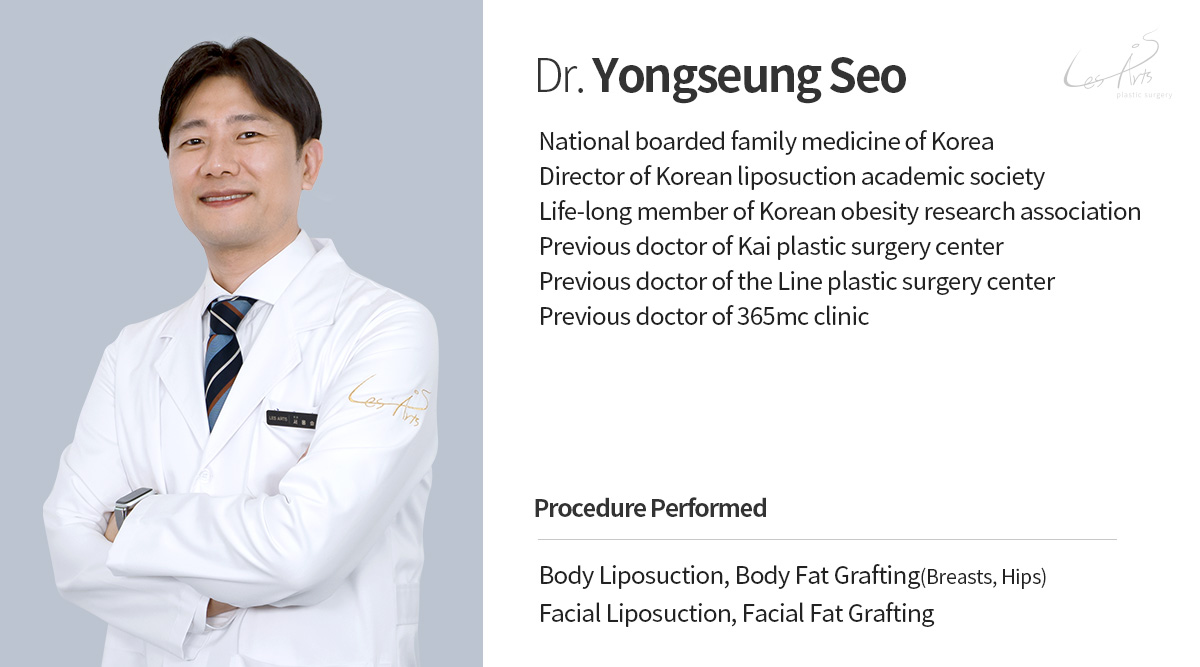
Hello, I am Dr. Yongseung Seo, Plastic Surgeon specializing in
liposuction and autologous fat transfer at Lesarts Plastic Surgery Clinic.
During clinical consultations with busy women balancing demanding schedules,
I frequently meet patients who have dedicated immense effort to disciplined exercise and strict dieting, only to face the same frustrating reality:
"The numbers on the scale dropped significantly,
yet my arm circumference and upper-arm fullness refuse to budge at all."
"Because my upper arms look heavy, my entire upper body appears bulky,
causing intense stress whenever I wear summer clothes or fitted tops."
Many attempt to eliminate stubborn subcutaneous arm fat through aggressive upper-body weight training,
only to build underlying muscle that makes the arms look even wider, while unintended volume loss hollows the face and breasts.
Despite losing weight through severe caloric restriction, the upper torso in the mirror remains broad and bulky,
and with stubborn upper-arm fat staying completely unyielding, patients ultimately turn to arm liposuction as their definitive solution.
The patient featured today was a female measuring 160 cm and 81.3 kg with a BMI of 31.8,
who had previously experienced deep frustration when rigorous dieting lowered her body weight but left her arm circumference virtually unchanged.
Following subsequent rebound weight gain, she visited our clinic at her lifetime peak weight,
earnestly expressing her wish to finally break the cycle of chronic upper-body stress.
[Patient Profile & Pre-Operative Diagnostic Findings]
Age: Late 20s
Height: 160 cm
Weight: 81.3 kg (lifetime peak weight)
BMI: 31.8 kg/m² (obesity class II range)
Body Fat Percentage: 42.4%
(※ Even with identical physical metrics, liposuction outcomes vary based on individual dermal elasticity and muscular framework.)

[Clinical Consultation & Diagnostic Ultrasound Evaluation]
"No matter how much weight I lose, my arm circumference remains the same."
In a resting neutral stance with arms at her sides,
the posterior triceps fat pad protruded outward prominently,
with subcutaneous fat accumulated so heavily that the lateral bulge was clearly visible on anterior view.
Furthermore, the gravitational pull on this substantial fat mass caused pronounced dependent hanging when abducting her arms.
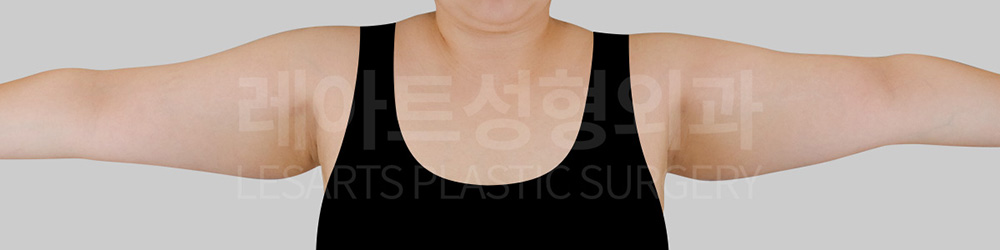
In addition, dense adipose accumulation across the axillae and scapular back rolls
amplified upper torso breadth, making her frame look substantially heavier than it was.
Diagnostic ultrasound imaging measured subcutaneous adipose depth as follows:
Posterior Arm (Triceps): 25 / 26 mm,
Anterior Arm (Biceps): 18 / 18 mm,
Scapular Back: 21 / 25 mm,
confirming an exceptionally rich aspirate volume that predicted dramatic contour transformation from arm liposuction.
However, because her skin envelope had been stretched significantly, the risk of residual skin laxity post-debulking was high;
we explained this recovery phase in detail.
Furthermore, because her baseline deltoid muscle framework was well developed, we transparently noted that sculpting an unnatural, knife-sharp 90-degree shoulder line was anatomically constrained, and that while pre-existing striae (stretch marks) would improve through skin contraction, they could not be erased entirely.
[Tailored Surgical Blueprint for High-Volume, Muscular Upper Bodies]
Because the patient presented with both thick subcutaneous fat and a well-developed muscular frame,
evacuating fat indiscriminately risked exposing harsh muscular ridges, creating waviness and compromising aesthetic slimness.
The core requirement was meticulously calibrating contour transitions to accommodate underlying muscle and skeletal anatomy.
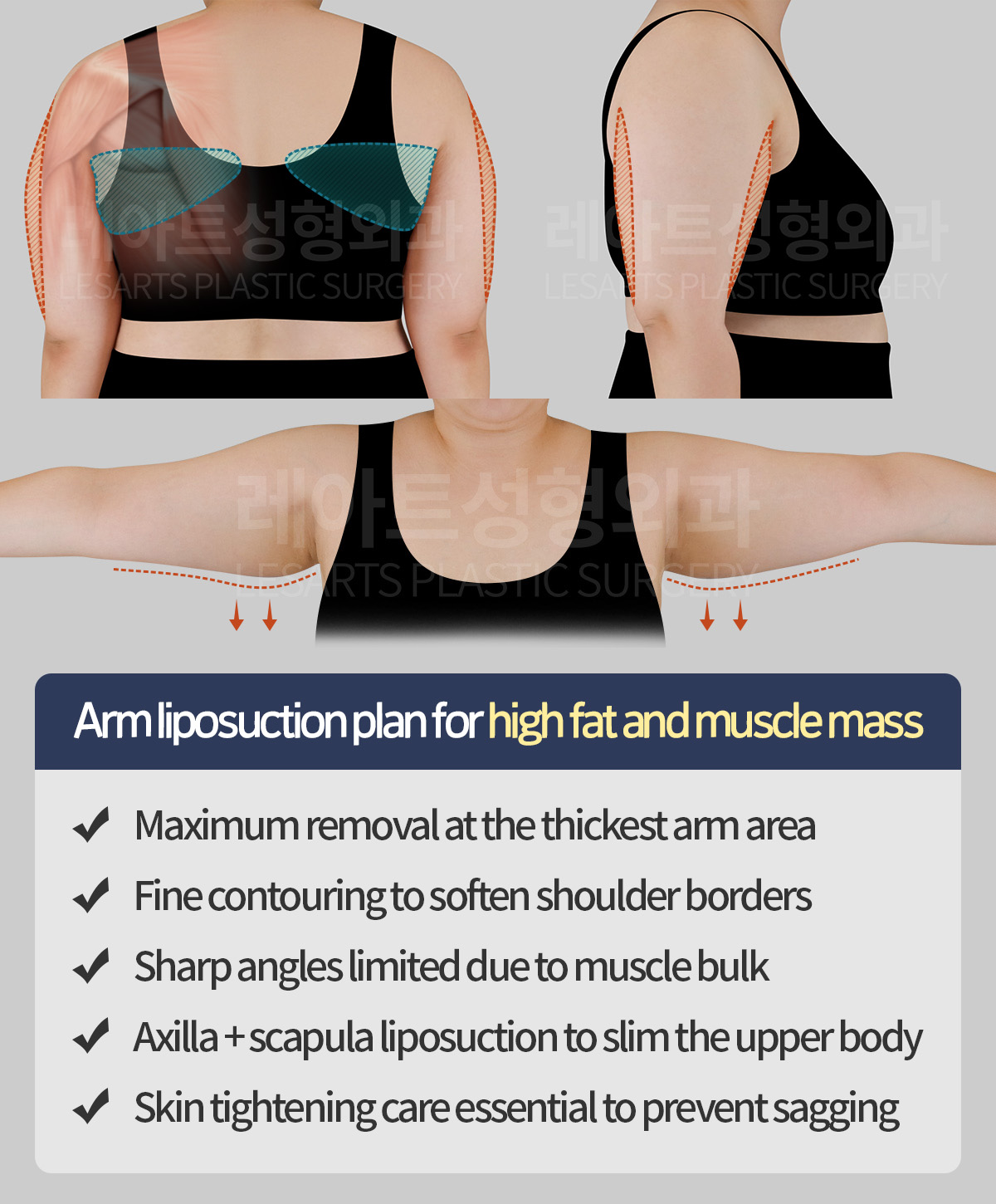

[Clinical Progress: Arm, Scapular & Axillary Liposuction]
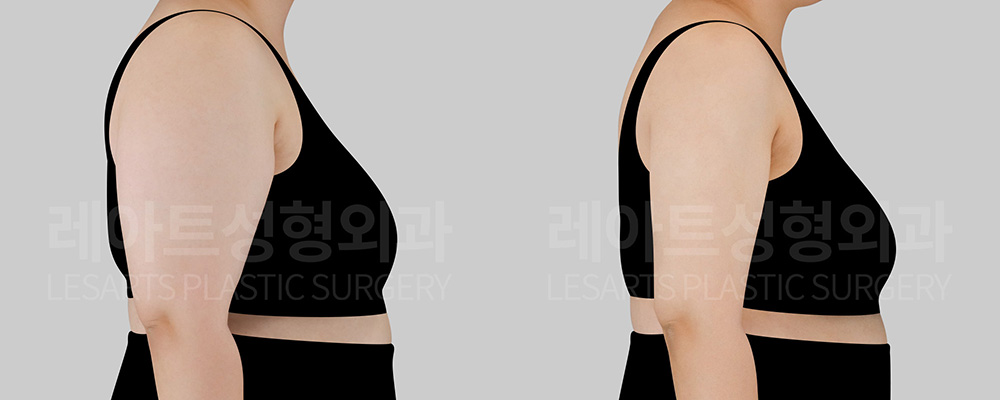
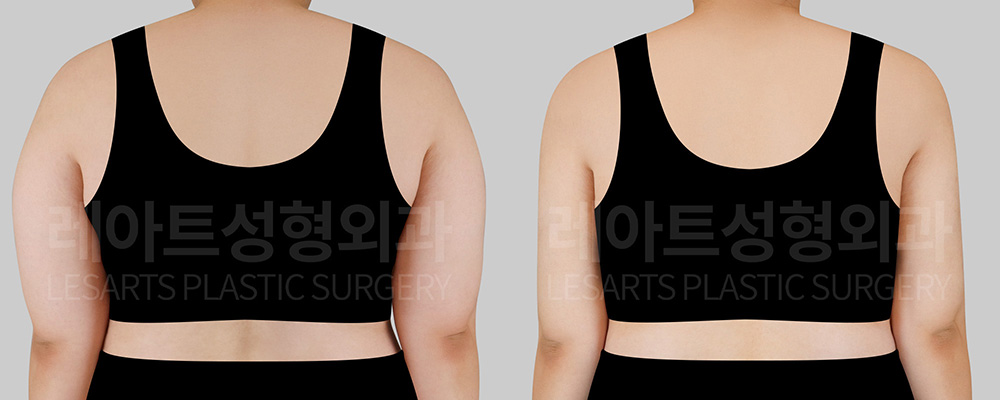
(※ Photographed at 8.5 months post-operatively under standardized studio lighting and positioning.)
Pre-operatively, outward posterior bulging made the upper torso look short and heavy;
following liposuction of the arms, scapula, and axillae, the posterior bulge was thoroughly debulked,
sculpting a visibly elongated, straight arm silhouette.
The patient expressed immense satisfaction that in a resting neutral stance, the lateral outer arm contour fell into a clean, straight line,
producing a sleek, flattering fit even in form-fitting long-sleeved clothing.
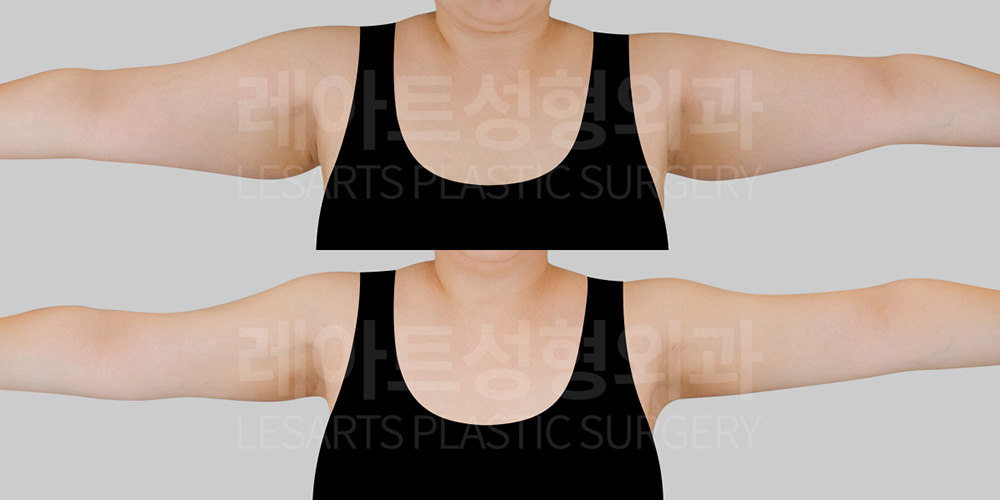
Dermal retraction progressed favorably without the anticipated flaccid sagging, maintaining a firm, slender contour even when lifting her arms.
Dr. Yongseung Seo


Cases finding
similar to my profile
Customer Diagnostics


Select the surgery and
area you are interestedto see real
before andafter changes.


we
make you,
the art
Clinic hours
MON - FRI
10 am – 7pm
SAT
10 am – 4pm
Holiday
SUN, HOLIDAY
Location
Lesarts Moon Clinic Tower 4-5F, 40, Nonhyeon-ro 168-gil,
Gangnam-gu, Seoul, Republic of Korea

Medical institution name Lesarts Plastic Surgery
Address Lesarts Moon Clinic Tower 4-5F, 40, Nonhyeon-ro 168-gil, Gangnam-gu, Seoul, Republic of Korea
Representative Moon sung jun
